
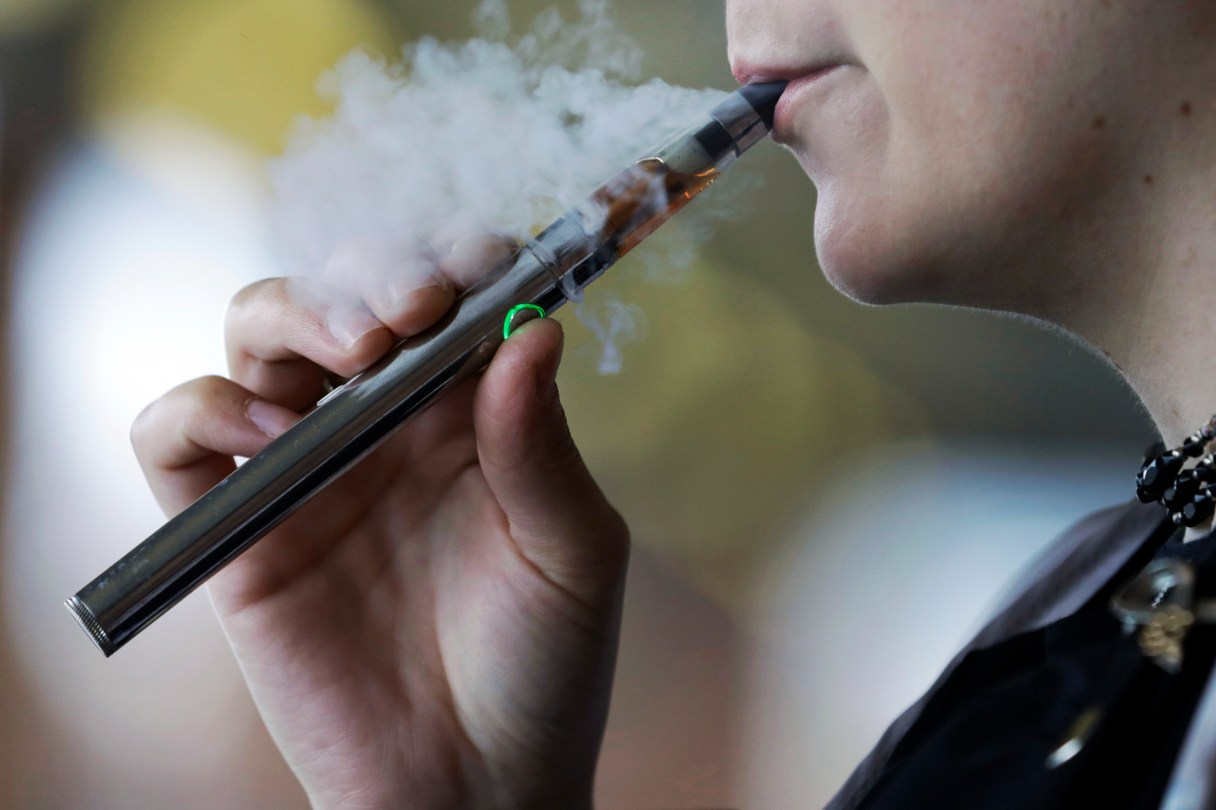
WASHINGTON (AP) – In almost any other year it would be hailed as a public health victory: The smoking rate among U.S. high schoolers took its biggest hit ever this year, federal figures show, falling to a new low.
Instead the milestone was relegated to a lone figure at the bottom of a government press release and went unremarked by anti-tobacco groups that have spent decades working to stamp out youth smoking.
It’s a new era in the tobacco wars – one in which the alarming rise of underage vaping has almost completely overshadowed a parallel drop in traditional smoking. And the pivotal question of whether electronic cigarettes are inadvertently helping to wipe out smoking among young people has become a polarizing topic: embraced by some experts, dismissed by others.
“Smoking is disappearing among young people and it’s a great public health triumph that we are failing to celebrate, much less even note,” says Kenneth Warner, professor emeritus at the University of Michigan’s school of public health.
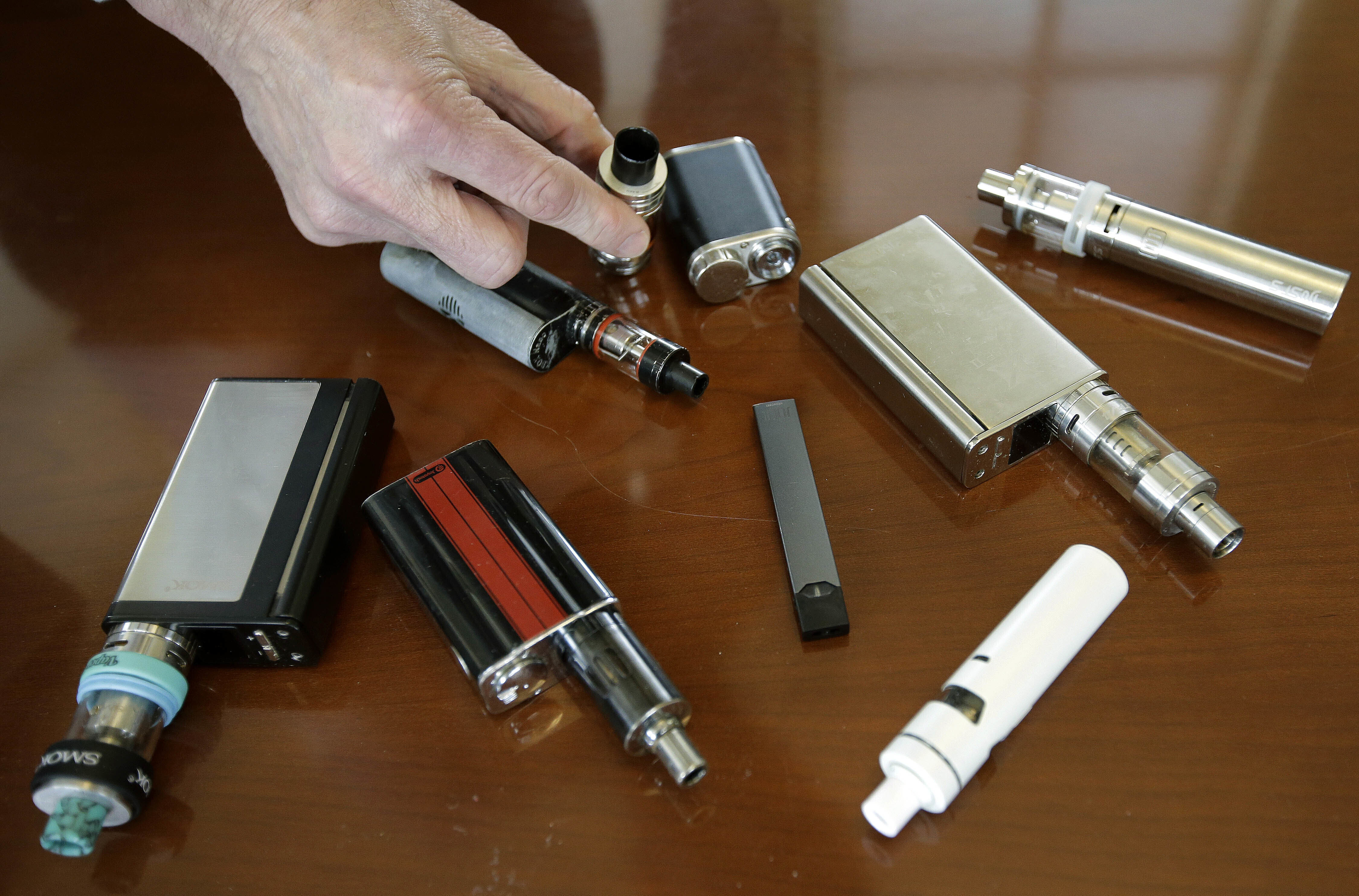 FILE – In this April 10, 2018, file photo, a high school principal displays vaping devices that were confiscated from students in such places as restrooms or hallways at the school in Massachusetts. With one in four teenagers now using electronic cigarettes, underage vaping is universally condemned, and the federal government considers it an epidemic. But some other researchers believe recent trends continue to show vaping’s promise as a tool to steer millions of adult smokers away from cigarettes, the nation’s leading cause of death. (AP Photo/Steven Senne, File)
E-cigarettes typically heat a solution that contains nicotine, the drug that makes tobacco addictive. They are generally considered less harmful than cancer-causing traditional cigarettes. But there is little long-term research on the health effects of vaping.