
Monday, November 16, 2026Nov 16

AP PHOTOS: Egypt’s banned ultras soccer fans take to streets

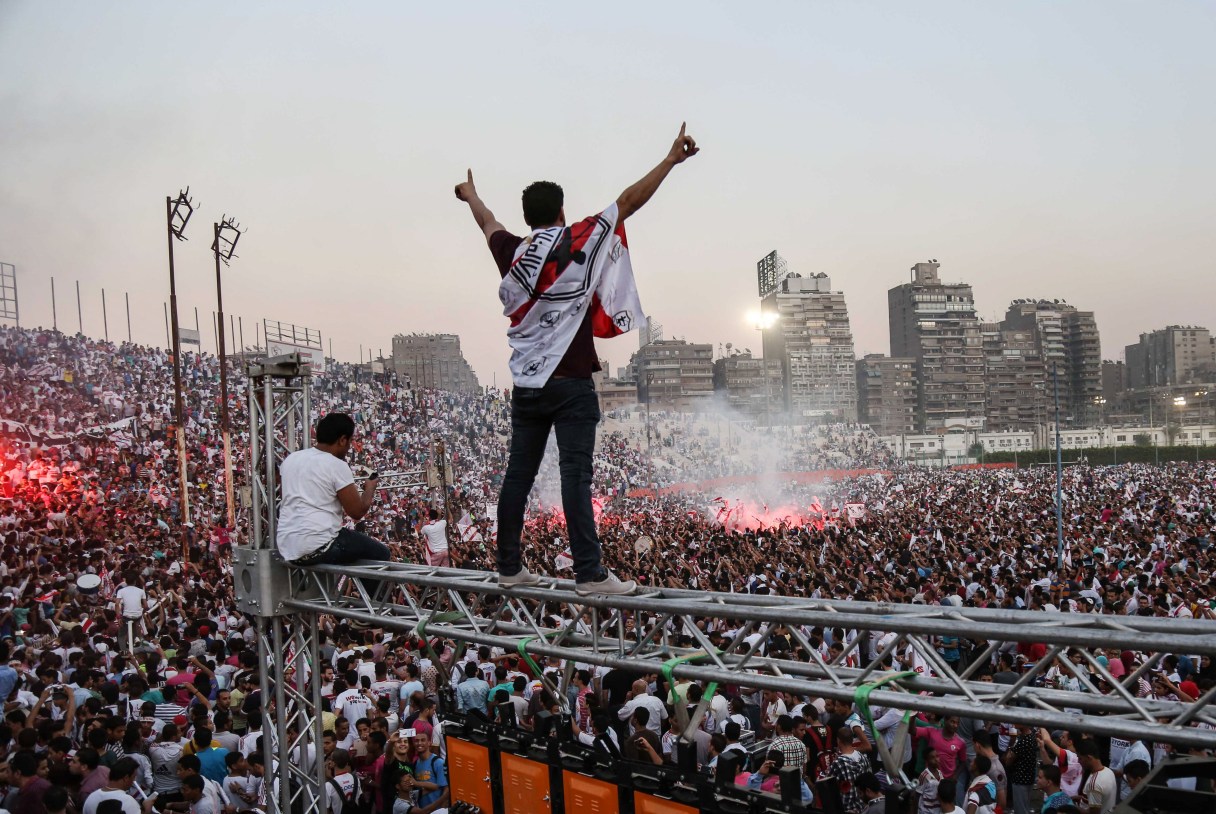
In this July 31, 2015 photo, Zamalek soccer fans celebrate after winning the Egyptian League at Zamalek Club in Cairo, Egypt. The hardcore fan base Ultras White Knights did not celebrate the winning of the team out of respect for more than 20 soccer fans who were crushed to death outside an air defense stadium in Cairo after police fired tear gas to break up the crowd waiting in a fenced, narrow corridor to watch. Police accused the fans of attacking the force, and rioting to enter the stadium on Feb. 8, 2015. (AP Photo/Mohammed El Raai)

CAIRO (AP) – Chanting slogans, carrying signs and waving flares, these eager young men who gather in Egypt could be mistaken for Arab Spring demonstrators.

And in this country, the recently-banned hardcore soccer fans known as ultras have played a political role.

Ultras, whose name comes from the Latin word for “beyond,” started in Latin America and Europe in the 1950s before coming to Arab countries. The first to form in Egypt, Ultras White Knights, emerged in 2007 to support the Zamalek team. Groups backing archrival al-Ahly and others followed.

Security forces and the media criticize ultras as being little more than violence-prone thugs. It was during Egypt’s 2011 revolt that ousted longtime autocrat Hosni Mubarak that ultras first took on a political role.

Often providing muscle at protests, ultras also directed demonstrators and led chants. They were considered one of the most organized movements in Egypt after the Muslim Brotherhood, which the government outlawed as a terrorist organization following the 2013 military overthrow of Islamist President Mohammed Morsi.