
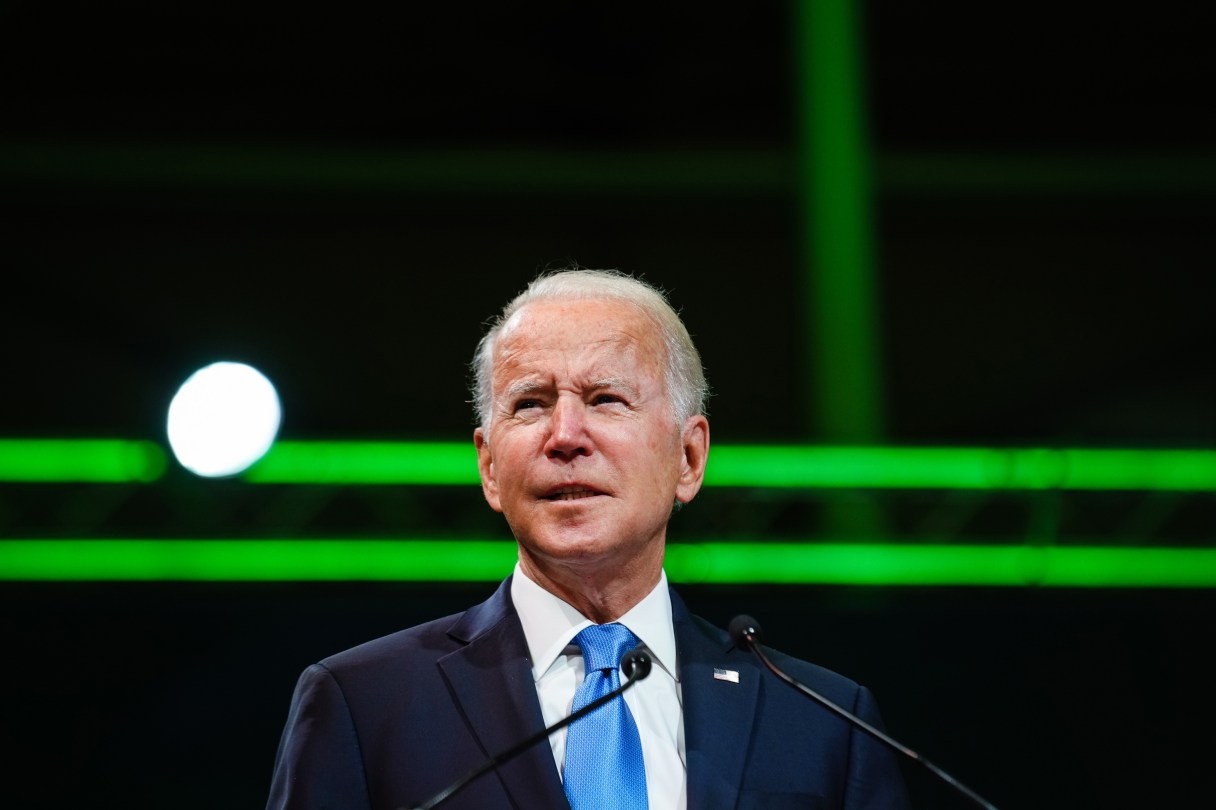
The nation’s largest federally owned utility plans to invest more than $3.5 billion in new gas-burning electric plants, despite President Joe Biden’s commitment to swiftly move away from fossil fuels and eliminate greenhouse gases from the power sector in a little more than a decade.
The Tennessee Valley Authority, which provides electricity to nearly 10 mil- lion people across the Southeast, is replacing aging power plants that run on coal, the dirtiest fossil fuel. But critics say substituting gas for coal would lock in decades of additional carbon dioxide emissions that are heating the planet and could be avoided by generating more electricity from solar, wind or another renewable source.
It marks the second time in recent months that a federal entity has clashed with Biden’s climate agenda. The U.S. Postal Service is replacing 165,000 aging mail trucks with mostly gasoline-powered vehicles, despite the desire of the White House and leading Democrats to convert the fleet to all-electric vehicles.
It raises the question of whether President Franklin D. Roosevelt’s grand 20th-century experiment with electrification can adapt to a 21st-century climate crisis that requires a radical rethinking of energy production.
Like the Postal Service, the TVA is an independent organization governed by a board of directors made up of presidential appointees. And in both cases, the board is dominated by members nominated by former President Donald Trump, who frequently mocked climate science and was an ally of the fossil fuel industry.