
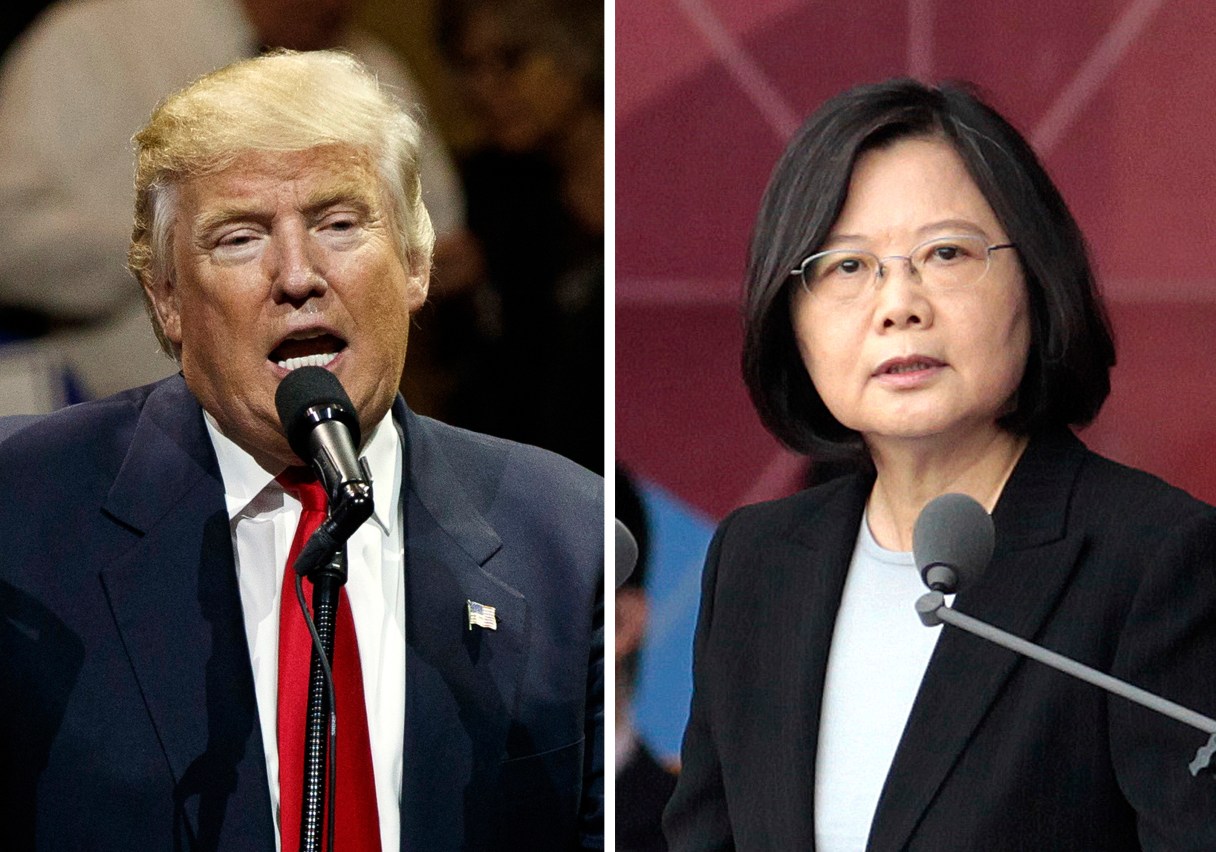
BEIJING (AP) – In a break with decadeslong diplomatic tradition, President-elect Donald Trump spoke directly with the president of Taiwan, a move that drew an irritated response from China and looked set to cast uncertainty over U.S. policy toward Asia.
It is perhaps unprecedented for a U.S. president or president-elect to speak directly with a leader of Taiwan, a self-governing island the U.S. broke diplomatic ties with in 1979.
In first comments apparently to downplay the significance of the call, Chinese Foreign Minister Wang Yi said Saturday the contact between Taiwan’s president and Trump was “just a small trick by Taiwan” that he believed would not change U.S. policy toward China, according to Hong Kong’s Phoenix TV.
“The one-China policy is the cornerstone of the healthy development of China-U.S. relations and we hope this political foundation will not be interfered with or damaged,” Wang was quoted as saying.
Washington has pursued a so-called “one China” policy since 1979, when it shifted diplomatic recognition of China from the government in Taiwan to the communist government on the mainland. Under that policy, the U.S. recognizes Beijing as representing China but retains unofficial ties with Taiwan.