
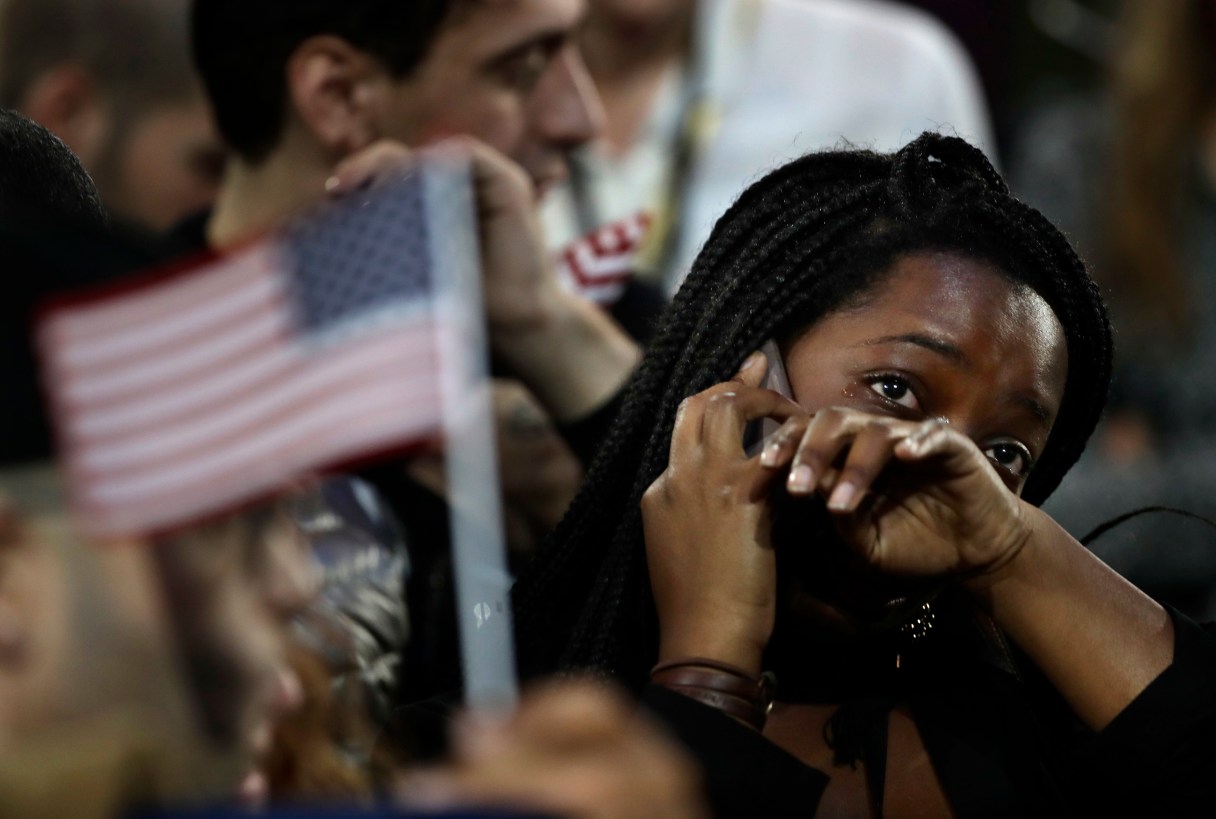
NEW YORK (AP) – As Donald Trump approaches his inauguration, young Americans have a deeply pessimistic view about his incoming administration, with young blacks, Latinos and Asian Americans particularly concerned about what’s to come in the next four years.
That’s according to a new GenForward poll of Americans aged 18 to 30, which found that the country’s young adults are more likely to expect they’ll be worse off at the end of Trump’s first term than better off. Such young Americans are also far more likely to think Trump will divide the country than unite it, by a 60 percent to 19 percent margin.
Fifty-two percent of young whites, 72 percent of Latinos, 66 percent of Asian-Americans and 70 percent of blacks think Trump’s presidency will lead to a more divided nation.
“Minority people are very afraid of all the rhetoric that he ran upon (in) his campaign,” said Jada Selma, a 28-year-old African-American graduate school student living in Atlanta. “Anytime he mentioned black people, he would talk about poor people or inner city. He would think that all of us live in the inner city and that we’re all poor.”
“If you’re not a straight white male, than I don’t think he’s looking out for you as an American,” she said.