
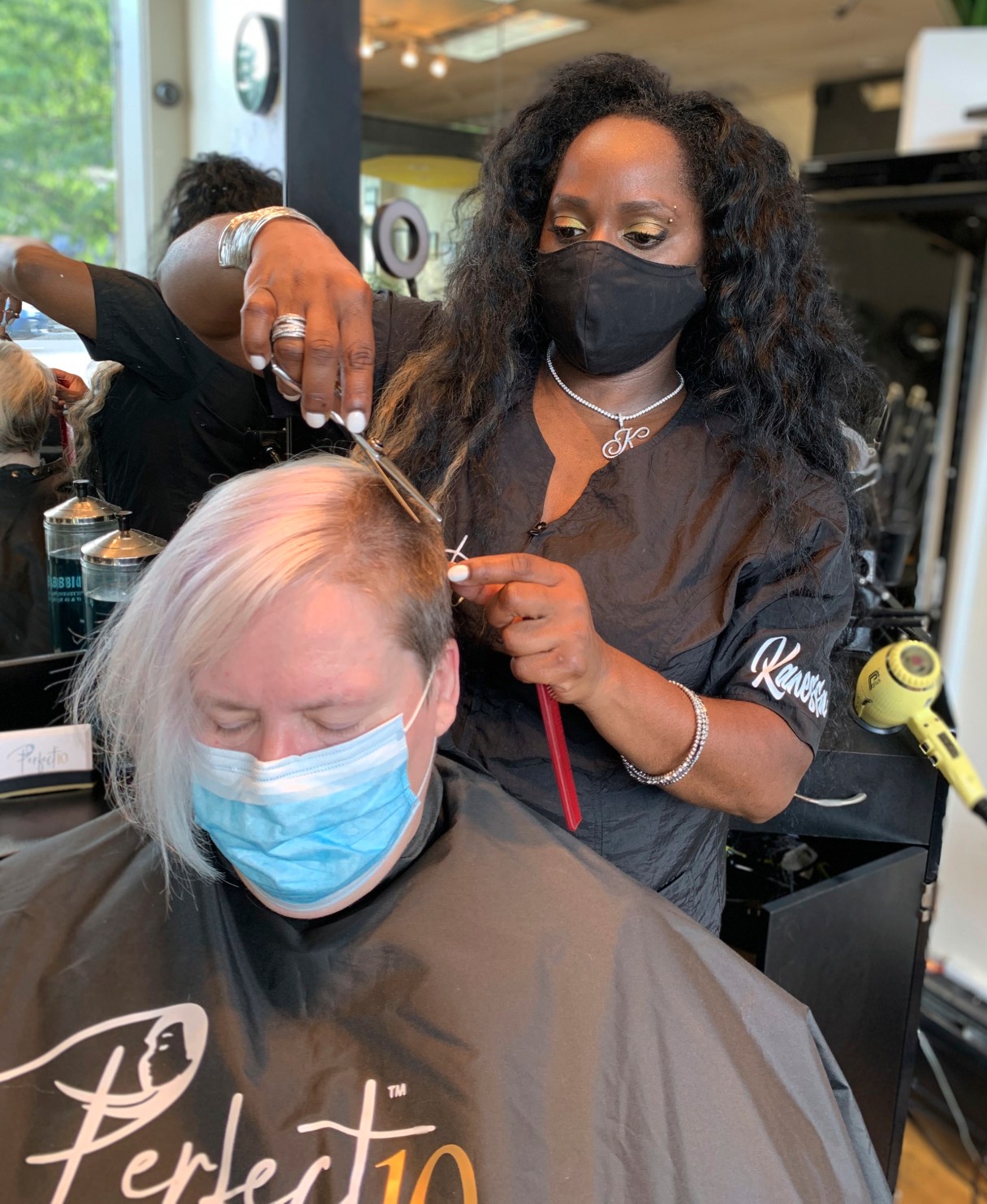
NEW YORK (AP) – After repeatedly being denied service by high-end salons because her hair was perceived as “too difficult” to style, Kanessa Alexander took an unusual step. She opened a shop of her own in a predominantly white Boston neighborhood with four Black stylists serving all hair textures.
“I wanted to be someplace where we existed but were not represented,” the African American cosmetologist said of her decision five years ago to set up Perfect 10 in West Roxbury, near where she grew up. “So many salons were just seeing a Black person.”
As a racial reckoning unfolds around the globe, Alexander and more than a dozen other people of color in the beauty industry trace such bias and discrimination in mostly white salons to the sidelining of formal education on tightly curled, coiled or kinky hair.
The lack of experience, or interest, is particularly acute when it comes to hair worn naturally, a growing trend among African American women who want to celebrate both personal identity and Black culture.
“They didn’t learn Black hair. They’ve been taught Black hair is difficult,” Alexander said. “Nobody will come in here and hear that their hair is too difficult.”