

 Casey Phillips
Thanks to ever faster Internet connections and the omnipresence of cameras on smartphones, it’s easier than ever to trot the globe without ever having to leave the body-fat-preserving confines of your favorite chair.
Want to place yourself at the digital feet of the Christ the Redeemer statue towering over Rio de Janeiro? Google Street View has you covered. Thanks to streaming broadcasts, anyone can tele-attend distant events in real time, whether technology product announcements, music festivals or family gatherings.
As our technological capabilities improve and increase the immersiveness of these virtual jaunts, there will be less and less reason to leave the house.
Only, that’s not remotely true.
There’s something about being in a place – actually being there – that no image or video stream can replicate. With this thought in mind, I realize now why a recent announcement from Google isn’t giving me the warm fuzzies as probably was intended.
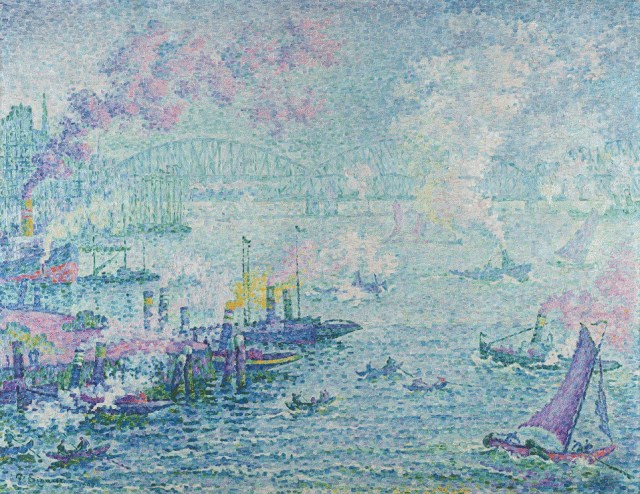
Last week, the company blogged about a new technological process for digitizing works of art. Using a robotic system, Google’s creatively named Art Camera automatically captures hundreds of close-up photos of a work. These then are digitally stitched together to create a composite photo composed of more than 1 billion pixels (aka a gigapixel).
Before the Art Camera, it took five years for Google to upload 200 gigapixel images to its Cultural Institute, a kind of Internet museum of world culture. Thanks to the new camera, however, it recently added 1,000 new digitized works, including paintings by Rembrandt van Rijn, Georgia O’Keeffe and Claude Monet. Google’s blog adds that it’s shipping “a fleet of these cameras” to museums around the world so they can digitize their collection without having to risk physically shipping it to California.
Perusing the images in Google’s virtual gallery, you can zoom in and see amazingly fine details, such as individual brush strokes in Claude Monet’s 1880 impressionistic landscape “Spring in Vethuil” (the actual painting is titled “Printemps à Vétheuil” and depicts a spring scene in a region of Paris).
Will this technology make art more accessible to a broader audience? Obviously it will. Will it replace museums and galleries? Absolutely not.
There’s something about being in the physical presence of a painting or sculpture, knowing that you’re feet away from something touched by the hands of Vincent Van Gogh or Leonardo Da Vinci, that no camera or virtual-reality headset can re-create.
That being said, flights to Paris to visit the Louvre are expensive, and Google’s tech is super cool, so you should probably check it out anyway.
Contact Casey Phillips at cphillips@timesfreepress.com or 423-757-6205. Follow him on Twitter at @PhillipsCTFP.