
Monday, November 16, 2026Nov 16

1,000-year-old Indian statues seized from NYC auction house

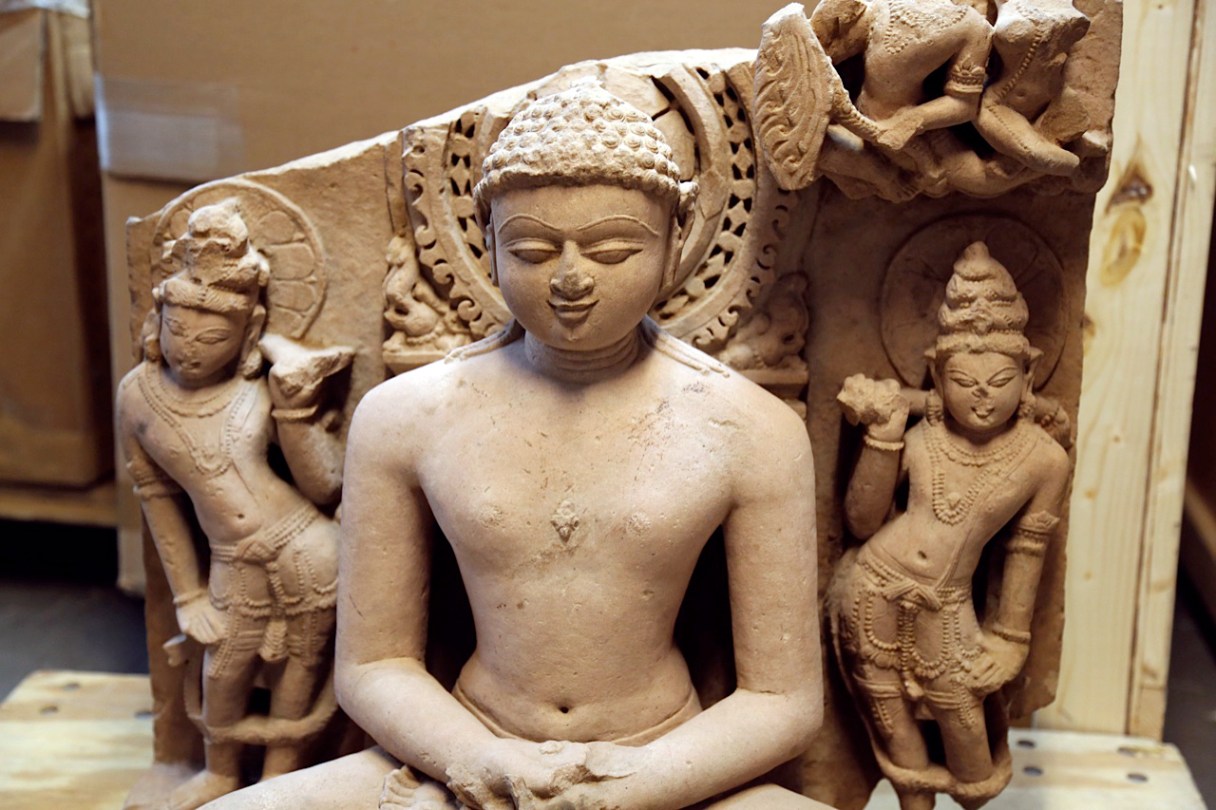
In this photo provided by United States Immigration and Customs Enforcement, an Indian statue believed to be from the 8th and 10th centuries A.D. that authorities say was stolen and smuggled out of India is shown. The statue is one of two that were seized from Christies Auction House in New York on Friday, March 11, 2016. The antiquities were to be part of an auction on the week of March 14, entitled "The Lahiri Collection: Indian and Himalayan Art, Ancient and Modern." Christie's said in a statement it was working with authorities and would never knowingly offer a stolen work of art. (United States Immigration and Customs Enforcement via AP)

NEW YORK (AP) – Two Indian statues that are more than 1,000 years old were seized Friday from Christie’s auction house after investigators discovered they had been smuggled out of the country, eventually landing in New York.

The antiquities were to be part of an auction next week called “The Lahiri Collection: Indian and Himalayan Art, Ancient and Modern.”

Both are made from sandstone. One statue called “Stele of Rishabhanata” depicts a cross-legged teacher flanked by standing attendants. It is valued at about $150,000 and dates from the 10th century. The second is a rare representation of an equestrian deity, Revanta, worth $300,000 from the 8th century.

Christie’s said in a statement that it would never knowingly offer a stolen work of art and it was cooperating with authorities.

“Christie’s devotes considerable resources to investigating the provenance of all objects we offer for sale. This is one of the difficulties the art market faces in vetting antiquities, which is why Christie’s very much values building strong relationships with and between countries of origin, law enforcement, archeologists, and the collecting community,” the statement read.