
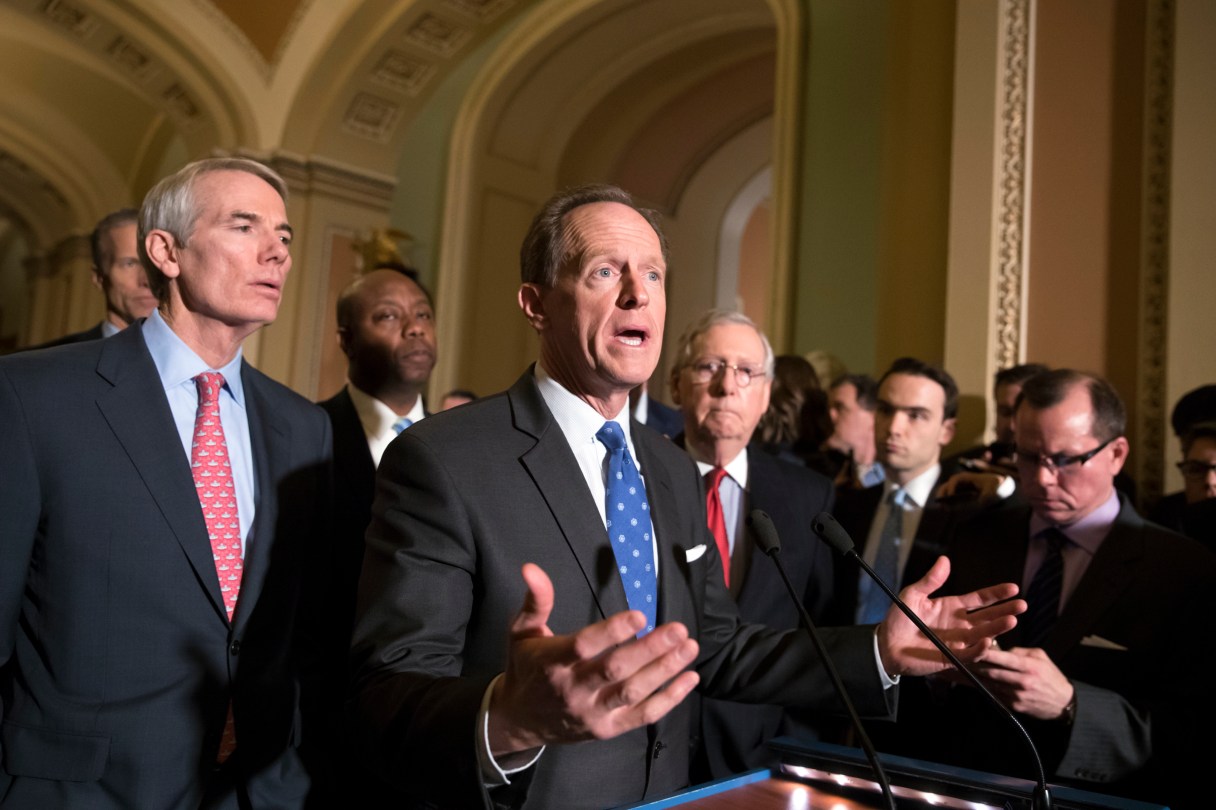
WASHINGTON (AP) – Wisconsin’s Ron Johnson on Wednesday became the first Republican senator to say he opposes his party’s tax bill, signaling potential problems for GOP leaders. Passage of a similar package seemed certain Thursday in the House, where a handful of dissidents conceded they expected to be steamrolled by a GOP frantic to claim its first major legislative victory of the year.
Eager to act before opposition groups could sow doubts among the rank-and-file, Republican leaders were anxious to hand Donald Trump the first crowning bill of his presidency by Christmas. Trump planned to visit House GOP lawmakers Thursday at the Capitol in what seemed likely to be a pep rally, not a rescue mission.
The two chambers’ plans would slash the 35 percent corporate tax rate to 20 percent, trim personal income tax rates and diminish some deductions and credits – while adding nearly $1.5 trillion to the coming decade’s federal deficits. Republicans promised tax breaks for millions of families and companies left with more money to produce more jobs.
“It represents a bold path forward that will allow us as a nation to break out of the slow-growth status quo once and for all,” said House Ways and Means Committee Chairman Kevin Brady, R-Texas, as his chamber debated the bill.
Democrats said the measures would bestow the bulk of their benefits on higher earners and corporations. In the Senate Finance Committee, they focused their attacks on two provisions designed by Republicans to save money.