
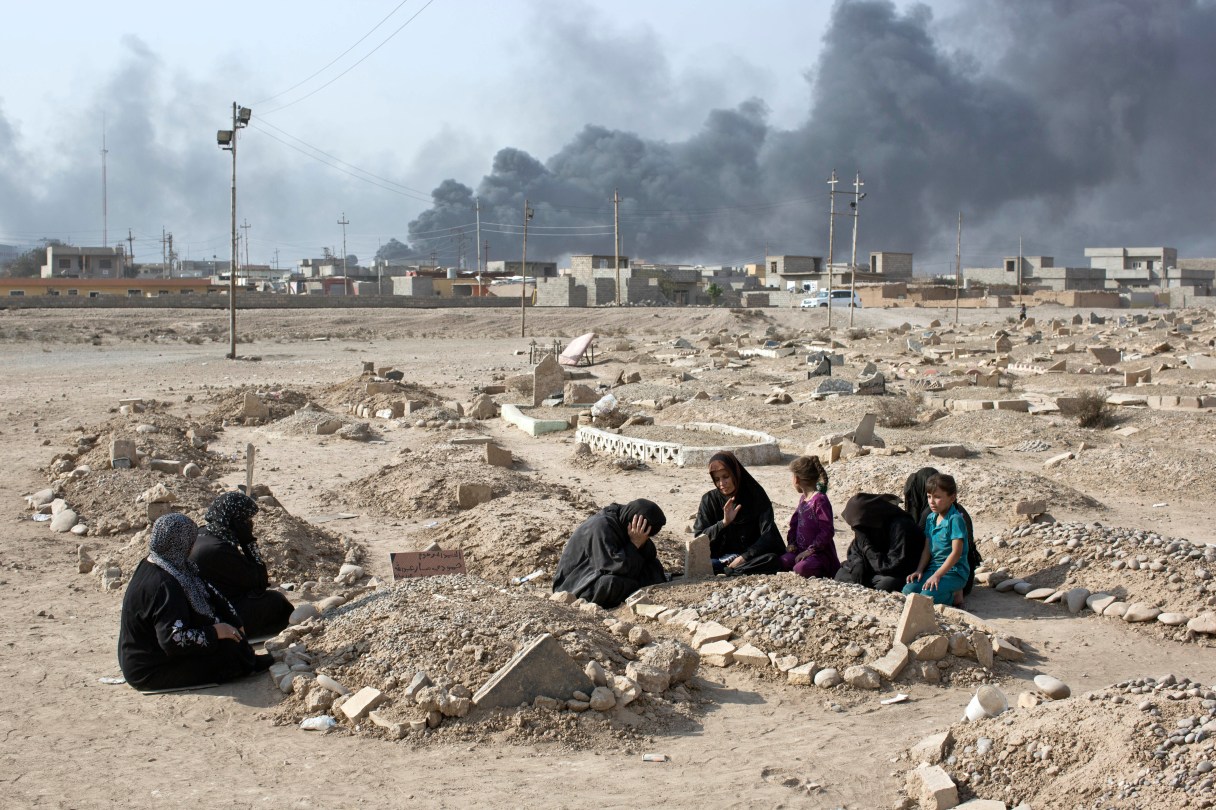
QAYARA, Iraq (AP) – On the main shopping street of the town of Qayara, murals put up by the Islamic State group that told people how to dress and behave have been hastily painted over. New signs touting nationalism and unity now line a main highway since Iraqi forces drove the extremists from the Tigris River Valley town in August.
Deeper inside Qayara, however, fresh graffiti has appeared on some streets, revealing bitterness, anger and lasting fissures among the population.
“Blood for blood,” reads the Arabic script spray-painted outside a destroyed home on the town’s northern edge. Neighbors said the house belonged to a man who joined IS when the group first rose to power in 2014. Slang and obscenities against the owner also are written on a partially destroyed garden wall.
When Qayara was retaken by Iraqi security forces, it was hailed as an early triumph over the extremists as the country prepared for the long-awaited offensive to liberate the second-largest city Mosul that began Oct. 17.
But for some residents, the ouster of IS doesn’t feel like victory.