
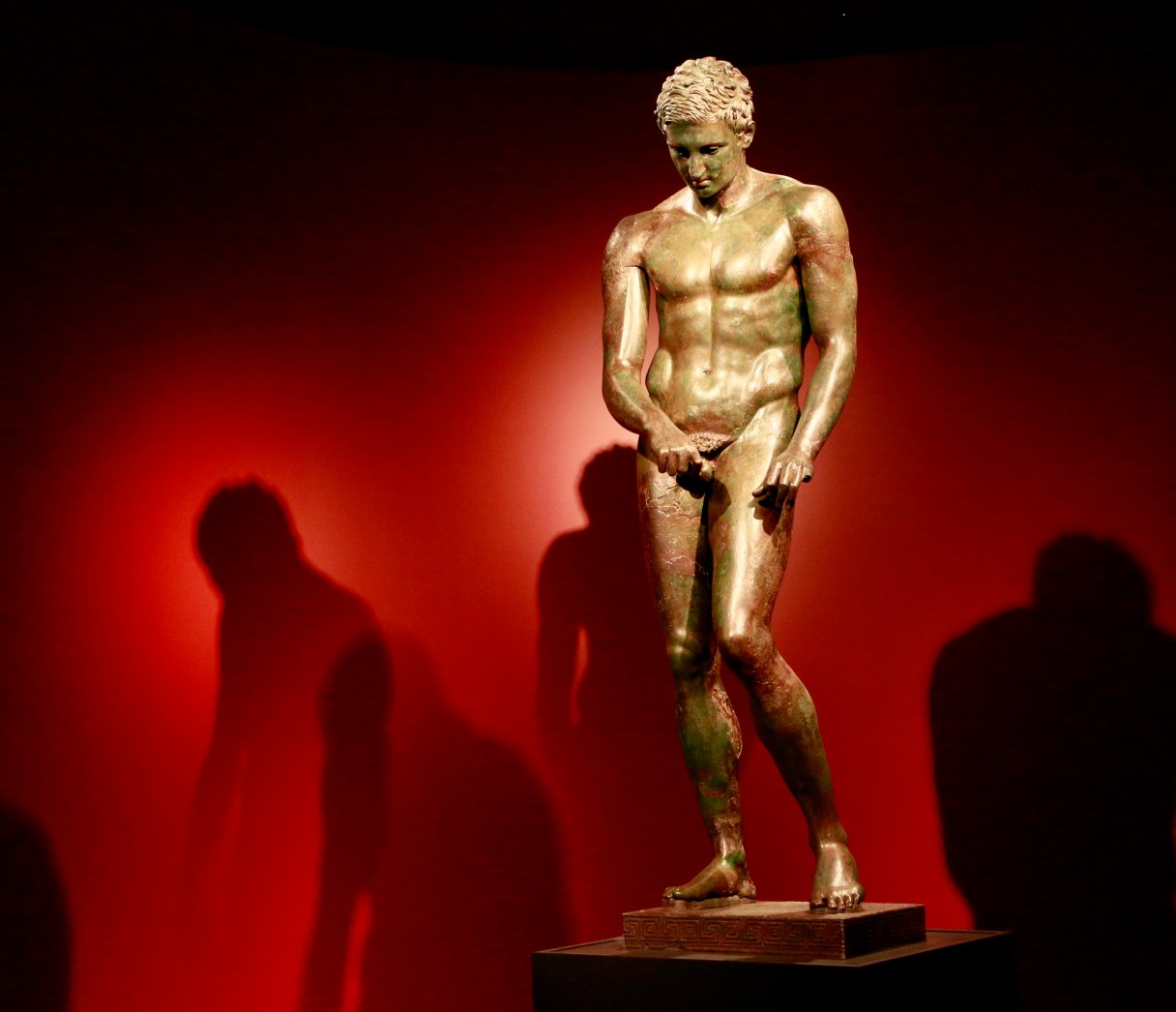
LOS ANGELES (AP) – It’s almost as if the dozens of exquisitely detailed, often perfectly intact bronze sculptures on display at the J. Paul Getty Museum disappeared into an ancient witness-protection program – and decided to stay there for thousands of years.
“Power and Pathos: Bronze Sculpture of the Hellenistic World,” which opened at the museum Tuesday, brings together more than 50 bronzes from the Hellenistic period that extended from about 323 to 31 B.C.
Many of them, like the life-size figure of an exhausted boxer, his hands still bandaged from a match, brow cut and bruised, are stunning in their detail. So is the “The Medici Riccardi Horse,” a horse’s head complete with flaring nostrils and a detailed mane. “Sleeping Eros” shows an infant sprawled out sound asleep on a pedestal. One arm is draped across the child’s chest, his tousled hair in gentle repose.
Perhaps even more stunning, however, is the fact that any of these things survived.
Thousands of such beautifully detailed bronzes were created during the Hellenistic Age. Larger works were assembled piece-by-piece and welded together by artisans working in almost assembly line fashion and displayed in both public places and the homes of the well to do.