
Tuesday, November 3, 2026Nov 3

This story is free to read.

Ebola lapses persisted for days at Dallas hospital

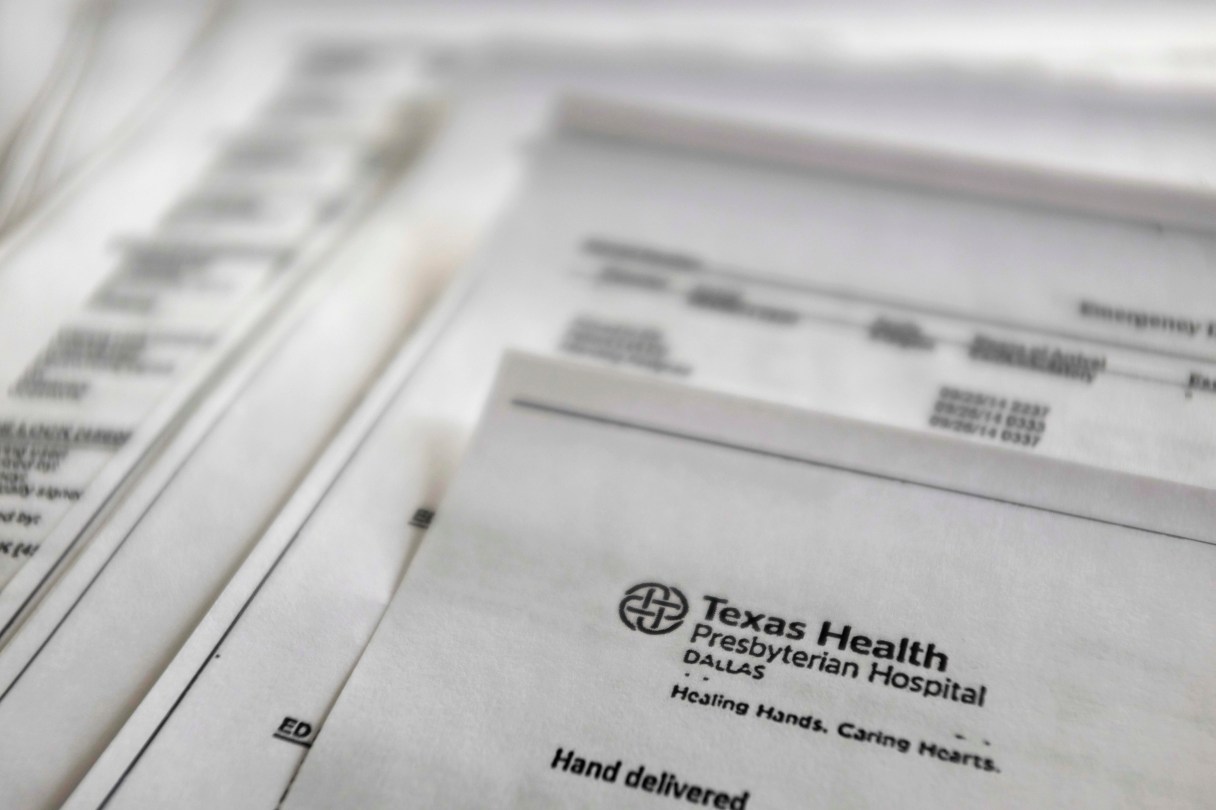
FILE - This Friday, Oct. 10, 2014, file photo, shows a copy of Thomas Eric Duncan's medical records from Texas Health Presbyterian Hospital, provided by Duncan’s family to The Associated Press. Duncan's records show that for days after he was admitted for Ebola, his caregivers were vulnerable to the deadly virus. (AP Photo/Kiichiro Sato, File)
FILE - This Friday, Oct. 10, 2014, file photo, shows a copy of Thomas Eric Duncan's medical records from Texas Health Presbyterian Hospital, provided by Duncan’s family to The Associated Press. Duncan's records show that for days after he was admitted for Ebola, his caregivers were vulnerable to the deadly virus. (AP Photo/Kiichiro Sato, File) FILE - This Friday, Oct. 10, 2014, file photo, shows a copy of Thomas Eric Duncan's medical records from Texas Health Presbyterian Hospital, provided by Duncan’s family to The Associated Press. Duncan's records show that for days after he was admitted for Ebola, his caregivers were vulnerable to the deadly virus. (AP Photo/Kiichiro Sato, File)

DALLAS (AP) – Just minutes after Thomas Eric Duncan arrived for a second time at the emergency room, the word was on his chart: “Ebola.”

But despite all the warnings that the deadly virus could arrive unannounced at an American hospital, medical records show that for days after the admission, his caregivers were vulnerable.

The Centers for Disease Control and Prevention has pointed to lapses by Texas Health Presbyterian Hospital in those initial days. And Duncan’s medical records show heightened protective measures as his illness advanced. But either because of a lag in implementing those steps or because they were still insufficient, the records indicate scores of hospital staffers were put at risk.

Dr. Joseph McCormick of the University of Texas School of Public Health says the hospital’s protective protocol was “insufficient.”