
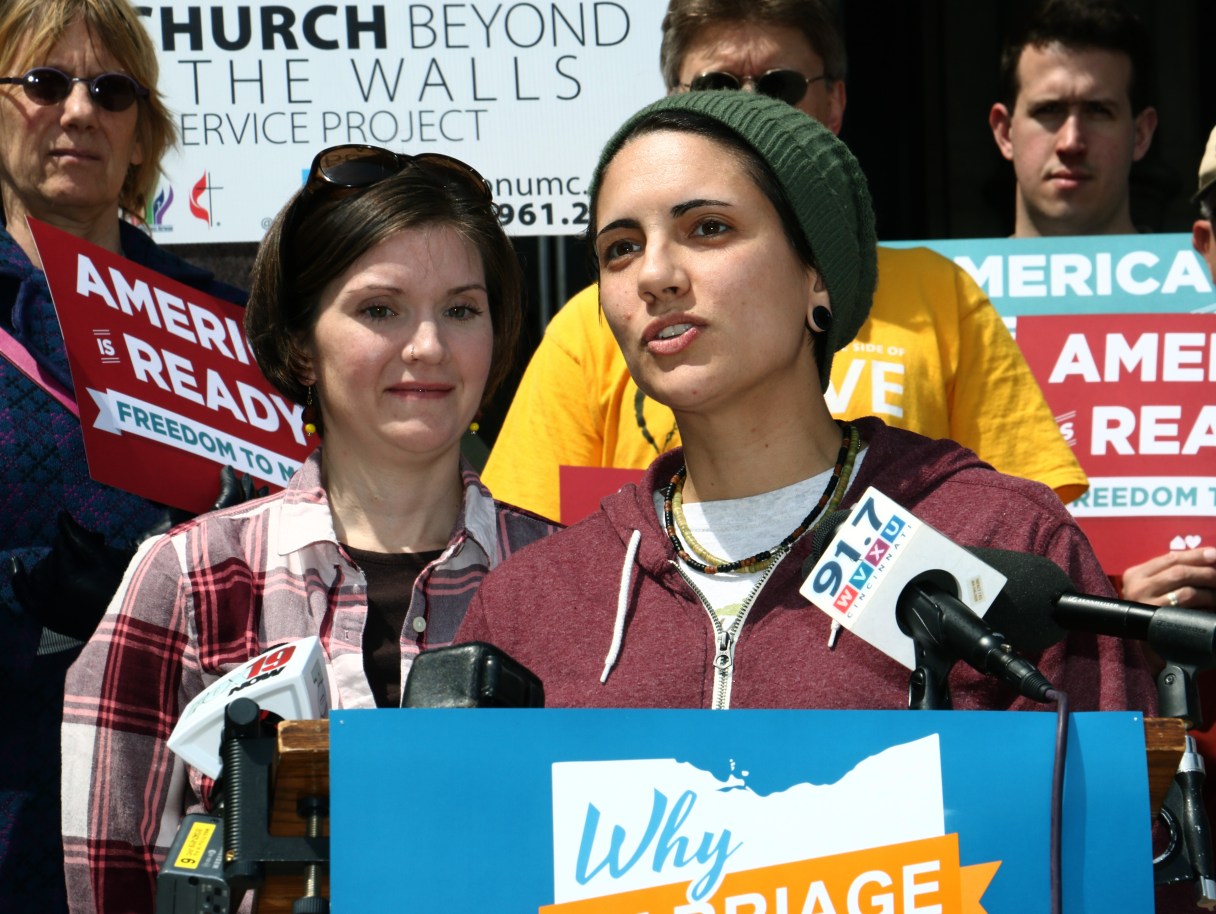
CINCINNATI (AP) – While Ohio has traditionally been a national bellwether politically, the state now finds itself in the minority on same-sex marriage heading into Tuesday’s U.S. Supreme Court oral arguments.
When Ohio voters handily passed a state ban in 2004, only Massachusetts allowed such marriages. Today, three dozen states and the District of Columbia do.
Al Gerhardstein, a Cincinnati civil rights attorney who filed challenges to Ohio’s ban that are now before the Supreme Court, compared the state’s position to those of the 16 states where interracial marriage was still illegal in 1967. That’s when the high court outlawed race-based marriage bans in a Virginia case.
“It’s a comparable time in our nation’s history,” he said. “Now Ohio is one (of the remaining states with bans).”
An Ohio State University legal expert says that the cultural and judicial landscape has changed dramatically since November 2004, when Ohio voters were among those in 11 states passing same-sex marriage bans. Polls have shown growing acceptance among Americans of same-sex marriage, and same-sex marriage advocates won a long series of court victories before the Cincinnati-based 6th U.S. Circuit Court of Appeals created a judicial split with a 2-1 ruling last November that upheld bans in Ohio, Kentucky, Michigan and Tennessee.