
Monday, November 16, 2026Nov 16

Review: Minnesota handled football suspensions properly

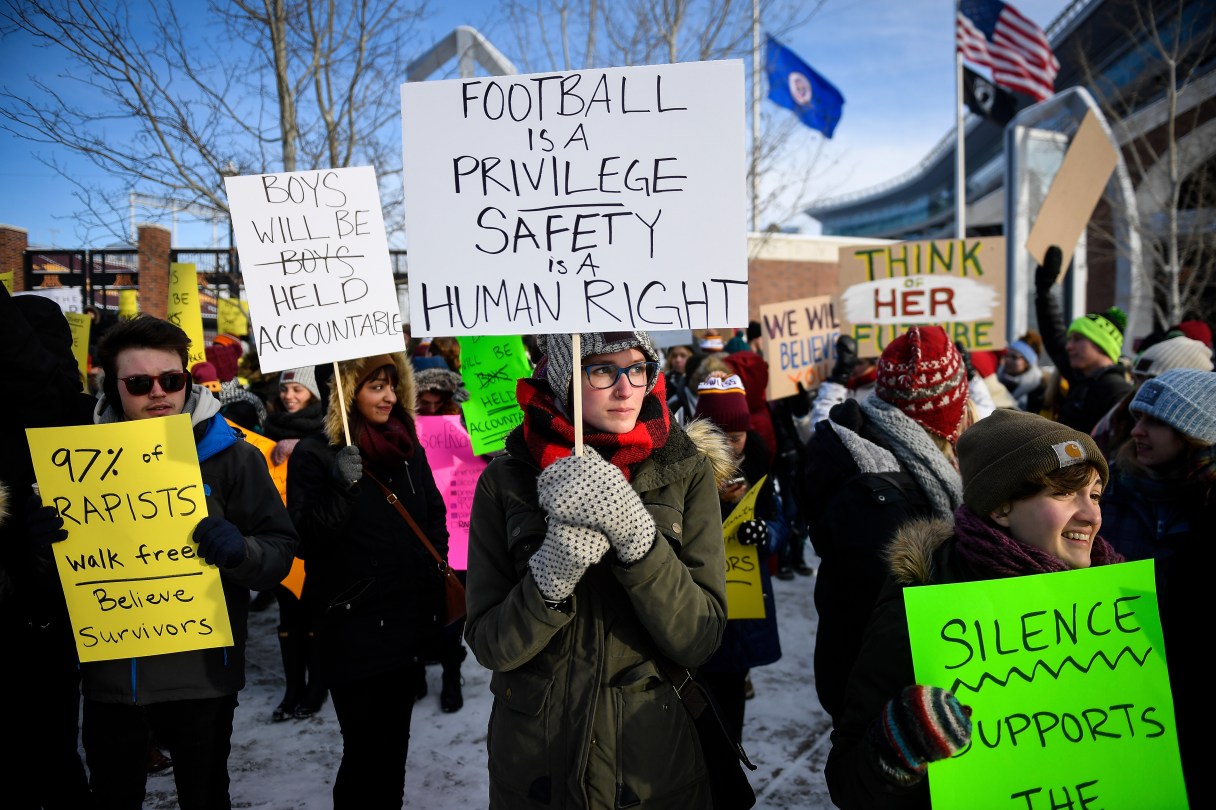
FILE - In this Dec. 17, 2016, file photo, Jenna Bergman, center, a 2013 graduate of the University of Minnesota, and others participate in a rally to support the victim of an alleged sexual assault that led to the suspension of 10 football players, outside TCF Bank Stadium at the University of Minnesota in Minneapolis, Minn. An outside review released Wednesday, Aug. 16, 2017, says the University of Minnesota followed law and policy properly when it suspended 10 football players last fall following an accusation of sexual assault. (Aaron Lavinsky/Star Tribune via AP File)

MINNEAPOLIS (AP) – The University of Minnesota followed law and policy properly when it suspended 10 football players last fall following an accusation of sexual assault, an outside review found.

The review released Wednesday blamed “weak leadership” by the coaching staff for a threat by remaining players to boycott the Holiday Bowl. The Dorsey and Whitney law firm’s review also said administrators and regents could have done a better job managing the threatened boycott.

A student accused several players of sexually assaulting her at a party last September. Prosecutors declined to file criminal charges, citing insufficient evidence. But the university suspended the players following an internal investigation.

Influence by unnamed outsiders on both the football team and coaching staff also “helped foster a hostile atmosphere where meaningful dialogue was difficult,” the report concluded.

Then-head coach Tracy Claeys backed the boycott, but players ultimately decided to play and beat Washington State 17-12. Claeys was fired a week later.