
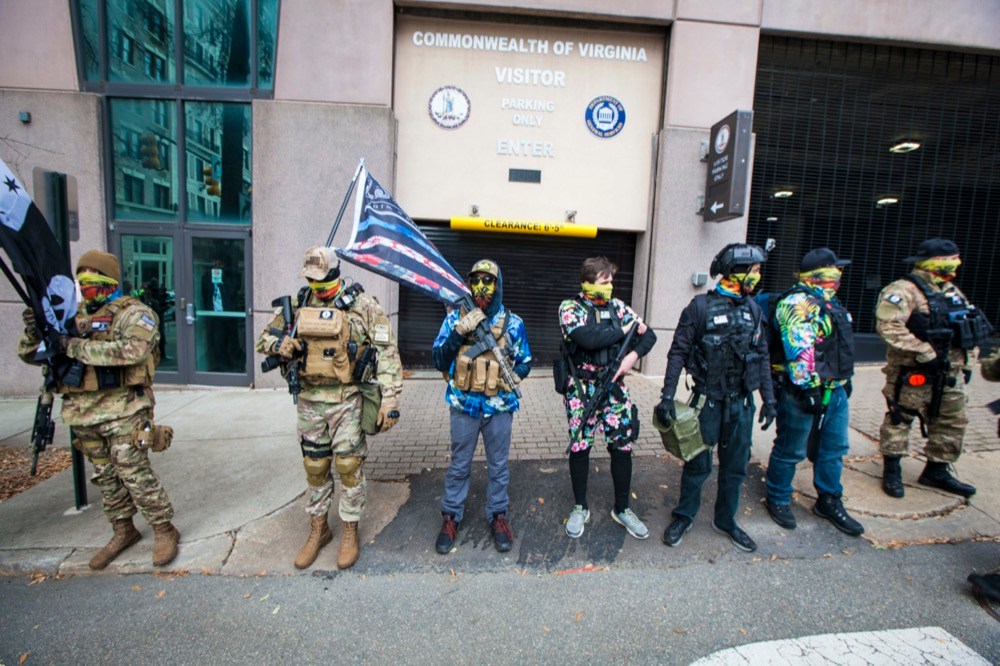
HONOLULU (AP) – People following a violent movement that promotes a second U.S. civil war or the breakdown of modern society have been showing up at recent protests across the nation armed and wearing tactical gear. But the anti-government “boogaloo” movement has adopted an unlikely public and online symbol: the so-called Hawaiian shirt.
The often brightly colored, island-themed garment, known in Hawaii as an aloha shirt, is to people across the world synonymous with a laid back lifestyle. But in Hawaii, it has an association with aloha – the Native Hawaiian spirit of love, compassion and mercy.
The shirts are being worn by militant followers of the boogaloo philosophy – the antithesis of aloha – at demonstrations about coronavirus lockdowns, racial injustice and, most recently, the presidential election.
Boogaloo is a loosely affiliated far-right movement that includes a variety of extremist factions and political views. The name is a reference to a slang term for a sequel — in this case, a second civil war.
“You have everyone from neo-Nazis and white nationalists to libertarians,” said Cassie Miller, a senior research analyst at the Southern Poverty Law Center, which tracks hate groups in the U.S. “And while ideologically there might be some differentiation among people who identify with the movement, what unites them is their interest in having complete access to firearms and the belief that the country is heading towards a civil war.”