
Friday, October 30, 2026Oct 30

This story is free to read.

Paralyzed man uses his thoughts to control a robotic arm

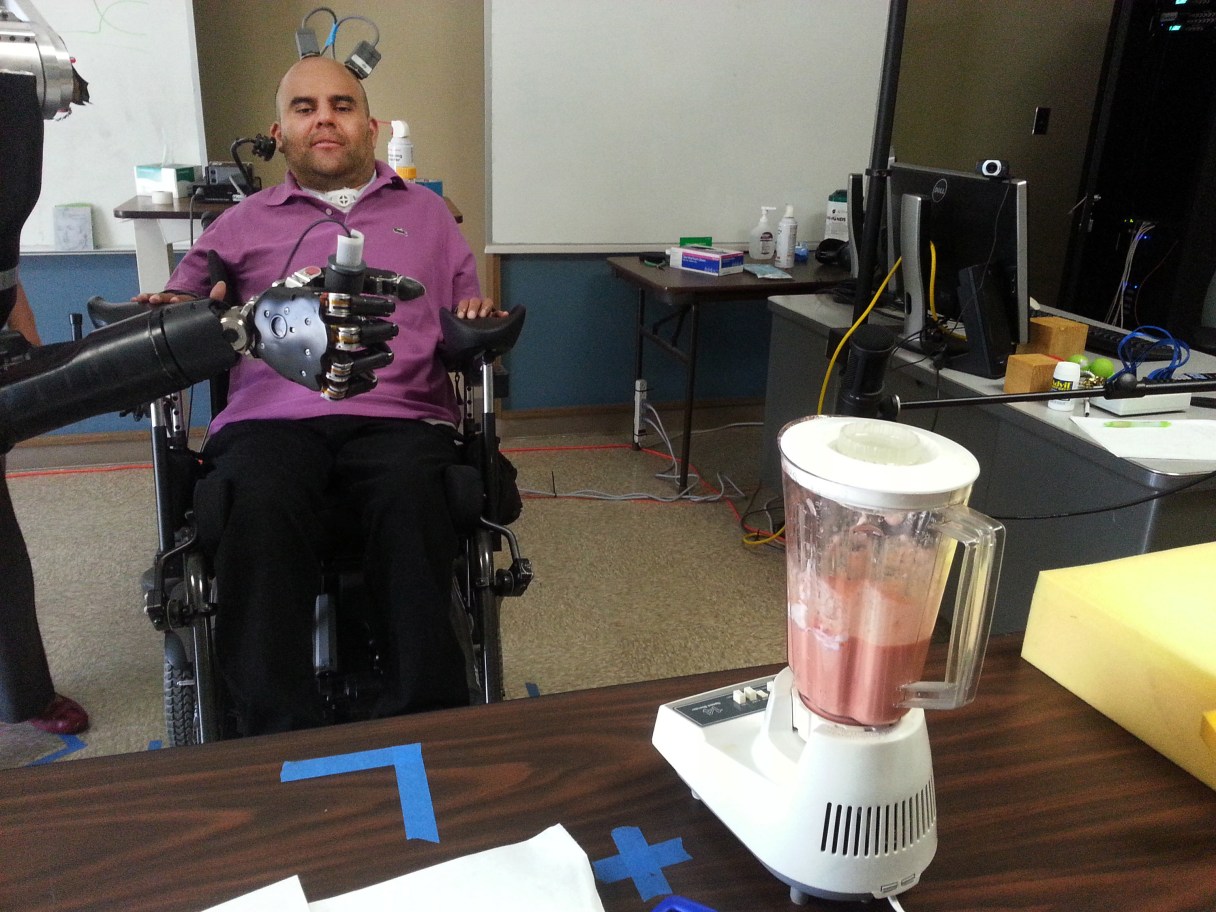
In this March 28, 2014 photo provided by the California Institute of Technology, Erik Sorto uses his mind to control a robotic arm to make a smoothie in Pasadena, Calif. Two years earlier, doctors in California implanted a pair of tiny chips in his brain that decoded his thoughts to move the free-standing robotic arm. The 34-year-old has been working with researchers and occupational therapists to practice and fine-tune his movements. (Spencer Kellis/Caltech via AP)
In this March 28, 2014 photo provided by the California Institute of Technology, Erik Sorto uses his mind to control a robotic arm to make a smoothie in Pasadena, Calif. Two years earlier, doctors in California implanted a pair of tiny chips in his brain that decoded his thoughts to move the free-standing robotic arm. The 34-year-old has been working with researchers and occupational therapists to practice and fine-tune his movements. (Spencer Kellis/Caltech via AP) In this March 28, 2014 photo provided by the California Institute of Technology, Erik Sorto uses his mind to control a robotic arm to make a smoothie in Pasadena, Calif. Two years earlier, doctors in California implanted a pair of tiny chips in his brain that decoded his thoughts to move the free-standing robotic arm. The 34-year-old has been working with researchers and occupational therapists to practice and fine-tune his movements. (Spencer Kellis/Caltech via AP)

LOS ANGELES (AP) – A man paralyzed by gunshot more than a decade ago can shake hands, drink beer and play “rock, paper, scissors” by controlling a robotic arm with his thoughts, researchers reported.

Two years ago, doctors in California implanted a pair of tiny chips into the brain of Erik Sorto that decoded his thoughts to move the free-standing robotic arm. The 34-year-old has been working with researchers and occupational therapists to practice and fine-tune his movements.

It’s the latest attempt at creating mind-controlled prosthetics to help disabled people gain more independence. In the last decade, several people outfitted with brain implants have used their minds to control a computer cursor or steer prosthetic limbs.

Here are some things to know about the new work, published Thursday by the journal Science:

THE STUDY