
Monday, November 16, 2026Nov 16

Scientists say ‘alien’ fungus threatens European salamanders

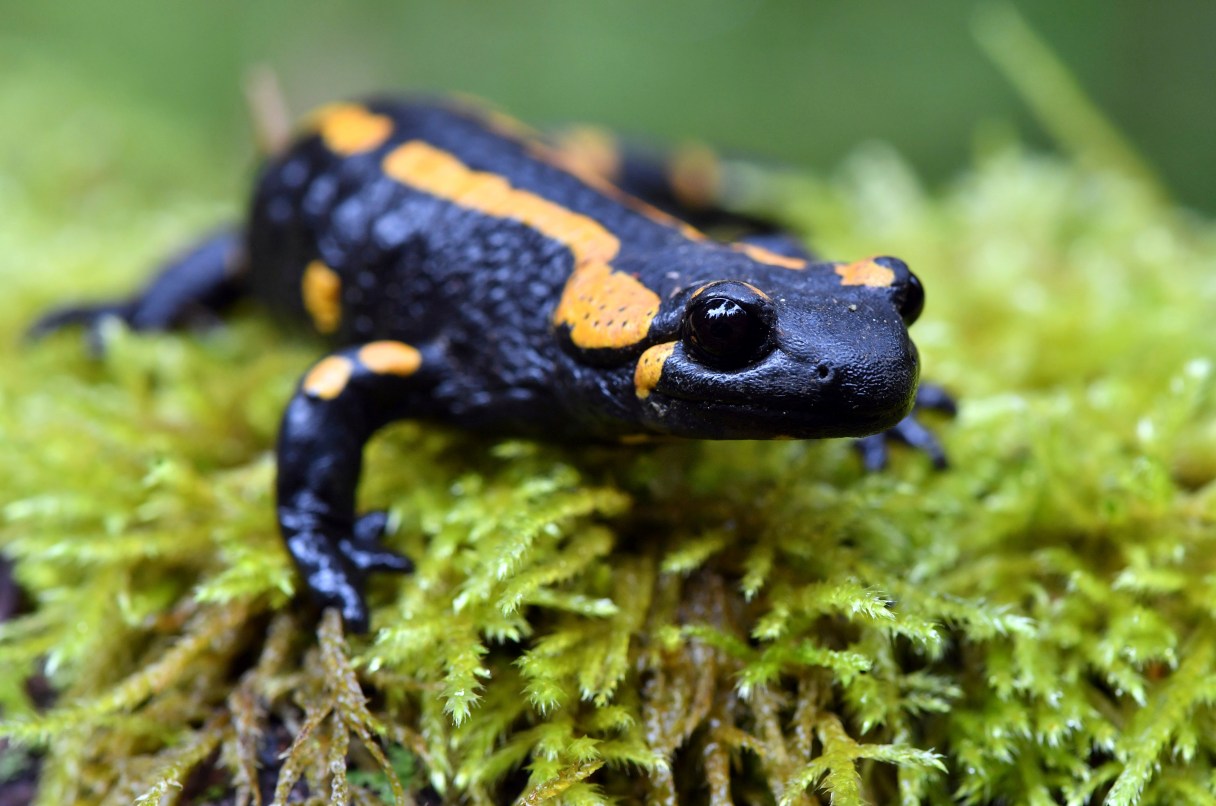
In this Oct. 18, 2016 file photo, a  fire salamander perches on a mossy surface near Oberhof, Germany. Europe’s salamanders could be decimated by an alien invader that has already wreaked havoc in some part of the continent, scientists say. Researchers who examined the impact of a non-native fungus on fire salamanders in Belgium and the Netherlands found that it is lethal to the amphibians and almost impossible to eradicate. (Martin Schutt/dpa via AP,file)
In this Oct. 18, 2016 file photo, a fire salamander perches on a mossy surface near Oberhof, Germany. Europe’s salamanders could be decimated by an alien invader that has already wreaked havoc in some part of the continent, scientists say. Researchers who examined the impact of a non-native fungus on fire salamanders in Belgium and the Netherlands found that it is lethal to the amphibians and almost impossible to eradicate. (Martin Schutt/dpa via AP,file)

BERLIN (AP) – Europe’s salamanders could be decimated by a flesh-eating alien species that has already wreaked havoc in some parts of the continent, scientists said in a study published Wednesday.

Researchers who examined the impact of the alien invader – a fungus native to Asia – on fire salamanders in Belgium and the Netherlands found it to be lethal to the amphibians and almost impossible to eradicate.

The study published in the journal Nature Research provides a drastic warning to North America, where the fungus hasn’t yet taken hold.

“Prevention of introduction is the most important control measure available against the disease,” said study co-author An Martel, a veterinarian at the University of Ghent, Belgium, who specializes in wildlife diseases.

The B. salamandrivorans fungus, which likely was imported to Europe by the pet trade – causes skin ulcers, effectively eating the salamander’s skin and making it susceptible to secondary bacterial infections.