
Thursday, November 12, 2026Nov 12

Expert: can’t say if bones in Florence are Mona Lisa model

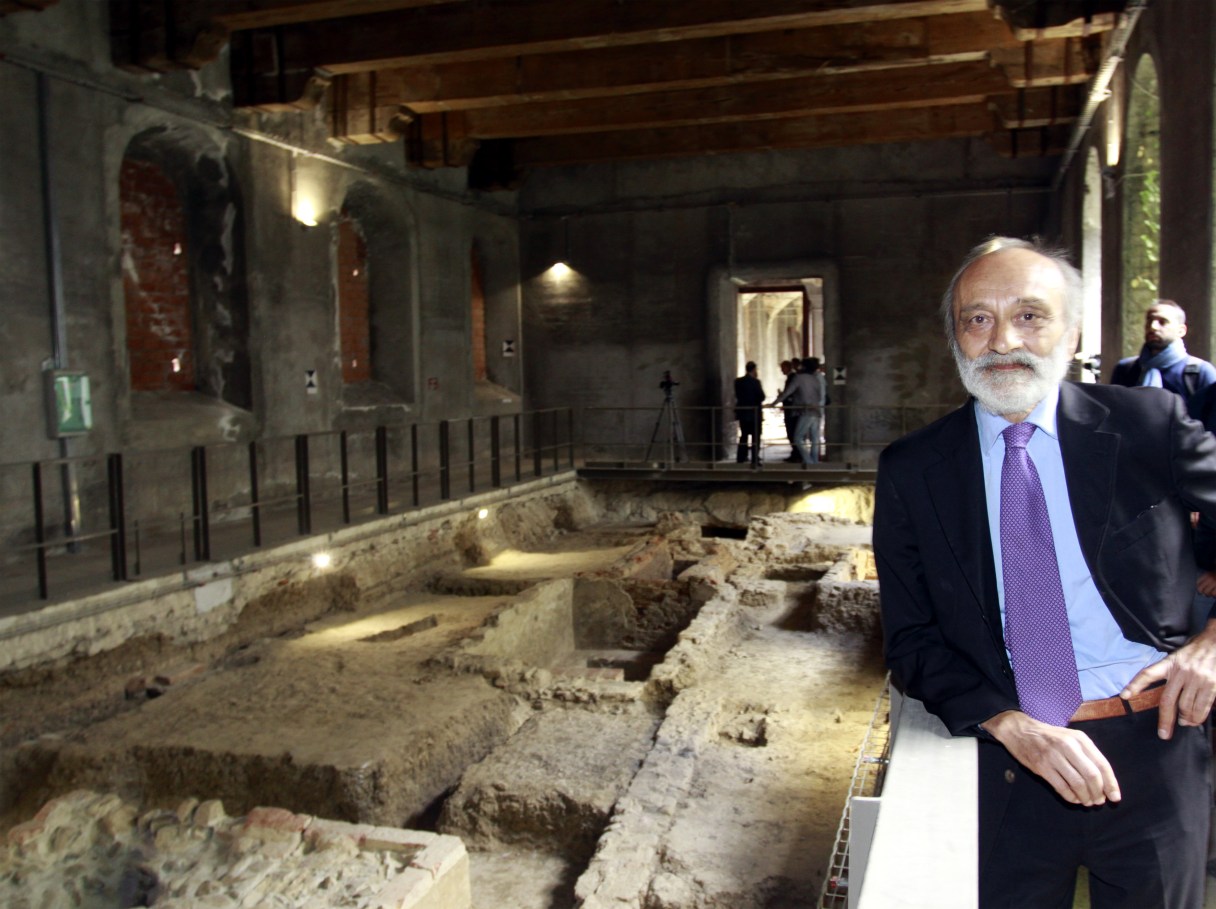
Head researcher Silvano Vinceti pose for photographers in front of excavation site inside the Sant'Orsola monastery in Florence, Italy, Thursday, Sept. 24, 2015, where archeologists found bones they hoped belonged to Lisa Gherardini, the woman some believe posed for the famous Leonardo da Vinci’s Mona Lisa painting.  Vinceti said during a press conference he can't say with certainty whether the bones dug up in the monastery are those of the Renaissance-era noblewoman. (AP Photo/Francesco Bellini)
Head researcher Silvano Vinceti pose for photographers in front of excavation site inside the Sant'Orsola monastery in Florence, Italy, Thursday, Sept. 24, 2015, where archeologists found bones they hoped belonged to Lisa Gherardini, the woman some believe posed for the famous Leonardo da Vinci’s Mona Lisa painting. Vinceti said during a press conference he can't say with certainty whether the bones dug up in the monastery are those of the Renaissance-era noblewoman. (AP Photo/Francesco Bellini) Head researcher Silvano Vinceti pose for photographers in front of excavation site inside the Sant'Orsola monastery in Florence, Italy, Thursday, Sept. 24, 2015, where archeologists found bones they hoped belonged to Lisa Gherardini, the woman some believe posed for the famous Leonardo da Vinci’s Mona Lisa painting. Vinceti said during a press conference he can't say with certainty whether the bones dug up in the monastery are those of the Renaissance-era noblewoman. (AP Photo/Francesco Bellini)

FLORENCE, Italy (AP) – Scientific testing of bone fragments from a Florence church grave could not determine whether they are from the body of a Renaissance-era woman some believe was the model for Leonardo da Vinci’s “Mona Lisa,” researchers said Thursday.

Perhaps as enigmatic as that Mona Lisa smile, the question of who might have been the model has intrigued art lovers for centuries.

Art historians differ on the model’s identity. Even if bone testing had determined that the remains were that of Lisa Gherardini, the wife of rich silk merchant Francesco del Giocondo, it wouldn’t have answered the intriguing question of who posed for Leonardo.

Some say he used a male model; still others theorize the artist did a kind of self-portrait in disguise or used several models.

Researchers told reporters in Florence that carbon-14 testing of one of the fragments indicated the remains were compatible with the period. Gherardini died at age 63 in 1542, and the researchers said historical documents indicate she was buried in a Florence convent.