
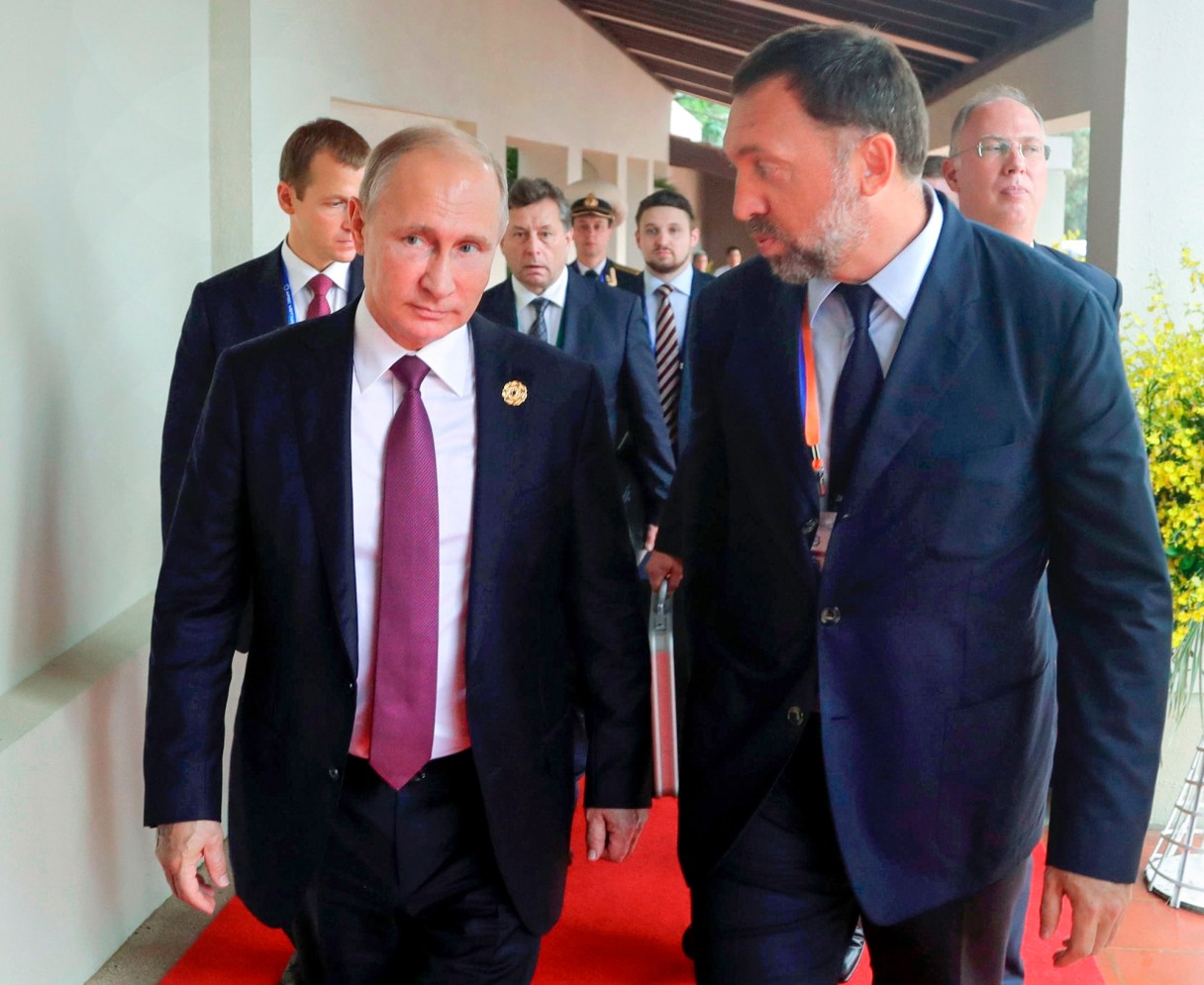
Right now Vladimir Putin is losing the battle for Ukraine. His maximal goals have been abandoned (for now), his troops around Kyiv are in retreat, his imperial dreams are being disavowed. He has more modest goals to fall back on, resources and territories that he may be able to hold – but a month of Ukrainian valor and Western support have dealt his ambitions a devastating blow.
Putin is not losing, however, in the battle for Russia. From the start of hostilities, the Western answer to his maximalist ambitions – not an official goal, but a hope that informs policy and punditry and slips out of Joe Biden’s lips in excited moments – has been regime change in the Kremlin, a failed war toppling Putin and bringing a more reasonable government to power.
This was always a thin hope, but despite military quagmire and unprecedented economic sanctions, it appears even thinner now. In polling and anecdote alike, Putin appears to be consolidating support from the Russian public, rallying a nation that feels itself to be as he portrays it – unjustly surrounded and besieged.
His approval ratings, according to Russia’s main independent pollster, look like George W. Bush’s after 9/11. His inner circle has always been unlikely to break with him, for reasons sketched by Anatol Lieven in The Financial Times a few weeks ago: Its members mostly come from the same background, share the same geopolitical assumptions, and are far more likely “to fight on ruthlessly for a long time” than to suddenly turn against their leader. But even in the wider circle of Russian elites, the war so far has reportedly generated more anti-Western solidarity than division.
“Putin’s dream of a consolidation among the Russian elite has come true,” journalist Farida Rustamova reported from her recent conversations. “These people understand that their lives are now tied only to Russia, and that that’s where they’ll need to build them.”