
Sunday, November 15, 2026Nov 15

A look at Syria’s Aleppo and the UN truce plan for the city

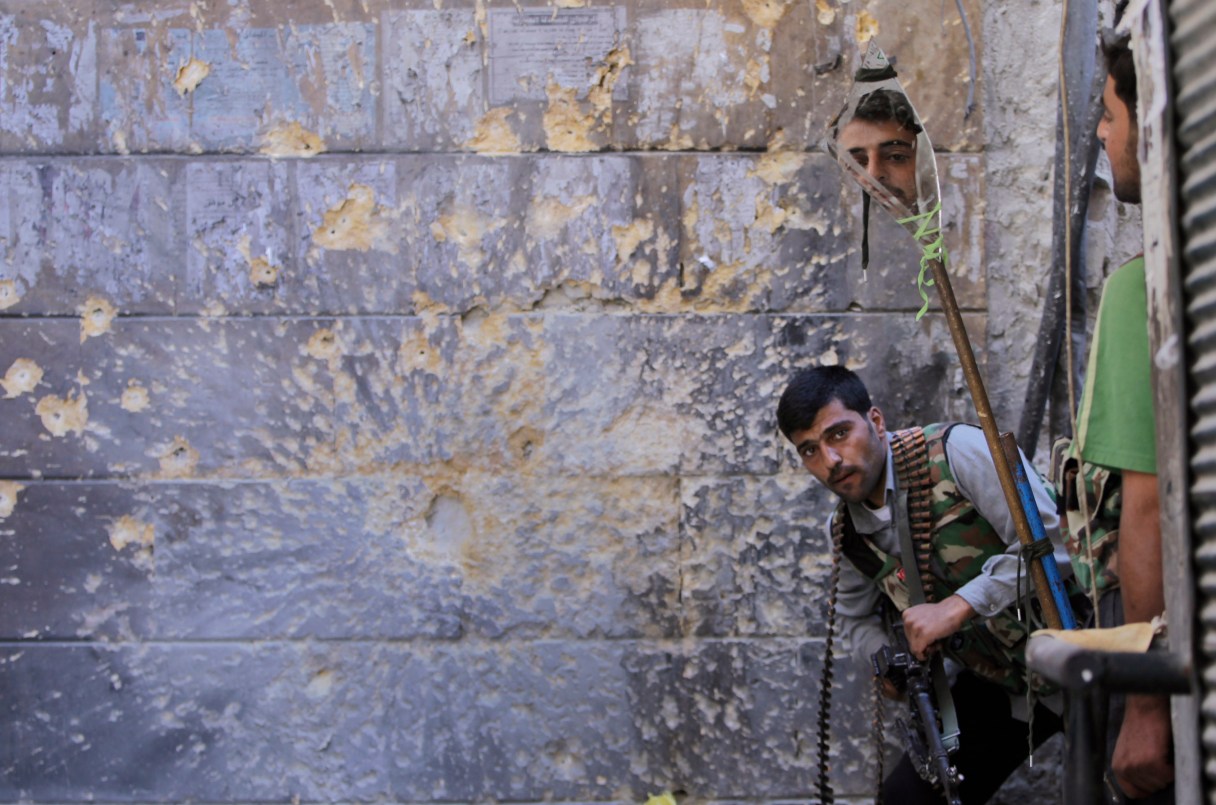
FILE - In this Monday Sept. 24, 2012 file photo, a Free Syrian Army fighter, right, looks through a mirror which helps him see Syrian troops from the other side, as he takes his position with his comrade during fighting, at the old city of Aleppo city, Syria. Nearly four years since it began, Syria’s civil war has defied all diplomatic attempts to broker a peaceful resolution _ and the fierce fighting still goes on daily, though it has taken a back seat to the rampage in the region by Islamic State militants. (AP Photo/Hussein Malla, File)

BEIRUT (AP) – Nearly four years since it began, Syria’s civil war has defied all diplomatic attempts to broker a peaceful resolution. While the conflict has recently been overshadowed by the U.S.-led international battle against the Islamic State extremist group, Syria’s war has continued its devastating march, with the death toll now at least 220,000 people.

The U.N. envoy to Syria, Staffan de Mistura, offered a small ray of hope this week, however, when he told the Security Council the Syrian government has agreed to suspend airstrikes and artillery shelling of the divided city of Aleppo for six weeks as part of a U.N.-proposed “freeze” in hostilities there.

Here are answers to a few key questions about the city and the prospects for a cease-fire in Aleppo:

– WHY DOES ALEPPO MATTER?

The city holds strategic as well as symbolic value. Before the war, it was Syria’s largest city as well as its commercial capital, and was home to a population that represented the mosaic of faiths and ethnicities that make the country so diverse: Arab Sunni and Shiite Muslims, Kurds, Alawites and Christians of various stripes – Armenians, Assyrian, Orthodox, Catholic.