
Monday, November 16, 2026Nov 16

‘Take all their excuses away’: Hard cases in heroin fight

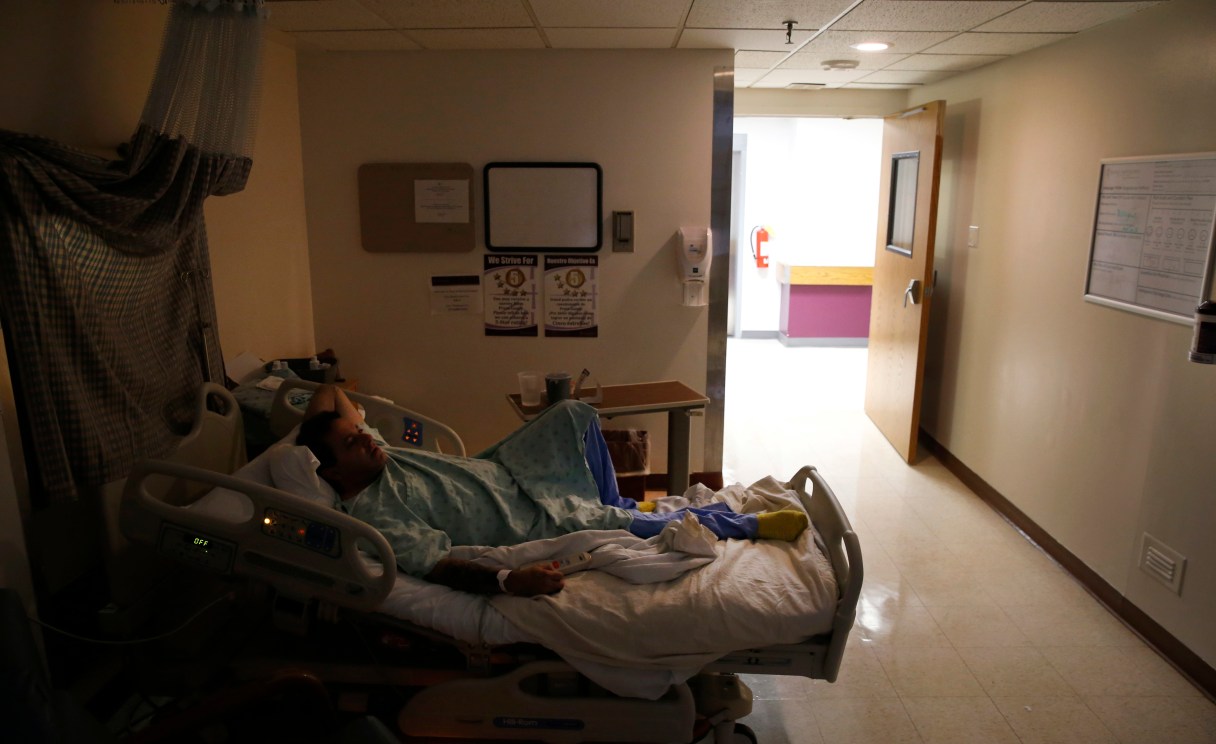
In this Tuesday, Oct. 24, 2017, photo, Richard Rivera lies in his Saint Anthony Hospital bed a few days after arriving sick from heroin withdrawal in Chicago. His public health insurance would cover three days in the hospital's new medical detox unit. Hours later, just moments from going to a sober-living facility, Rivera complained of chest pains that took him away from the watchful eye of the medical detox staff. (AP Photo/Charles Rex Arbogast)

CHICAGO (AP) – The van was coming for Richard Rivera, but it was taking a long time. He waited inside the entrance of Saint Anthony Hospital where he had spent the past three days getting off heroin. His next stop: a sober-living facility.

As his addiction counselor, DeValle Williams, kept a silent watch, the 49-year-old Rivera griped about the people who found him a bed 22 miles away, complete with meals, job training and gym access.

“They couldn’t find me a place closer?” he grumbled.

Would Rivera get in the van, Williams wondered. Or would he walk away?

Long before President Donald Trump declared the opioid crisis a national emergency and pledged to “overcome addiction in America,” Williams was fighting in the trenches, where it’s tough to tell victory from defeat. More than 64,000 died of drug overdoses last year in the U.S., most from opioids.