
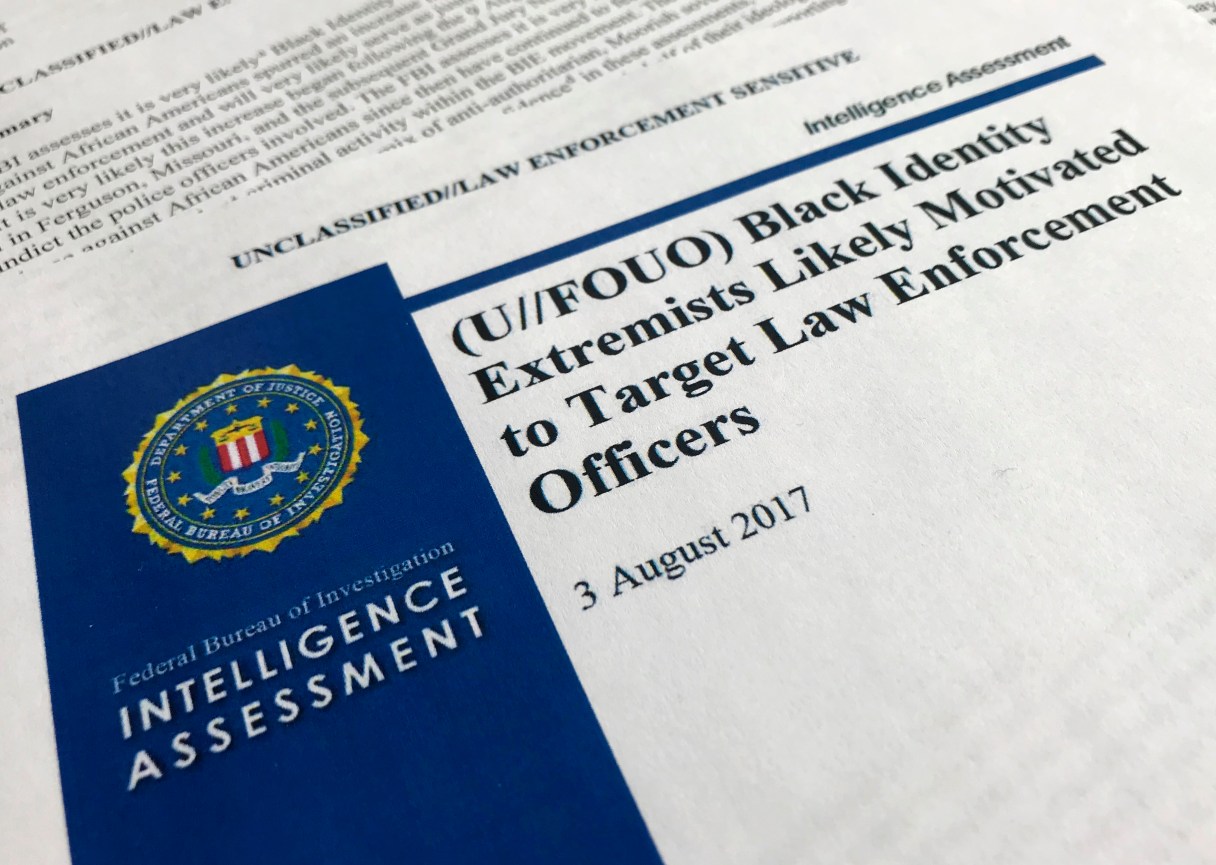
WASHINGTON (AP) – An FBI report on the rise of black “extremists” is stirring fears of a return to practices used during the civil rights movement, when the bureau spied on activist groups without evidence they had broken any laws.
The FBI said it doesn’t target specific groups, and the report is one of many its intelligence analysts produce to make law enforcement aware of what they see as emerging trends. A similar bulletin on white supremacists, for example, came out about the same time.
The 12-page report, issued in August, says “black identity extremists” are increasingly targeting law enforcement after police killings of black men, especially since the shooting of Michael Brown roiled Ferguson, Missouri, in 2014. The report describes cases in which “extremists” had “acted in retaliation for perceived past police brutality incidents.” It warned that such violence was likely to continue.
Black leaders and activists were outraged after Foreign Policy revealed the existence of the report last month. The Congressional Black Caucus, in a letter to FBI Director Christopher Wray, said the report “conflates black political activists with dangerous domestic terrorist organizations” and would further erode the frayed relationship between police and minority communities.
“I have never met a black extremist. I don’t know what the FBI is talking about,” said Chris Phillips, a filmmaker in Ferguson.