
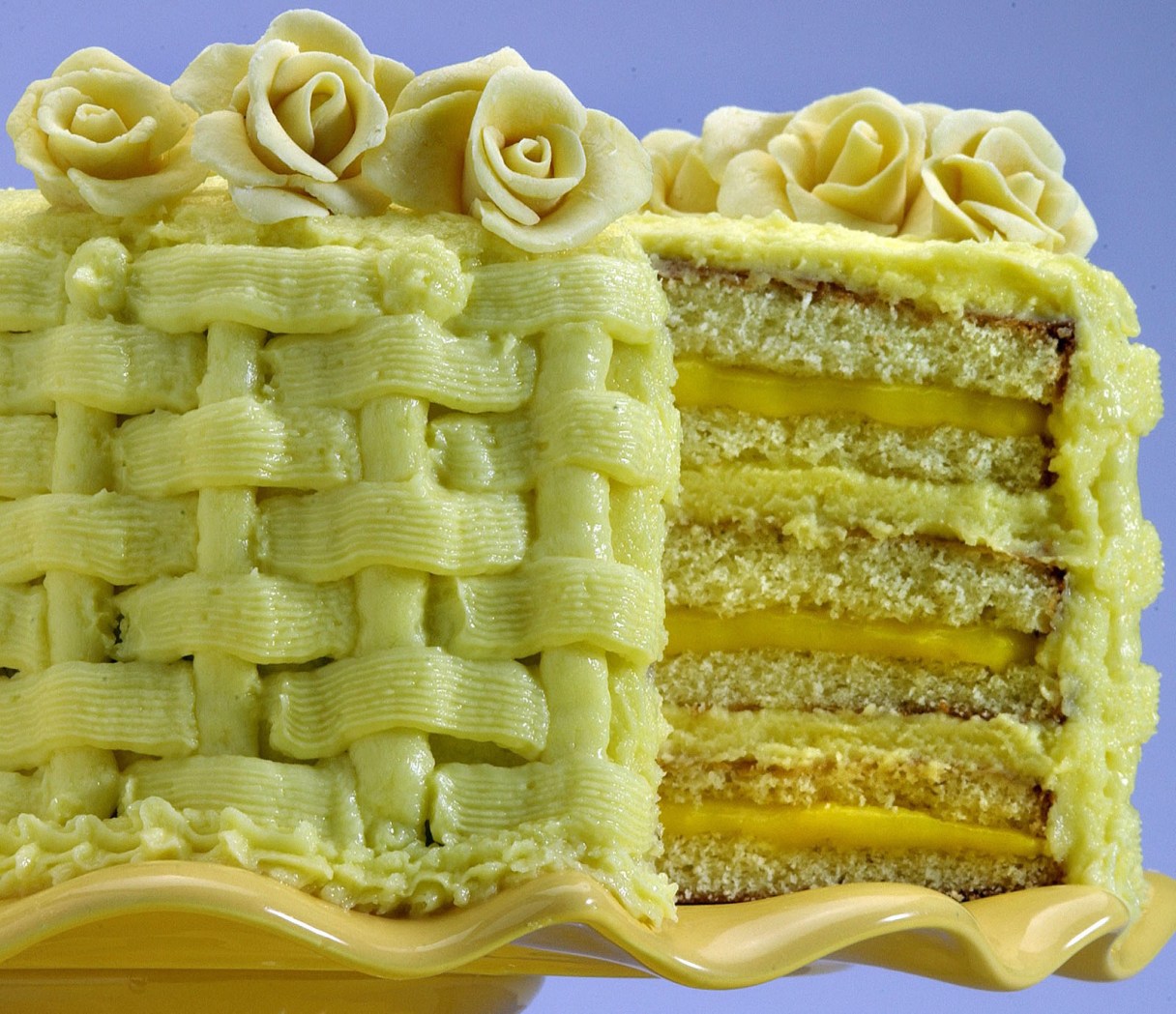
Soups, stews and casseroles are the comfort foods that get us through winter. With the change of season, it’s time to lighten up the fare. Cakes spring to mind.
“You don’t want comfort food this time of year — you want something refreshing,” said Denise Ware, co-owner of Virginia’s Southside Cafe and pastry chef trained at the Culinary Institute of America. “People want lighter-tasting food during warm weather.”
Mrs. Ware’s favorite cakes for spring are lemon cake and coconut cake, the latter of which her mother always made for Easter Sunday.
Here are five tips Mrs. Ware offers for the perfect cake:
1. Always use butter, not shortening or margarine and especially not tub margarine. Butter gives you the best flavor. Shortening has none.
2. Sift the flour, even if the bag says presifted, because you don’t want lumps in the batter. Just put the flour through a sifter. It keeps the texture even.
3. Put the eggs out to come to room temperature. Room-temperature eggs create more volume.
4. Don’t overbeat the batter. Mix it just till smooth.
5. Don’t trust your timer. All ovens are different, so check by touch. When it springs back and doesn’t sink in, it’s ready.
Now, for the icing on the cake, some great recipes for spring baking.
Chocolate Mousse Cake
2 (8-ounce) packages semi-sweet chocolate
6 egg yolks
1/2 cup sugar
1 teaspoon vanilla
3 tablespoons instant coffee
1/2 cup boiling water
6 egg whites
2 pints whipping cream
2 packages lady fingers
1/3 cup rum, optional
Shaved chocolate for garnishing
Melt chocolate squares. Beat yolks and sugar at medium speed. Add vanilla and 3 tablespoons instant coffee dissolved in boiling water. Add melted chocolate, and mix in beaten egg yolks. Beat egg whites until stiff; fold into mixture. Beat 1 pint whipping cream; fold into mixture. Line sides and bottom of a 9-inch springform pan with lady fingers. Sprinkle 1/3 cup rum on lady fingers (optional). Pour mixture in pan. Freeze 2-3 hours or overnight. Remove from pan when ready. Whip second pint of cream; top cake. Garnish with shaved chocolate.
— www.cooks.com
Orange Layer Cake
Leave yourself plenty of time to frost the cake; it works best if filled and then refrigerated before frosting. Remember to zest your oranges before juicing.
For the filling:
2/3 cup sugar
3 tablespoons all-purpose flour
1 cup fresh orange juice (from about 3 large or 4 medium oranges), without pulp
2 large egg yolks
2 tablespoons salted butter
For the cake:
2 1/4 cups all-purpose flour
2 1/2 teaspoons baking powder
1 teaspoon salt
1/3 cup salted butter
1/3 cup vegetable shortening
2 teaspoons grated orange zest (from about 1 large orange)
1 1/2 cups sugar
3 large eggs
1 cup fresh orange juice (from about 3 large or 4 medium oranges), without pulp
For the frosting:
6 ounces (12 tablespoons ) salted butter, room temperature
4 1/2 cups (about 18 ounces) confectioners sugar
Dash salt
1 teaspoon grated orange zest
5 tablespoons fresh orange juice
For the garnish:
1 or 2 small oranges, sliced thinly, slices cut halfway through on one side, laid on paper towels to drain
7 or 8 sprigs fresh mint (pick pairs of leaves)
Make the filling: Combine the sugar and the flour in a heavy-based saucepan. Whisk just to mix. Add the orange juice and egg yolks, and whisk vigorously again to combine. Put the saucepan over medium-high heat and cook, whisking constantly, until the mixture boils (3 to 4 minutes). Cook another minute, stirring constantly (the mixture will thicken noticeably and become less cloudy). Be sure it boils for 1 minute so that the filling will thicken enough to support the cake. Remove from the heat and stir in the butter. Transfer to a bowl, cover with plastic wrap (lay the wrap directly on the filling’s surface) and refrigerate. Chill thoroughly before using.
Make the cake: Heat the oven to 350 F. Grease two 9- by 1 1/2-inch cake pans, and line the bottom of each with a round of parchment paper. Lightly flour the sides and bottom of each pan.
Sift together the flour, baking powder and salt.
In a mixer bowl, cream together the butter, shortening and zest. Gradually add the sugar, creaming until the mixture is light and fluffy. Scrape down the sides of the bowl. Add the eggs, one at a time, mixing well between additions and scraping down the sides.
Add the sifted dry ingredients alternately with the orange juice to the creamed mixture, beating well on low speed after each addition. Pour equal amounts of the batter into the two prepared cake pans. Tap the pans on the counter before putting them in the oven to even the batter and remove any air bubbles. Bake until a toothpick inserted in the middle comes out clean, about 28 minutes. Cool the cake layers in the pans for 10 minutes, then loosen the layers by running a knife between the cake and the edge of the pan. Remove the layers from the pans and put them on a rack to continue cooling.
Make the frosting: Cream the butter in the mixer. Add the confectioners sugar and salt, and combine thoroughly. Add the orange zest, and mix to combine. Add the orange juice, and mix on high speed until well blended, scraping down the sides. It will be light and creamy. Refrigerate if not using right away.
Assemble the cake: When all the components are cool, put one cake layer on a cake stand or a cardboard cake round. Spread the orange filling over the cake to make a 1/4-inch layer. You’ll have about 1/3 cup extra filling; serve it alongside the cake, if you like. Put the second layer on top of the first, and refrigerate the cake until the filling has chilled again and firmed up, about 45 minutes.
Loosen the frosting by beating with a spatula (if it’s very stiff, beat it with an electric mixer). Using an icing spatula, spread just a very thin layer of frosting over the whole cake (this is called a “crumb coat” because it secures loose crumbs) and refrigerate the cake to let the frosting firm up, about 10 minutes. Put on the final coat of frosting, taking care to work gently, as the top layer of the cake tends to slide around ever so slightly because of the filling. If it slides, just push it back. Create a pattern on the frosting using the icing spatula (heat it up under warm water and dry it). Transfer the cake (on its cardboard or by lifting it with spatulas) to a cake plate or pedestal.
Garnish the cake: Twist the orange slices into “S” shapes and put seven or eight around the top of the cake. Tuck a pair of mint leaves into each orange twist.
— www.finecooking.com
Fresh Coconut Layer Cake
3/4 cup coconut milk, regular whole-fat milk or a combination of coconut milk and regular milk
1/2 cup fresh grated coconut
1 teaspoon vanilla
2 1/4 cups cake or pastry flour
2 teaspoons baking powder
1/2 teaspoon salt
10 tablespoons butter
1 1/2 cups granulated sugar
3 large eggs
Fluffy coconut frosting:
1/2 cup water
1 cup granulated sugar
2 large egg whites
1 1/2 to 2 1/2 cups fresh grated coconut
Grease two 9-inch round cake pans; line the bottoms with rounds of parchment paper or wax paper. Grease and flour the paper and sides of the pans; set aside. Heat oven to 350 F.
Heat the coconut milk with 1/2 cup fresh coconut and 1 teaspoon vanilla until hot. Put in blender and process until coconut is finely chopped. Set aside.
Sift the cake flour into a bowl with the baking powder and salt; set aside.
In a bowl of electric mixer, beat butter until light and creamy. Gradually add the 1 1/2 cups sugar, a few tablespoons at a time, scraping the bowl and beating for about a minute after each addition. Add the 3 eggs, one at a time, beating well after each addition, scraping sides of the bowl frequently.
Slowly add about one-third of the flour mixture to the creamed mixture along with half of the milk/coconut/vanilla mixture. Beat on low speed until blended. Scrape the bowl and repeat with another one-third of the dry mixture and the remaining milk mixture. Scrape the bowl and repeat with remaining flour mixture. Scrape the bowl and continue beating on low speed for a few seconds.
Spoon batter into the two baking pans, spreading evenly. Bake for about 30 minutes, or until browned and sides pull away from the sides of the pans. Cool in pans on racks for 15 minutes. Invert onto racks sprayed with a little nonstick coating to cool completely.
Frosting: Bring the 1/2 cup water and 1 cup sugar to a boil; cover and cook without stirring for 1 minute. Uncover and boil, stirring frequently, until mixture is hot enough to spin a thread when a little is dropped from a spoon, or to about 230 F. Remove from heat and set aside. In the bowl of electric mixer — with whisk attachment if available — beat the eggs until fluffy and soft peaks form when you lift the beaters or whisk. Still beating on high speed, gradually add the sugar syrup in a thin stream. Continue beating until the frosting is fluffy and holds peaks.
Invert one of the cakes onto a serving plate; frost top and sides with frosting. Place the second layer atop the first and frost the top and sides liberally. Sprinkle fresh-grated coconut over the top of the cake, and toss coconut gently onto the sides. Decorate with edible flowers, if desired.
— southernfood.about.com
5 tips for making sugared flowers
Edible flowers that work well include sweet violets, Johnny jump-ups, pansies and small roses.
1. Place fresh flowers in a large bowl filled with cool water, and circulate water gently (removing grass or other plant material). Using a slotted spoon, remove flowers from water, and place on a double layer of paper towels. Gently pat dry.
2. If using powdered egg white, mix 2 tablespoons powdered egg whites with two teaspoons of water. When the egg white has dissolved and absorbed the water, whisk vigorously until foamy. If using a regular egg white, whisk with a fork until very foamy. Grasp flower at stem end with tweezers. Using an artist’s brush, paint one side evenly with the beaten egg whites.
3. Rotate flower, and paint other side. Coat both sides completely and evenly. Sugar will stick only to coated areas. If petals fold over, use your fingers to gently separate and rearrange them.
4. Hold violet over a small bowl filled with superfine sugar. Using fingers or a small spoon, sprinkle sugar over the flower, turning to coat both sides. Gently shake off excess sugar, and place on a sheet of wax paper. Larger flowers can be placed on a baking rack to dry. Small flowers like violets and Johnny jump-ups will dry in 24 hours. Larger flowers may take longer to dry. Halfway through drying time, carefully turn flowers to other side using tweezers.
5. Store candied flowers in an airtight container. Flowers will last up to several months. However, their color will be best if used within a few days of preparation.
— www.ehow.com