
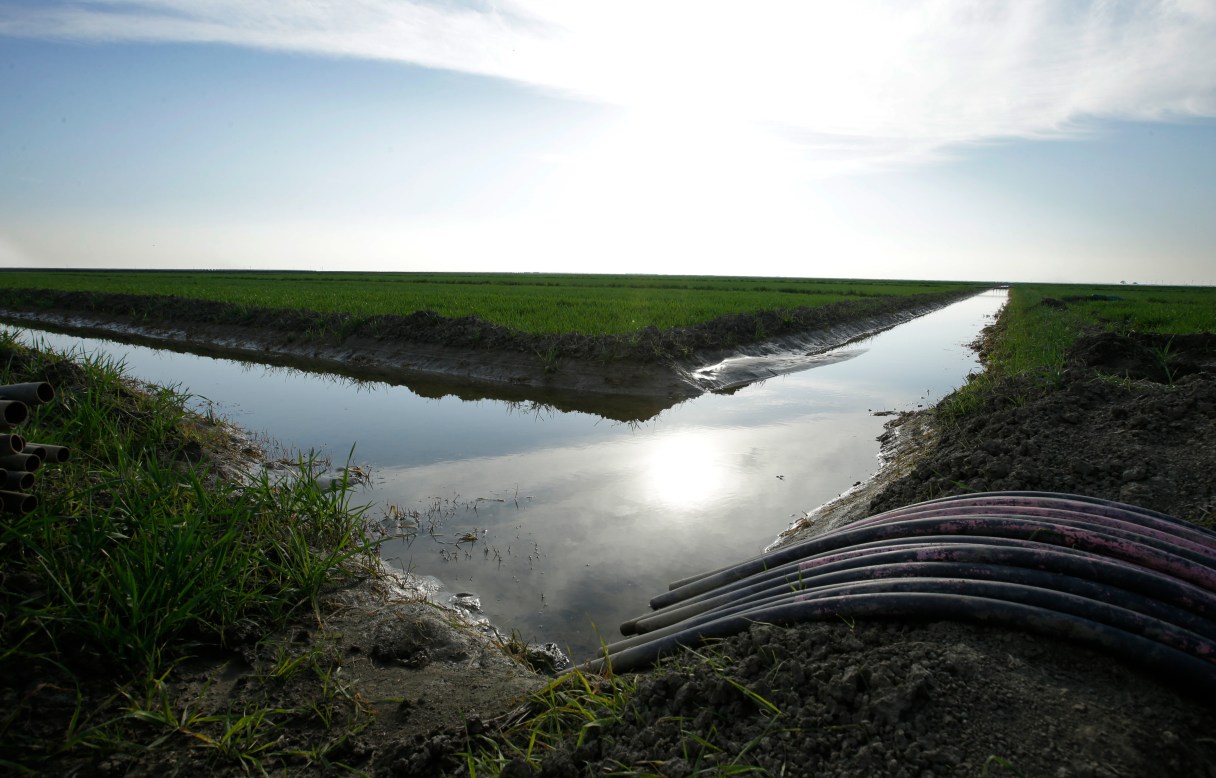
SAN FRANCISCO (AP) – Giant tunnels that Gov. Jerry Brown wants to build to haul water across California are economically feasible only if the federal government bears a third of the nearly $16 billion cost because local water districts may not benefit as expected, according to an analysis that the state commissioned last year but never released.
The findings counter longstanding state pledges that the local agencies that would get water from the tunnels would bear the full cost. Restore the Delta, a group opposing the project, obtained the fall 2015 cost analysis and subsequent state emails on revising the report through open record laws and provided them to The Associated Press on Wednesday.
The analysis and its new assumptions of shifting some costs to taxpayers are likely to heighten debate over Brown’s proposal to build two 40-foot-high tunnels to carry water from Northern California’s Sacramento River, just above its delta with the San Joaquin River, 35 miles south for use by politically influential agricultural and urban water districts, including in the state’s top population center of Los Angeles.
Conservation groups and project supporters disagree over whether the tunnels would hurt or help dozens of threatened native fish and other species in the delta, which leads to the San Francisco Bay and is part of the largest estuary on the West Coast.
The cost-benefit analysis by economist David Sunding of the University of California, Berkeley, for the first time raises the prospect that funding from the federal government would be needed. U.S. officials have not publicly said they would share in the price tag.