
Monday, November 16, 2026Nov 16

Afghan refugees tell UN: ‘We need peace, land to go home’

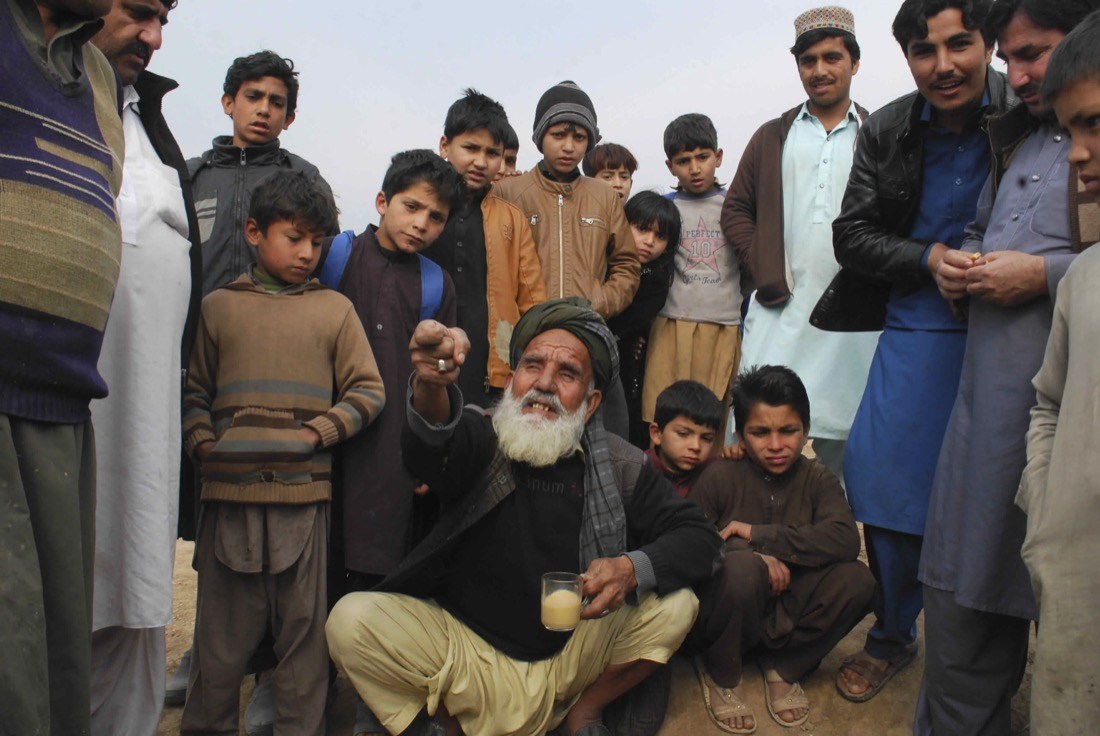
In this Thursday, Feb. 13, 2020 photo, Afghan refugee Hukam Khan narrates the situation of his country, at Kabobayan refugee camp, in Peshawar, Pakistan. Khan isn't sure how old he is, but his beard is long and white, and when he came to Pakistan 40 years ago fleeing an earlier war in Afghanistan his children were small, stuffed onto the backs of donkeys and dragged across rugged mountain peaks to the safety of northwest Pakistan. After 40 years, more than 1.5 million Afghan refugees still live in neighboring Pakistan. They feel abandoned by their own government, increasingly unwelcome in their reluctant host country and ignored by the United Nations. (AP Photo/Muhammad Sajjad)

KABOBAYAN CAMP, Pakistan (AP) – Hukam Khan isn’t sure how old he is, but his beard is long and white, and when he came to Pakistan 40 years ago fleeing an earlier war in Afghanistan, his children were small, stuffed onto the backs of donkeys and dragged across rugged mountains to the safety of northwestern Pakistan.

Back then the war was against the former Soviet Union and Khan was among more than 5 million Afghans forced to become refugees in Pakistan, driven from their homes by a bombing campaign so brutal it was referred to as a “scorched earth” policy.

After four decades of war and conflict, more than 1.5 million Afghans still live as refugees in Pakistan, feeling abandoned by their own government, increasingly unwelcome in their reluctant host country and ignored by the United Nations.

Now, for the first time in years, there’s a faint possibility they might eventually return home. The United States and the Taliban appear to have inched closer to a peace deal, agreeing as a first step to a temporary “reduction in violence.”

If that truce should hold, the next step could be a long-sought-after agreement between Washington and the Taliban to end Afghanistan’s current war, now in its 19th year. The agreement would return American troops home and start negotiations between the warring Afghans to bring peace to their shattered country.