
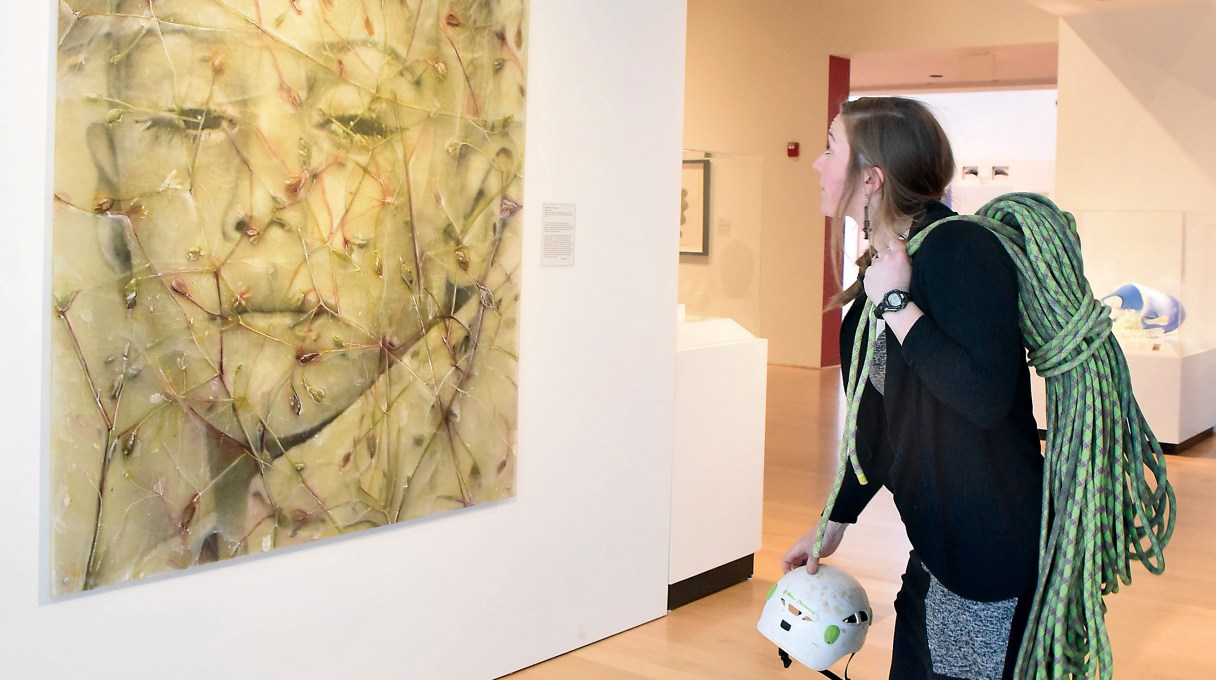

In a town known for both its accessibility to outdoor recreational opportunities and its support for the arts, it’s only natural to want to bring the two together.
That’s the idea behind The Nature of Art, a new series that’s the result of a partnership between the education programs at the Hunter Museum of American Art and Reflection Riding Arboretum and Nature Center.
Each event in the monthly series combines an outdoor activity – climbing, open-water swimming or standup paddleboarding, for example – with a related visual-art element.
When Chelsea Higgins, education coordinator at the Hunter and a lover of the outdoors, approached Reflection Riding President Mark McKnight about the partnership, he told her he would be up for hosting as many events as possible in conjunction with the museum. Since taking over his position in October, McKnight says one of his goals has been to draw people engaged in outdoor pursuits in the downtown area to the nature center’s 317 acres. Putting art in the context of the outdoors helps expand the reach of both organizations, McKnight says.
The first event was held in January at Reflection Riding. Participants had an opportunity to feed the nature center’s endangered red wolves and hike on the property. For the art element, attendees looked at a Wyeth painting from the Hunter’s permanent collection. The artist’s searing depiction of a red wolf helps one understand how our impression of wolves as a bad thing goes back to our European ancestry, and how this contributed to the excessive hunting of wolves and eventually their endangerment, McKnight says.