
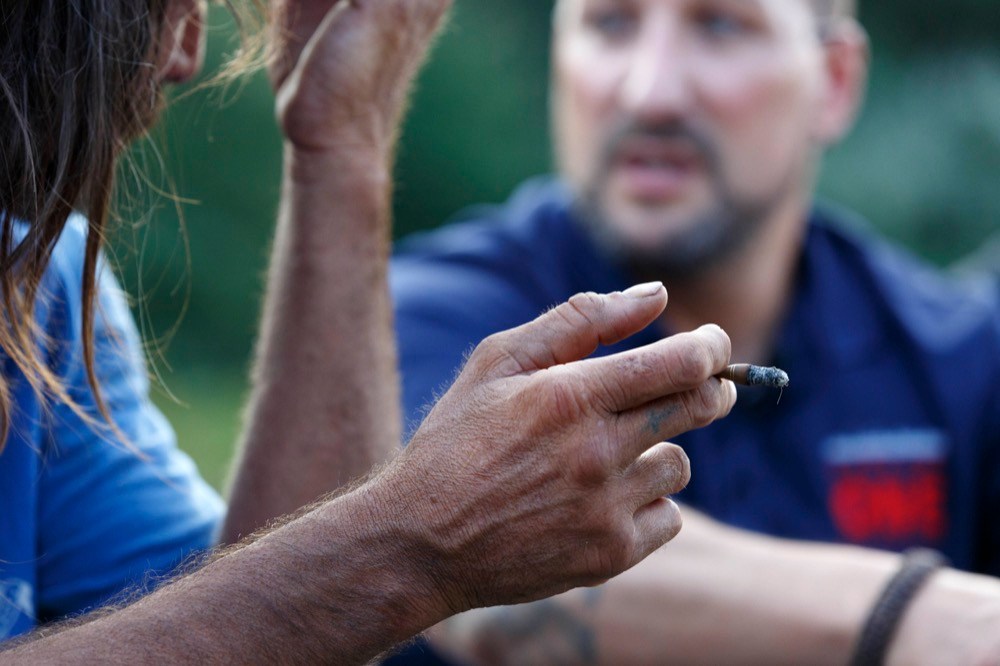
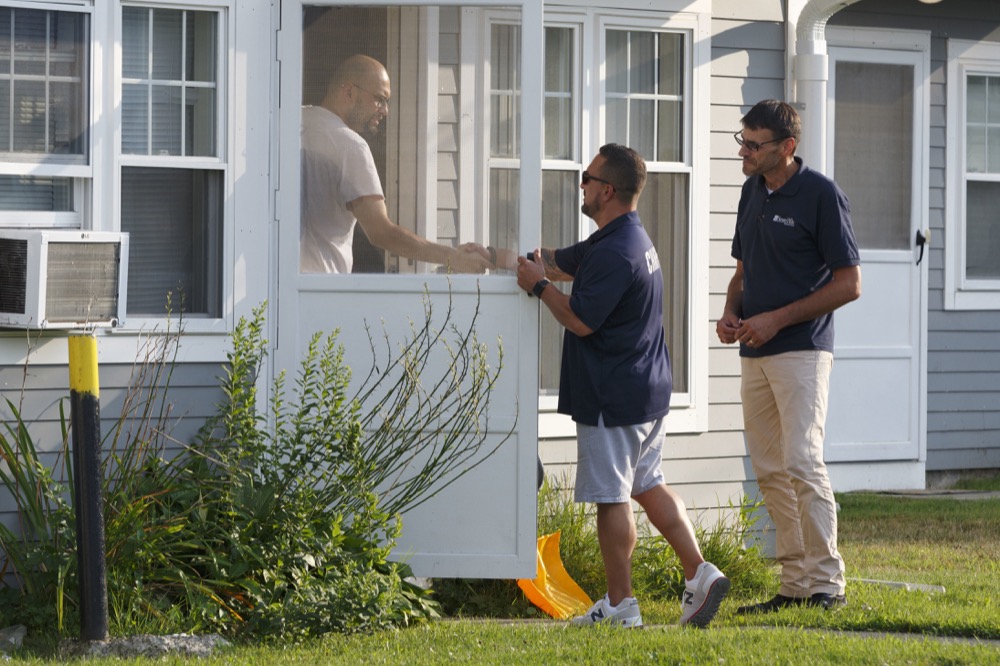
 Jamie Casey, center and Peter Lagasse, right, make a wellness check at a residence in New Bedford, Mass., on Friday, Aug. 10, 2018. Casey, a 45-year-old associate pastor in a nondenominational church, is part of a team of clergy from a variety of faiths who regularly crisscross town with police officers and counselors. Their goal is to get addicts into treatment and, if they will listen, to offer some spiritual advice. (AP Photo/Michael Dwyer)
Sidewalk prayers near shoot-up spots. Sunday sermons in the back of a bar. Pleas to struggling souls to surrender to God. Funerals for members of their flock who didn’t make it.
Clergy members have become spiritual first responders in the opioid crisis, often leaving the pulpit to minister on the streets.
They can be reverends, rabbis, priests or pastors. Though their faiths differ, they invariably approach people with addiction as equals. No Bible-thumping, no blaming. Quite a few are in recovery themselves.
Despite some signs of a slowdown, the nation’s all-time deadliest drug overdose epidemic endures. Opioids were involved in most of the deaths, killing nearly 48,000 people last year.
A spiritual element to recovery is familiar to people who have worked 12-step programs, with their references to an undefined higher power. Scientific studies have found evidence that religious faith can help substance abusers with their recovery.