
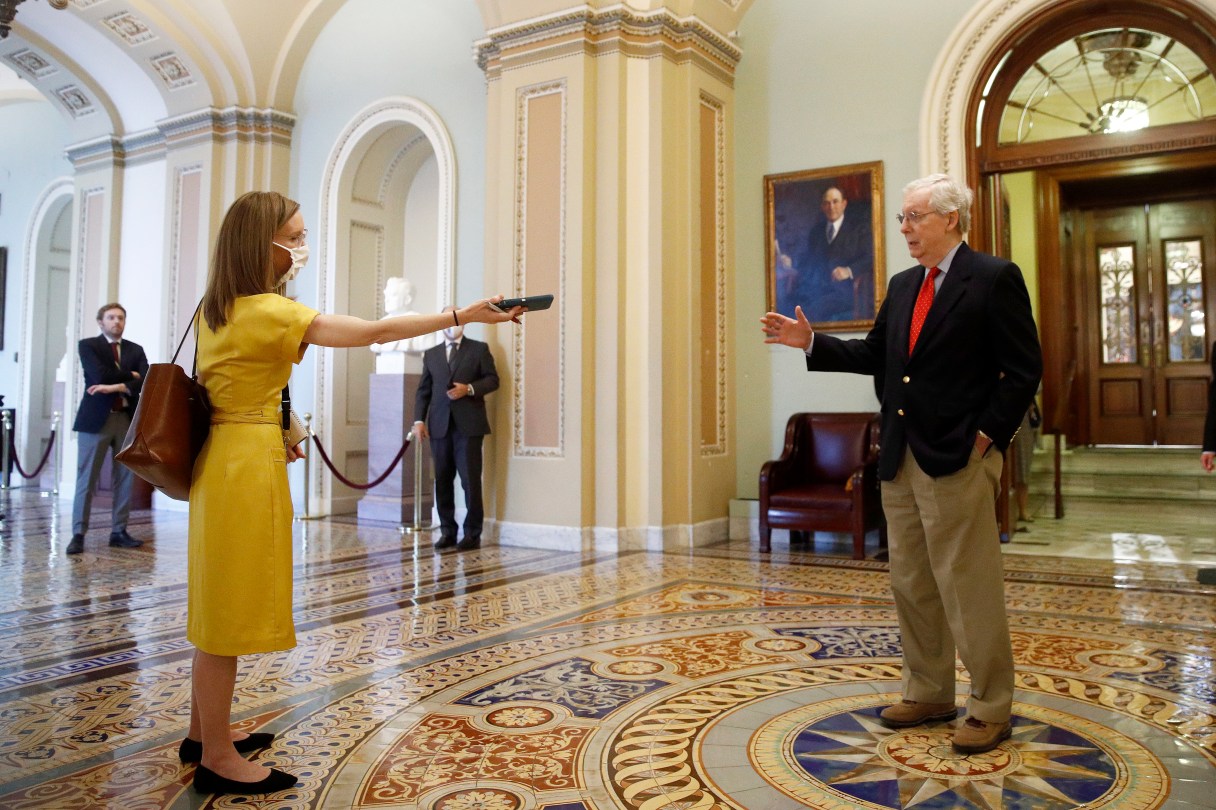
WASHINGTON – The Senate twisted itself into knots Thursday over President Donald Trump’s new coronavirus aid request, as Democrats refused to rubber stamp his proposal for $250 billion more to boost small businesses, demanding modifications along with an additional $250 billion for health care providers and states. Republicans wouldn’t go along.
The standoff doesn’t end the pursuit of more rescue funds, but it came as the government reported that 6.6 million more people filed for unemployment benefits last week, increasing worries that the economy is sliding toward a severe recession. The small business program at issue is off to a rocky rollout.
GOP leader Mitch McConnell sought to keep Thursday’s debate limited to Trump’s request and wouldn’t accept Democratic additions. Even if the GOP plan had succeeded in the Senate, the Democratic-controlled House is determined to make changes to ensure small businesses in minority communities benefit from the burst of government funding.
Democrats and Republicans agree the aid is urgently needed and talks are sure to continue, but it reinforces that Congress and the White House will need to find bipartisan agreement – especially with lawmakers scattered in their states and districts and both the House and Senate unable to conduct roll-call votes.
“Nobody thinks this will be the Senate’s last word on COVID-19,” McConnell said. “Let’s continue to work together, with speed and bipartisanship. We will get through this crisis together.”