
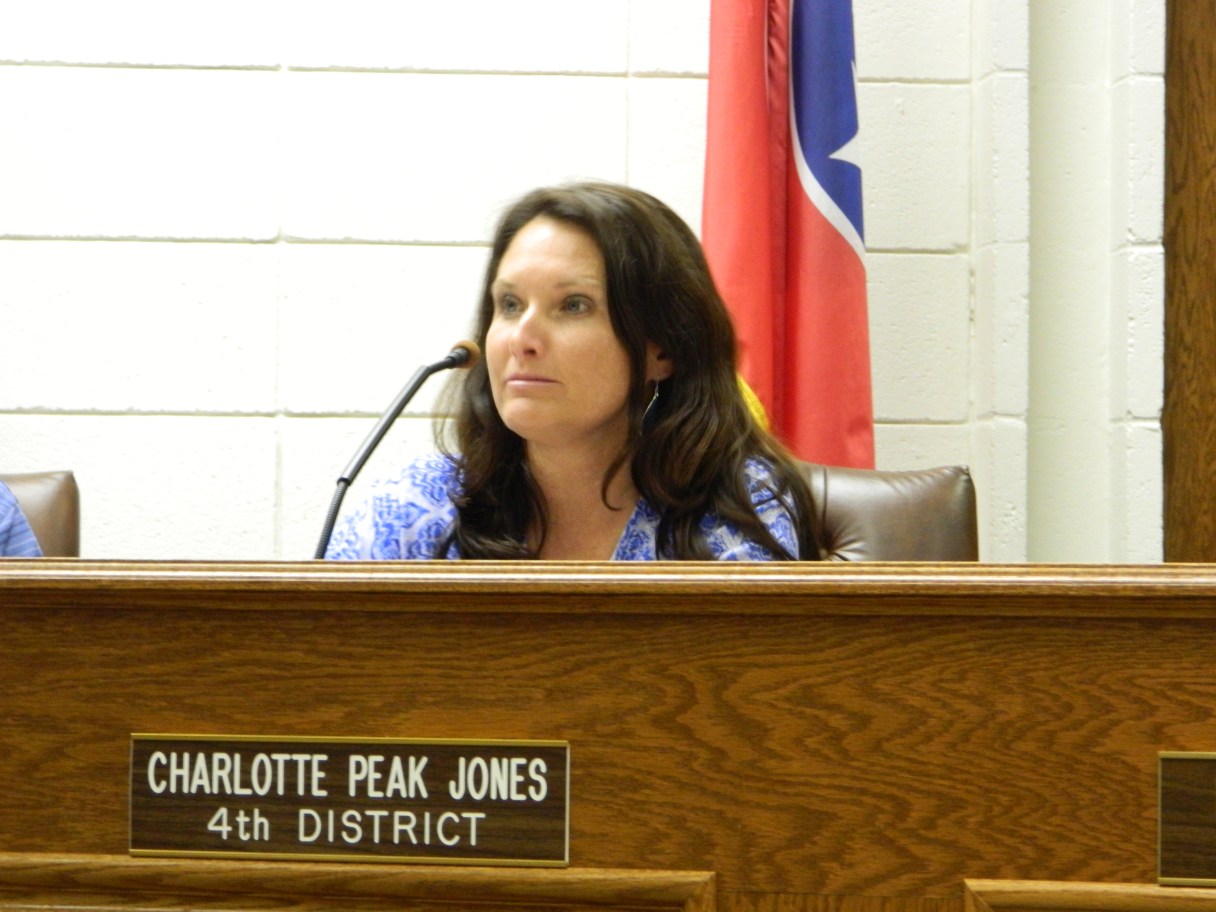
 Bradley County Commissioner Charlotte Peak-Jones
CLEVELAND, Tenn. — The Bradley County Commission is scheduled to vote Tuesday whether to adopt 2012 International Building Codes or opt out of statewide building code standards for one- and two-family dwellings.
Commissioner Charlotte Peak, a building contractor, has proposed that the county adopt the 2009 International Energy Conservation Code and 2012 International Codes pertaining to building, fire protection, plumbing, fuel gas and mechanical standards.
“If we don’t update our codes, the state will require that the county adopt the 2015 International Codes, which are more stringent,” Peak said. “The changes in the 2012 codes are minimal, and building associations are pretty happy with it.”
The proposal also makes some amendments to the 2012 standards, such as not requiring one- and two-family dwellings to have fire sprinkler systems.
If adopted, the new standards would replace Bradley County’s current codes, which date back to 2006 and were adopted in 2010.
The state requires local governments have codes within seven years of the current standards, Peak said.
If the county decides to opt out of statewide codes altogether, it could impact the county’s ISO rating and potentially hinder the receipt of some state funding, putting greater burdens on “taxpayers’ backs,” she said.
Adopting the 2012 International Building Codes and the 2009 International Energy Conservation Code also will put construction in Bradley County on the same footing as construction within Cleveland, which adopted the same codes a few years ago, she said.
Peak said an increase in building costs is expected to accompany the adoption of the new codes. Depending on the builder, additional costs for a new home are estimated to range between $500 and $3,000, she said.
While increased building costs are a concern, they are not the only one voiced by Commissioner Dan Rawls, who has proposed the county opt out of statewide building codes pertaining to one- and two-family dwellings.
“The codes we have now are good, according to conversations with our building inspector,” Rawls said. “What is the purpose of adopting new ones that increase the costs of building homes?”
Rawls said additional upfront costs, driven by newer energy conservation requirements, can take up to 18 years to pay for themselves.
The approval of the new codes by builders associations does not change his position, he said.
“They are there to lobby for their industry, not the taxpayers of Bradley County,” Rawls said. “This is our fight.”
He said he would like to simply adopt the current codes as a “Bradley County Code,” giving local government more control over such matters.
Paul Leach is based in Cleveland. Email him at paul.leach.press@gmail.com.