
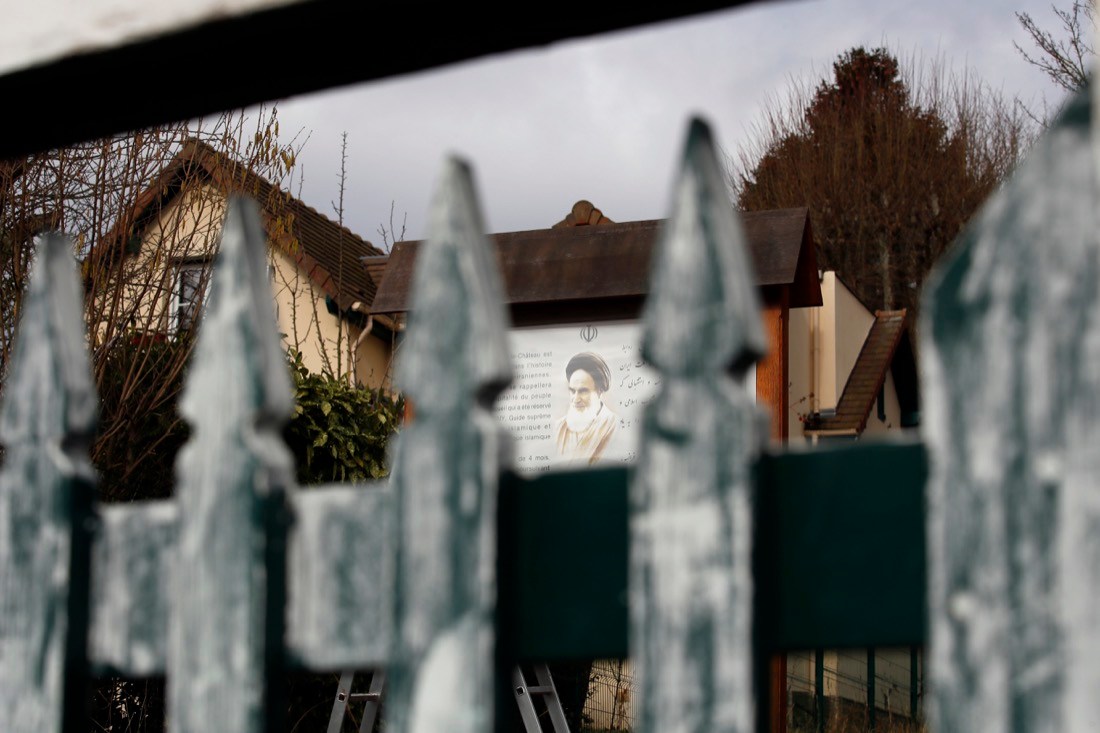
NEAUPHLE-LE-CHATEAU, France (AP) – From a sleepy village outside Paris, the man who would become the supreme leader of the Islamic Republic of Iran sat cross-legged beneath an apple tree, delivering messages daily to hundreds of followers clamoring to glimpse the glowering cleric in the black turban.
For several months in late 1978 and early 1979, the humble site became a megaphone for the pronouncements of Ayatollah Ruhollah Khomeini that were sent back home to Iranians seeking to overturn 2,500 years of monarchical rule.
Shah Mohammad Reza Pahlavi had expelled Khomeini from Iran in 1964, and he spent most of his time in Najaf, Iraq, a pilgrimage city for Iranians and other Shiite Muslims. But Iraq, reportedly under pressure from the shah, forced the cleric to flee to France in 1978.
Khomeini’s entourage in Neauphle-Le-Chateau had only the simplest of tools in those pre-internet days. With telephones and cassette tape recorders, they turned the exiled cleric’s cottage and garden into a media hub.
“The fate of the Iranian revolution depended on what came out of Mr. Khomeini’s mouth,” said Abolhassan Bani-Sadr, who was among the ayatollah’s closest aides and later became the first president of the new Iran.