
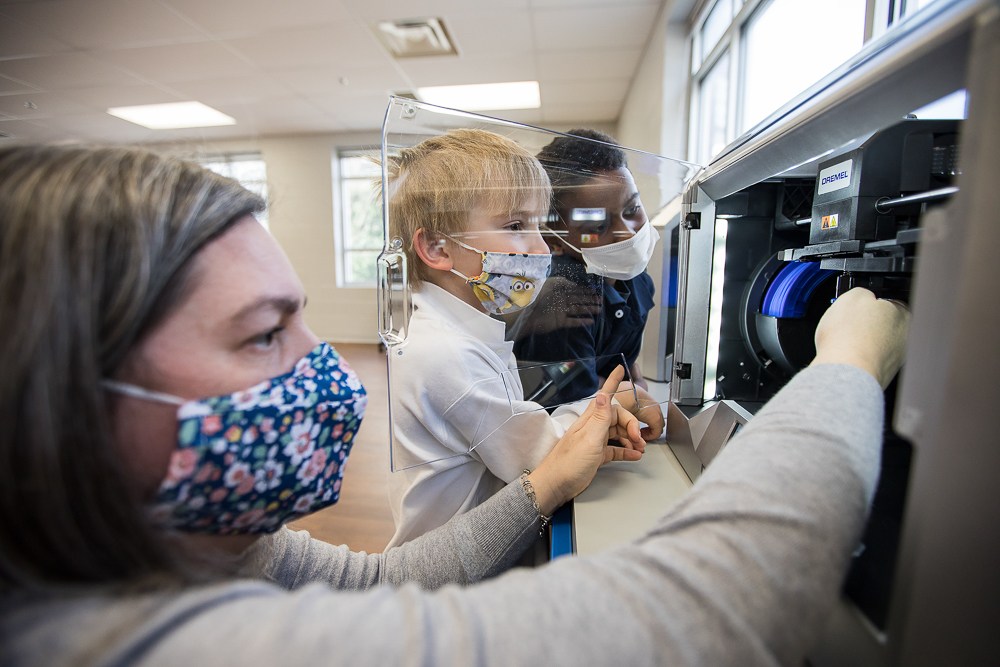
Q: Do children and adolescents still need to wear masks when they return to school?
A: Daily cases of COVID-19 are increasing, leading many organizations to revise their mask recommendations. The Centers for Disease Control and Prevention, the American Academy of Pediatrics and many others have recently revised their school guidelines and recommend universal indoor masking for all teachers, staff and students of K-12 schools, regardless of their vaccination status.
These changes were made given the concerns of the more contagious delta variant, data showing that rates of infection and transmission in children and adolescents are comparable to adults and the effectiveness of masks to reduce the spread of SARS-CoV-2. Several published school-based studies have shown that wearing masks in schools decreases transmission and that infections are more likely to occur when preventive strategies are not implemented. Schools that consistently implemented prevention strategies were successful in limiting transmission.
Transmission of SARS-CoV-2 in schools depends on local transmission rates. The CDC recommends schools consider levels of community transmission when assessing risk of transmission within the schools. If community transmission is high and community vaccination levels are low, students and staff are more likely to come to school while infectious and introduce SARS-CoV-2 into schools.
Currently in Hamilton County, community transmission is high. Cases and hospitalizations have increased significantly. The seven-day average has increased from nine cases at the beginning of June to now more than 150. This level of community transmission increases the risk of transmission in schools if mitigation efforts, including masks, are not used.