
Friday, November 13, 2026Nov 13

Philippine Congress extends martial law in south amid siege

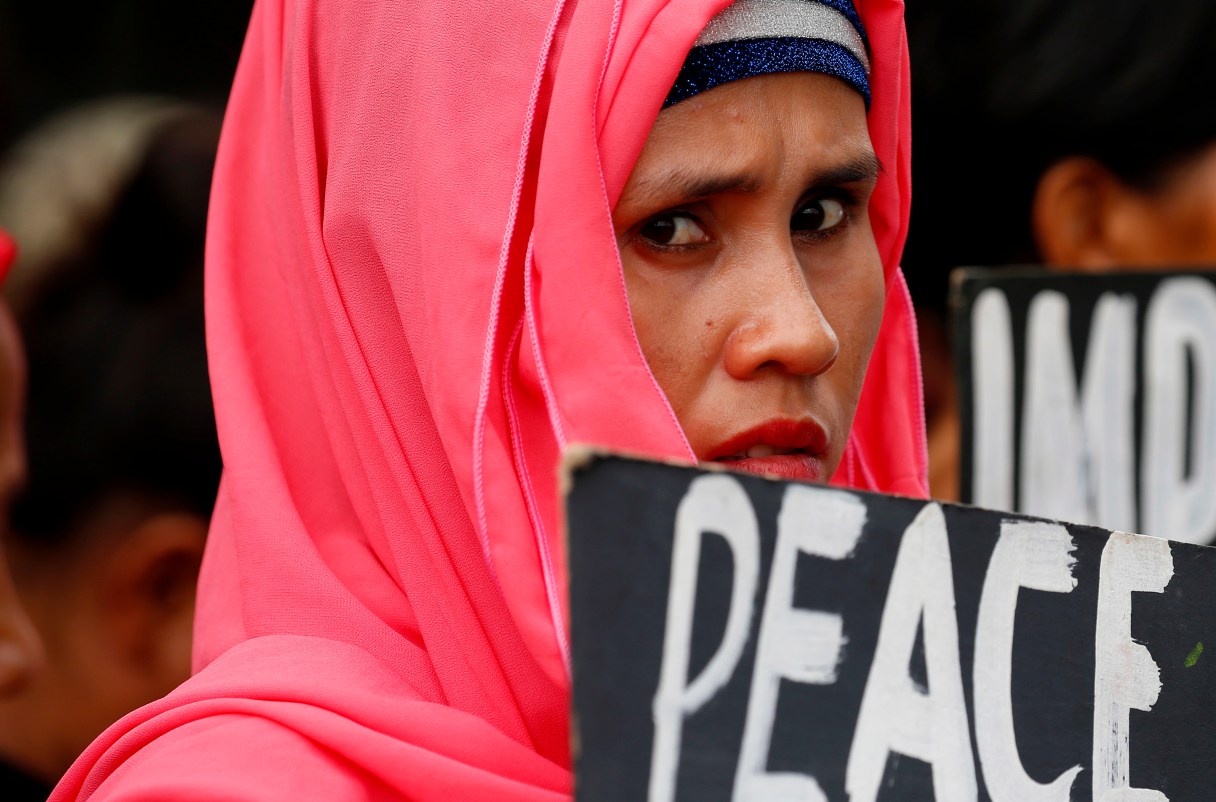
A protester displays a placard during a rally outside the Lower House as lawmakers gather for a special joint session on the possible extension of martial law in the southern Philippines, Saturday, July 22, 2017 in Quezon city, northeast of Manila, Philippines. Martial Law was declared by President Duterte last May 23 for 60 days following the siege by Muslim militants of Marawi city which is now on its second month. (AP Photo/Bullit Marquez)
A protester displays a placard during a rally outside the Lower House as lawmakers gather for a special joint session on the possible extension of martial law in the southern Philippines, Saturday, July 22, 2017 in Quezon city, northeast of Manila, Philippines. Martial Law was declared by President Duterte last May 23 for 60 days following the siege by Muslim militants of Marawi city which is now on its second month. (AP Photo/Bullit Marquez) A protester displays a placard during a rally outside the Lower House as lawmakers gather for a special joint session on the possible extension of martial law in the southern Philippines, Saturday, July 22, 2017 in Quezon city, northeast of Manila, Philippines. Martial Law was declared by President Duterte last May 23 for 60 days following the siege by Muslim militants of Marawi city which is now on its second month. (AP Photo/Bullit Marquez)

MANILA, Philippines (AP) – The Philippine Congress on Saturday overwhelmingly approved the president’s appeal for martial law in the south to be extended to the end of the year to help troops quell a two-month siege by Islamic State group-linked militants and stamp out similar extremist plots in the volatile region.

House of Representatives Speaker Pantaleon Alvarez announced that senators and House members voted 261-18 in favor of granting President Rodrigo Duterte’s request in a special joint session. The 60-day martial law was to expire late Saturday.

The military chief of staff, Gen. Eduardo Ano, warned during the session that aside from the uprising in Marawi, extremist groups have plotted similar insurrections in other southern cities and that martial law has helped troops stop attacks, including bombings, elsewhere.

“There was an order for them to do their own version of Marawi in other areas, but we were able to stop this because of martial law,” Ano told the legislators.

Defense Secretary Delfin Lorenzana played down concerns of military abuses, saying no major human rights violations have been reported since Duterte declared martial law to deal with the Marawi violence, the worst crisis in his yearlong presidency.