
Friday, October 30, 2026Oct 30

This story is free to read.

Experts: Belgium often comes up short in preventing attacks

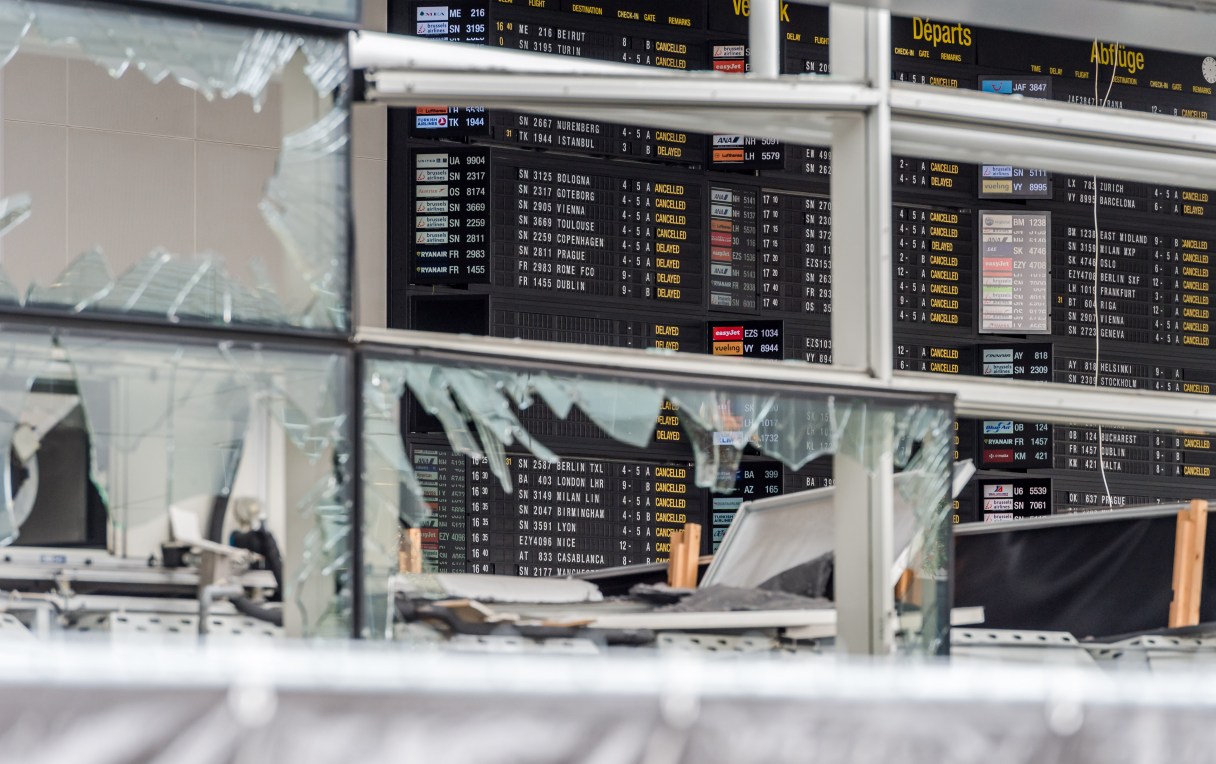
An arrivals and departure board is seen behind blown out windows at Zaventem Airport in Brussels on Wednesday, March 23, 2016. Belgian authorities were searching Wednesday for a top suspect in the country's deadliest attacks in decades, as the European Union's capital awoke under guard and with limited public transport after scores were killed and injured in bombings on the Brussels airport and a subway station. (AP Photo/Geert Vanden Wijngaert, Pool)
An arrivals and departure board is seen behind blown out windows at Zaventem Airport in Brussels on Wednesday, March 23, 2016. Belgian authorities were searching Wednesday for a top suspect in the country's deadliest attacks in decades, as the European Union's capital awoke under guard and with limited public transport after scores were killed and injured in bombings on the Brussels airport and a subway station. (AP Photo/Geert Vanden Wijngaert, Pool) An arrivals and departure board is seen behind blown out windows at Zaventem Airport in Brussels on Wednesday, March 23, 2016. Belgian authorities were searching Wednesday for a top suspect in the country's deadliest attacks in decades, as the European Union's capital awoke under guard and with limited public transport after scores were killed and injured in bombings on the Brussels airport and a subway station. (AP Photo/Geert Vanden Wijngaert, Pool)

BRUSSELS (AP) – Belgium has come up short in its efforts to prevent extremist attacks time and again, experts say – failing to coordinate intelligence, investigate suspects and control its borders.

No country has a perfect record, but Belgium’s is especially bad.

On Tuesday, suicide bombers linked to the Islamic State group detonated their explosives at Brussels Airport and on a subway train, killing 32 people including three of the attackers and injuring some 270.

Raffaello Pantucci, director of international security studies at the Royal United Services Institute in London, called it “depressingly predictable” that a major attack would occur in Brussels.

“There is sort of a perfect union,” he said – a combination of homegrown, hardened Muslim radicals willing to act and possessing the tools and opportunity, as well as a government and law enforcement structure that simply isn’t up to the task.