
WARSAW, Poland (AP) – Poland’s education minister has sparked criticism for appearing to deny Polish responsibility for two massacres of Jews in the 1940s.
Anna Zalewska’s comments on Wednesday evening raised questions about the commitment by the populist ruling party, Law and Justice, both to historical truth and to opposing anti-Semitism.
Since coming to power last year, leaders of the Law and Justice party have sent mixed messages on where they stand on issues of tolerance. President Andrzej Duda, who hails from the party and remains an ally, has strongly condemned anti-Semitism at multiple state observances. But some ruling party members have appeared to pander to extreme nationalists at times.
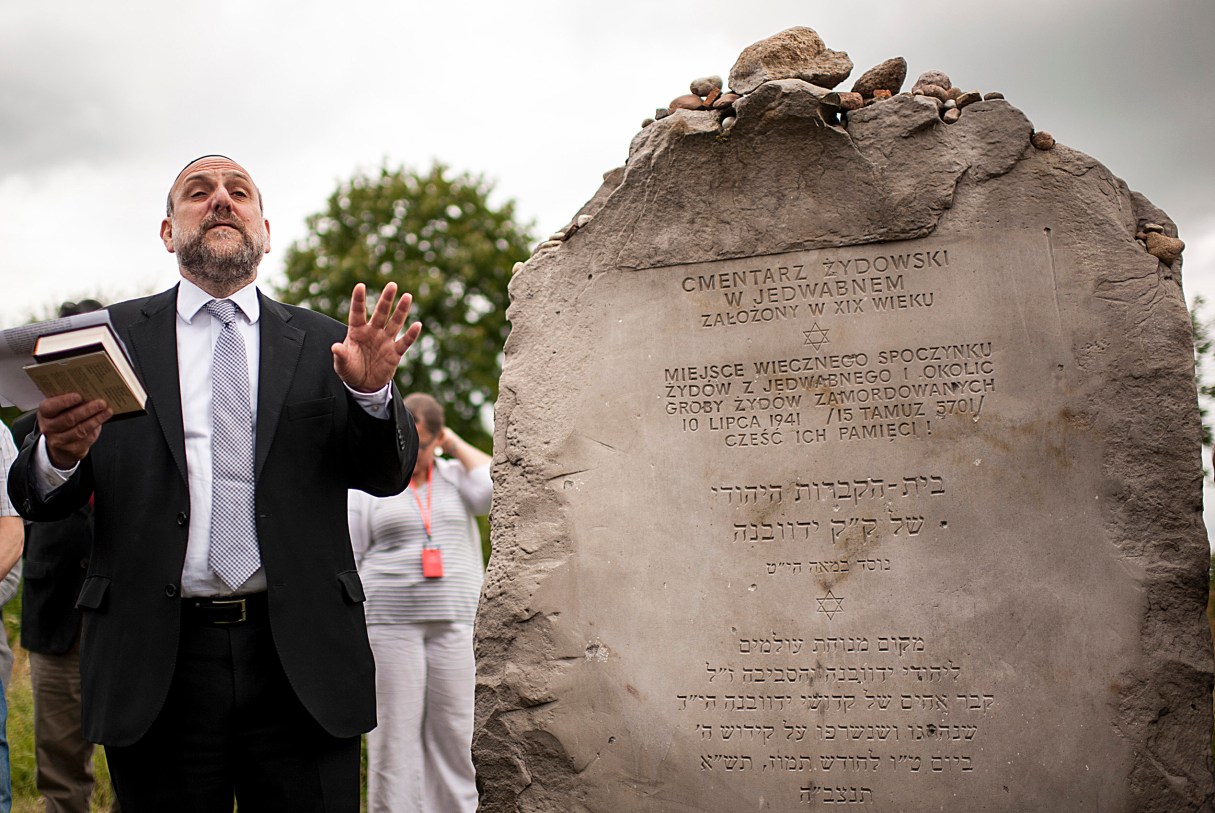
The comments concerned the Jedwabne massacre of 1941, when Poles burned alive more than 300 Jews in a barn, and the Kielce massacre of 1946, in which 42 people died. Anniversaries of both pogroms were marked with observances last week, with Duda condemning anti-Semitism at the Kielce event.
For decades, Polish society avoided discussions of those killings, or denied that Polish anti-Semitism motivated them. Sometimes Germans, who occupied Poland during World War II, were blamed for the Jedwabne killings. A turning point was the publication of a book, “Neighbors,” in 2000 by Polish-American sociologist Jan Tomasz Gross, which explored the murder of Jedwabne’s Jews by their Polish neighbors and resulted in widespread soul-searching and official state apologies.