
Monday, November 16, 2026Nov 16

Fed looks at way to shift big-bank losses to investors

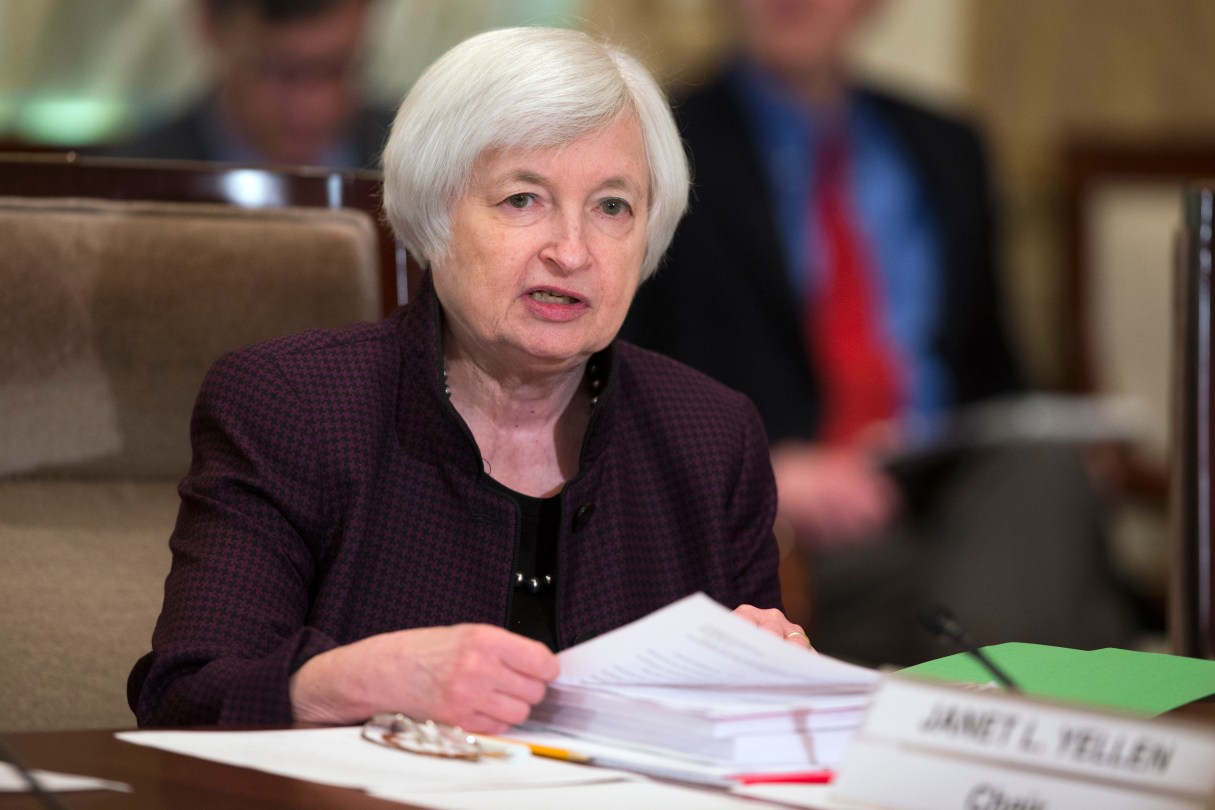
Federal Reserve Chair Janet Yellen speaks during a meeting of the Board of Governors of the Federal Reserve, Friday, Oct. 30, 2015, in Washington. The meeting was to discuss a proposed rule establishing total loss-absorbing capacity and long-term debt requirements for global systemically important banking organizations, as well as a final rule on margin and capital requirements for uncleared swaps of prudentially regulated swap entities. (AP Photo/Evan Vucci)

WASHINGTON (AP) – In their latest bid to reduce the chances of future taxpayer bailouts, federal regulators are proposing that the eight biggest U.S. banks build new cushions against losses that would shift the burden to investors.

The Federal Reserve’s proposal put forward Friday means the mega-banks would have to bulk up their capacity to absorb financial shocks by issuing equity or long-term debt equal to prescribed portions of total bank assets.

The idea is that the cost of a huge bank’s failure would fall on investors in the bank’s equity or debt, not on taxpayers.

The Fed governors led by Chair Janet Yellen voted 5-0 at a public meeting to propose the so-called “loss-absorbing capacity” requirements for the banks, which include JPMorgan Chase, Citigroup and Bank of America.

The eight banks would have to issue a total of about $120 billion in new long-term debt to meet the requirements of the proposal, the Fed staff estimates.