
Sunday, November 15, 2026Nov 15

Russia social media influence efforts ongoing, report says

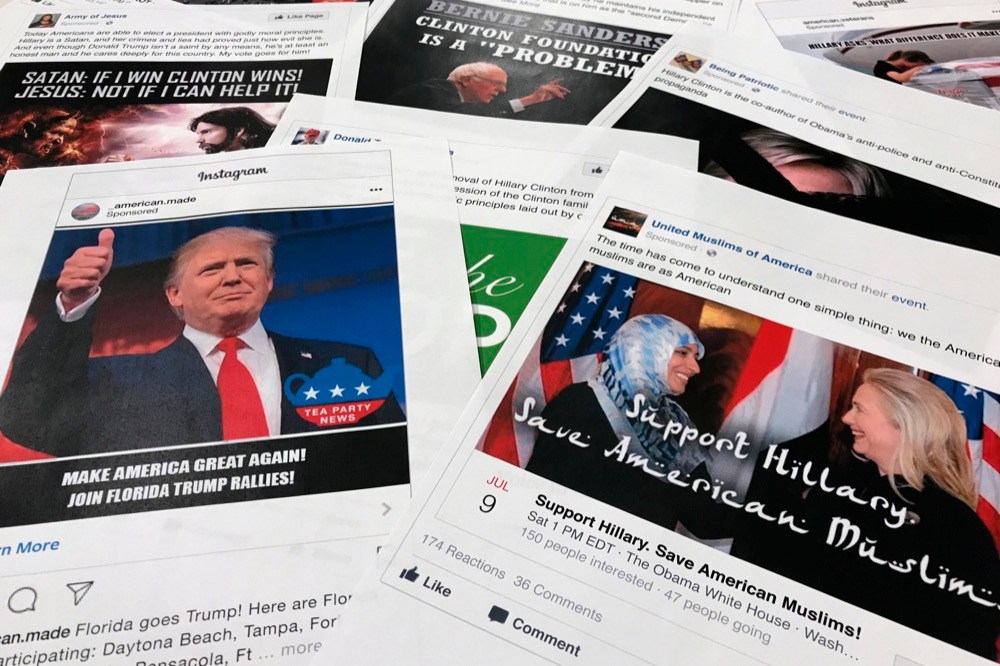
Some of the Facebook and Instagram ads linked to a Russian effort to disrupt the American political process and stir up tensions around divisive social issues, released by members of the U.S. House Intelligence committee, are photographed in Washington, on Wednesday, Nov. 1, 2017. A report compiled by private researchers and released by the Senate intelligence committee Monday says that "active and ongoing" Russian interference operations still exist on social media platforms, and that the Russian operation discovered after the 2016 presidential election was much broader than once thought. (AP Photo/Jon Elswick)

WASHINGTON (AP) – Russia’s sweeping political disinformation campaign on U.S. social media was more far-reaching than originally thought, with troll farms working to discourage black voters and “blur the lines between reality and fiction” to help elect Donald Trump in 2016, according to reports released Monday by the Senate intelligence committee.

And the campaign didn’t end with Trump’s ascent to the White House. Troll farms are still working to stoke racial and political passions in America at a time of high political discord.

The two studies are the most comprehensive picture yet of the Russian interference campaigns on American social media. They add to the portrait investigators have been building since 2017 on Russia’s influence – though Trump has equivocated on whether the interference actually happened.

Facebook, Google and Twitter declined to comment on the specifics of the reports.

The reports were compiled by the cybersecurity firm New Knowledge and by the Computational Propaganda Research Project, a study by researchers at the University of Oxford and Graphika, a social media analysis firm.