
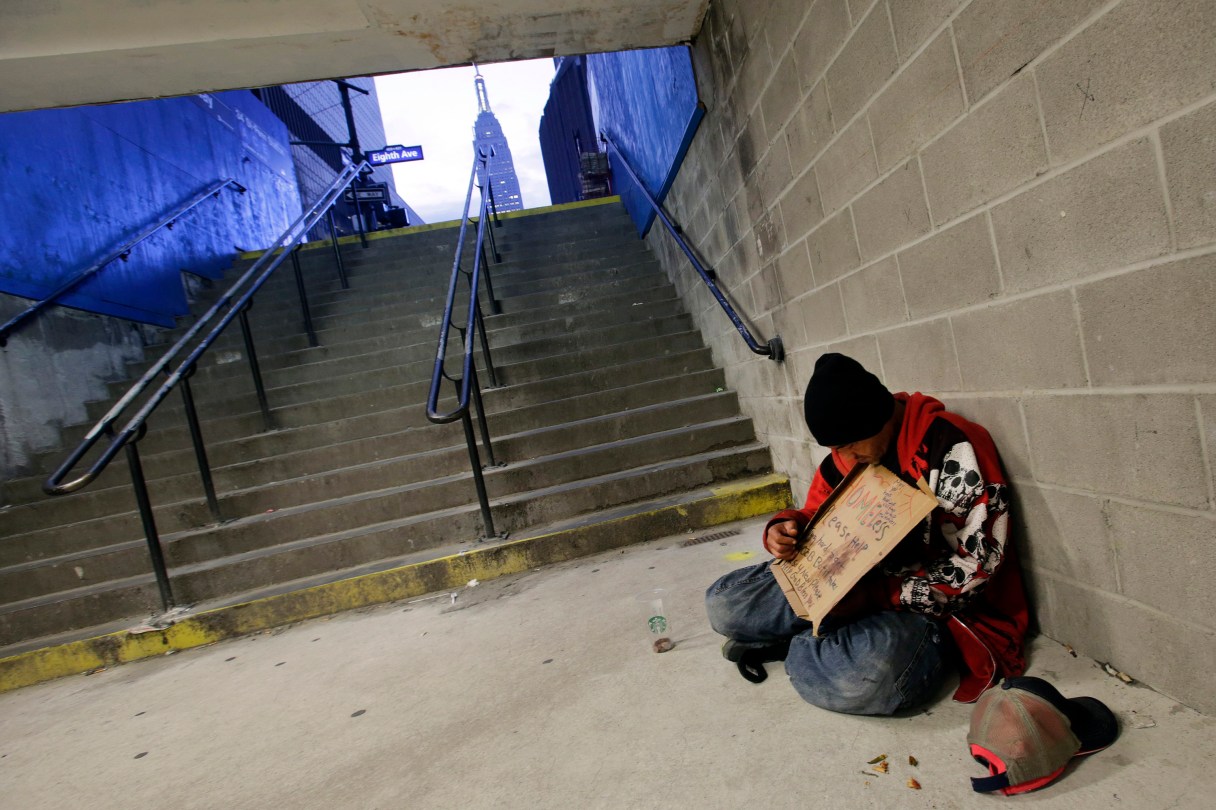
NEW YORK (AP) – A surge of outreach teams set to be deployed by New York City to deal with its persistent street homelessness problem has a deceptively simple goal: talk to as many homeless people as possible, as often as possible.
That increased frequency of contact, many experts believe, could help persuade the homeless, even those who have lived on the street for years, to finally go to a shelter. The number of staffers doing the outreach – which started this past week with plans to double to more than 300 by March – will flood an 8-mile stretch of Manhattan, checking each block daily to try to make contact with the estimated 3,000 to 4,000 people living on the streets of the nation’s largest city.
Mayor Bill de Blasio hopes the tactic, which has had mixed results in other U.S. cities, could help the city “crack the code” of what has been a chronic problem. He stressed that, while the city looks to create permanent affordable housing, it still can offer a bed in a shelter, hotel or room donated by religious organizations.
“Now, more than ever, we’re going to provide the housing they need,” the mayor said during a radio interview Friday. “So if we can get them in the right direction, we actually have a place for them to go.”
The teams will engage each homeless person and offer services, such as shelter, medical care or a hot shower, officials said. The hope is that the homeless people, many of whom are mentally ill, will begin to trust the familiar faces and eventually accept help. But they can’t be forced to leave.