
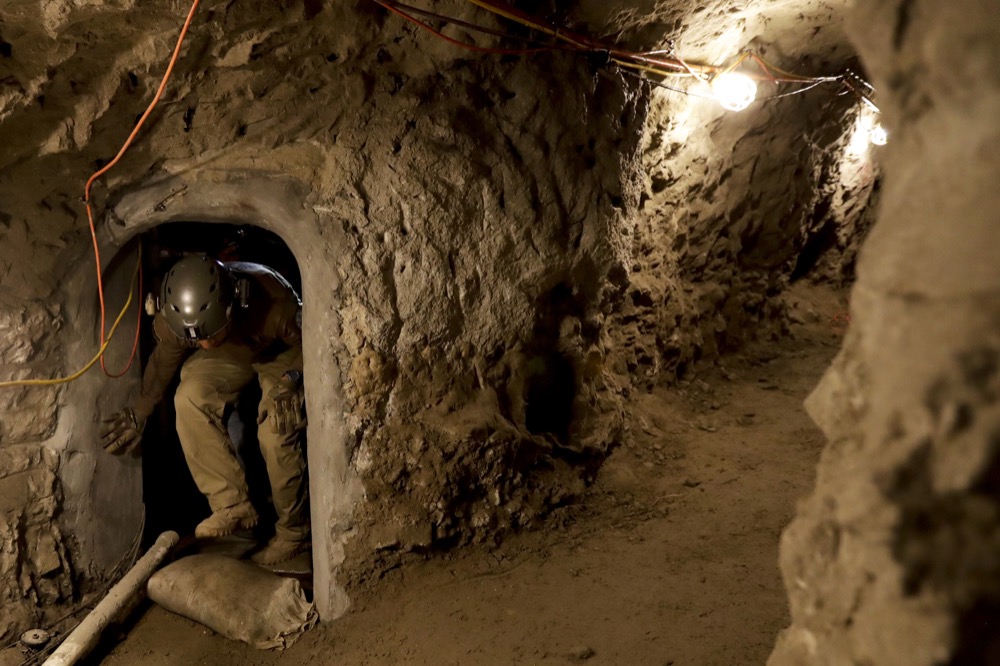
 FILE – In this March 6, 2017 photo, a member of the Border Patrol’s Border Tunnel Entry Team enters a tunnel spanning the border between San Diego and Tijuana, Mexico, in San Diego. Since 1990, U.S. officials have discovered at least 230 tunnels, most of them running from Mexico into California and Arizona. It’s believed smugglers have spent hundreds of thousands of dollars to build the more sophisticated ones with ventilation and lighting. (AP Photo/Gregory Bull, File)
PHOENIX (AP) – In his demands that Congress set aside $5.7 billion for a border wall, President Donald Trump has insisted that a new physical barrier would stop heroin entering the U.S. from Mexico.
“Our southern border is a pipeline for vast quantities of illegal drugs, including meth, heroin, cocaine and fentanyl. Every week, 300 of our citizens are killed by heroin alone, 90 percent of which floods across from our southern border,” Trump said in a speech last week about U.S.-Mexico border security.
Trump added in a Tweet the next day: “These numbers will be DRASTICALLY REDUCED if we have a Wall!”
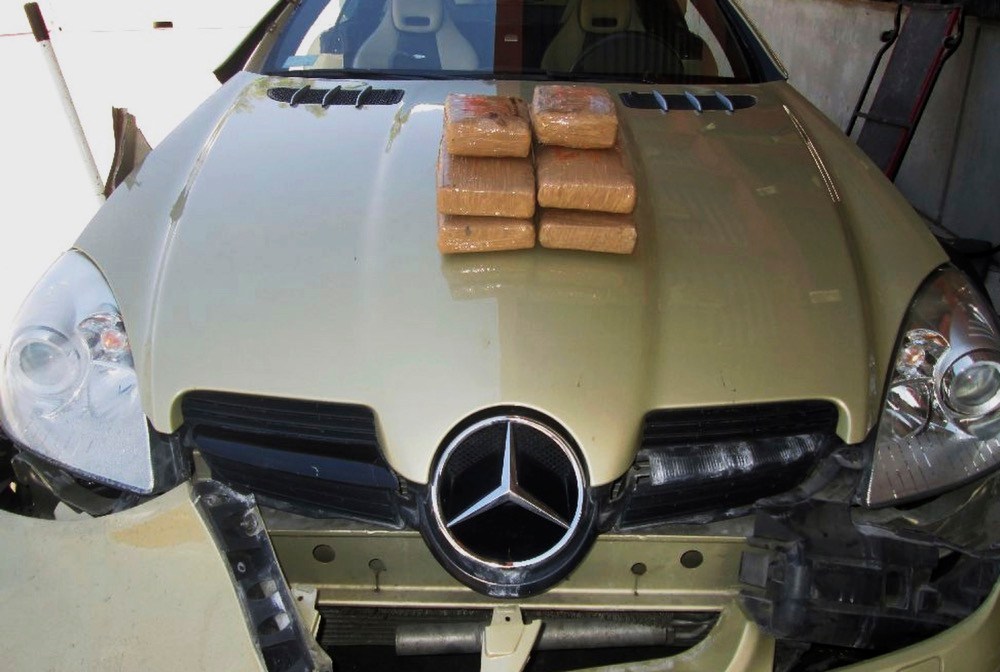
But U.S. statistics, analysts and ongoing testimony at the New York City trial of drug kingpin Joaquin “El Chapo” Guzman show that most hard drugs entering the U.S. from Mexico come through land border crossings staffed by agents, not open sections of the border.
“We’ve been gradually beefing up physical barriers along the border for 20 years and have not seen any demonstrable difference in drug flows,” said David Shirk, a University of San Diego political science and international relations professor who specializes in U.S.-Mexico relations and border politics. “Drugs come through many ways that are not stopped by a wall, whether it’s by boat, submersible, tunnel, catapult, drone.”