
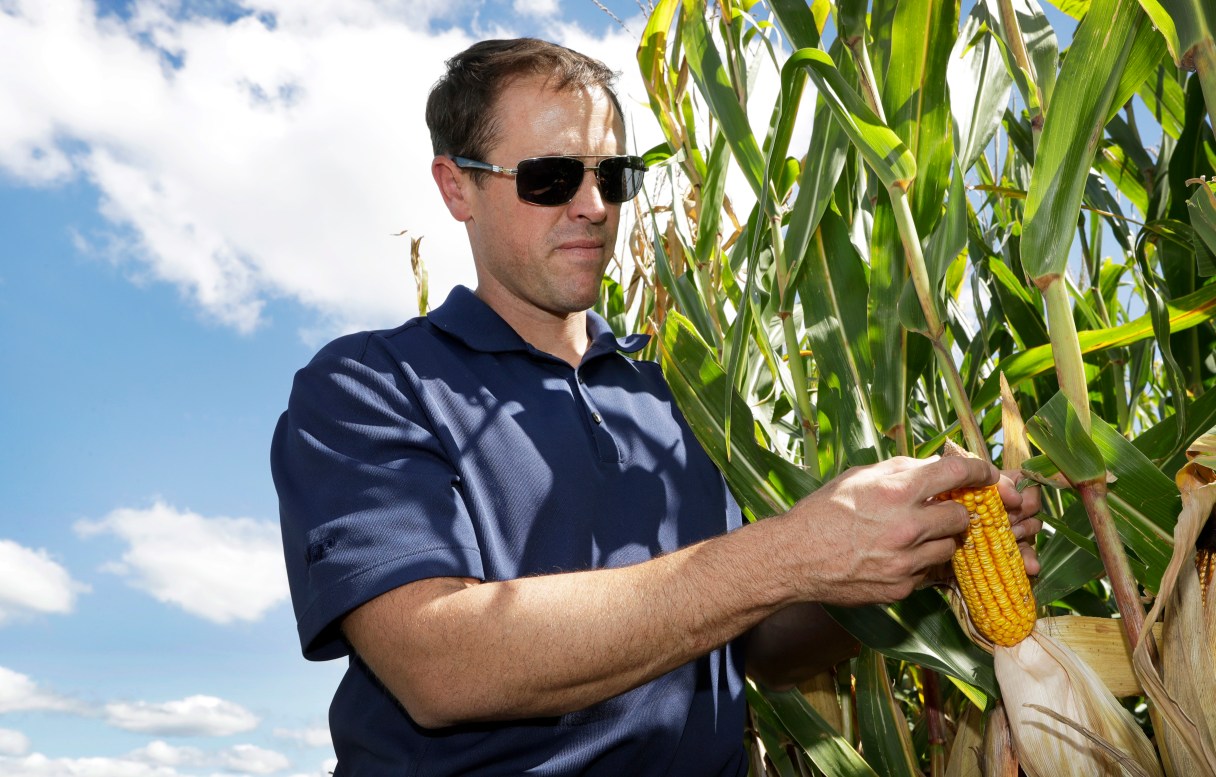
MAXWELL, Iowa – Pale green and 8 feet tall, tightly packed corn stalks reach to the horizon throughout the Midwest in what is likely to be the biggest harvest the U.S. has ever seen.
Aside from a sense of pride in breaking the previous record by nearly a billion bushels, farmers won’t benefit. They’ll lose money on virtually every cob.
It’ll be the third consecutive year in which most corn farmers will spend more than they’ll earn. The growing has been too good and the resulting glut of corn depressed prices to a decade-low. It’s a similar story for soybeans, the second most common Midwest crop.
As a result, farmers are cutting costs, dipping into savings or going further into debt. Federal crop insurance and payments that help protect farmers when prices fall too low offer some protection, yet many farmers and their spouses supplement income with off-the-farm jobs. The drop in farm profits raises questions about agriculture’s boom-and-bust cycles and why people adhere to what at times is seemingly not a sustainable business model.
“I am 67 years old and when we examined my Social Security records recently, I had a 12-year stretch when I didn’t pay myself one single dime,” said Wayne Humphreys, who grows corn and soybeans and raises hogs in southwest Iowa. “We lived on my wife’s salary. Everything else went to the farm.”