
Monday, November 16, 2026Nov 16

Drought stricken California welcomes El Nino’s storms

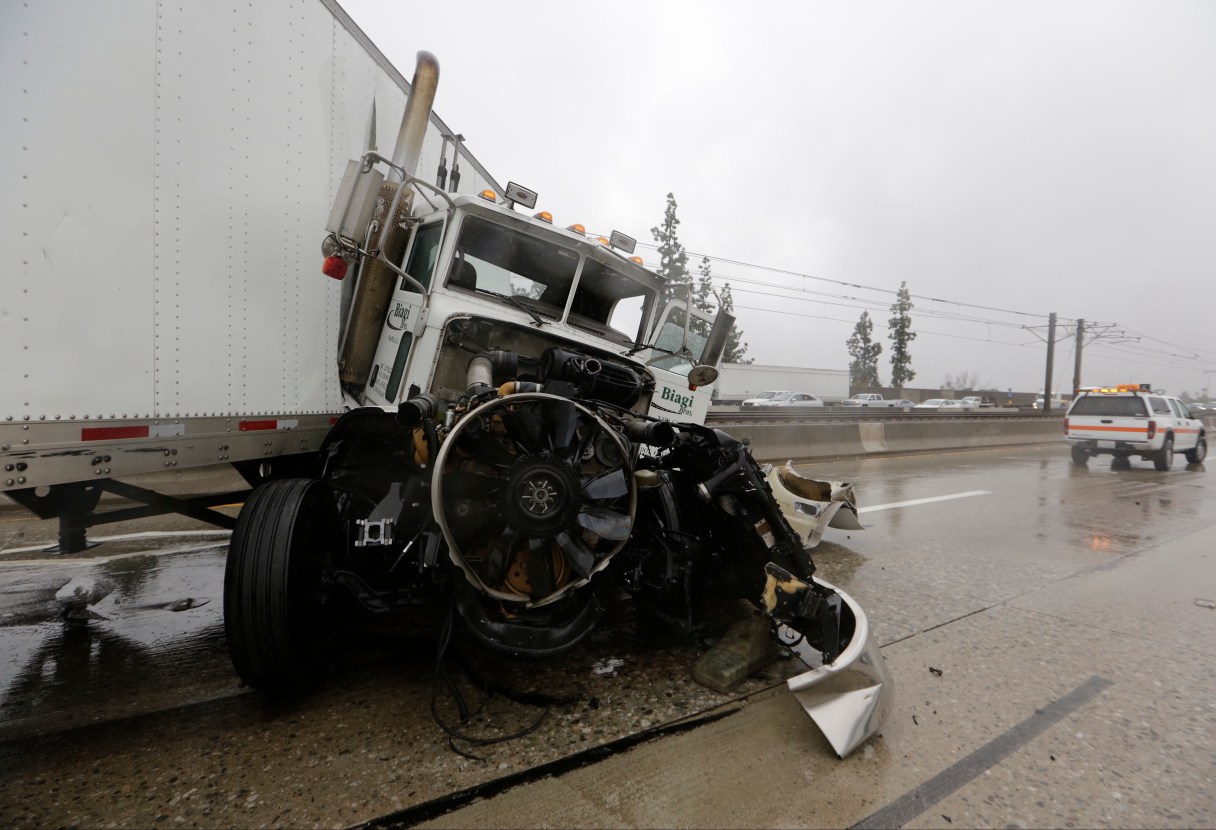
Authorities investigate a multi-vehicle crash involving a semi-truck in the westbound lane of Foothill 210 Freeway at Sierra Madre Blvd., Tuesday, Jan. 5, 2016, in Pasadena, Calif. Persistent wet conditions could put some Los Angeles County communities at risk of flash flooding along with mud and debris flows, especially in wildfire burn areas. El Nino storms lined up in the Pacific, promising to drench parts of the West for more than two weeks and increasing fears of mudslides and flash floods in regions stripped bare by wildfires. (AP Photo/Damian Dovarganes)

SAN FRANCISCO (AP) – Despite the potential for flooding and mudslides, a series of storms moving toward California was welcome news for a state suffering from a severe drought. But officials warned against reverting to old water-use habits.

As the first of the storms drenched the state on Tuesday, authorities cautioned that even the wettest of winters can’t replenish depleted reservoirs and aquifers unless everyone keeps pitching in.

California’s water deficit is so deep after four years of drought that a “steady parade of storms” like these will be needed for years to come, said Mike Anderson, climatologist for the state’s Department of Water Resources.

“We’re at least on a good trajectory,” he said. “We’ve got to keep it going.”

The current El Nino – a natural warming of the central Pacific Ocean that interacts with the atmosphere and changes weather worldwide – has tied 1997-1998 as the strongest on record, the National Oceanic and Atmospheric Administration’s Climate Prediction Center said, citing statistics that go back to 1950.