
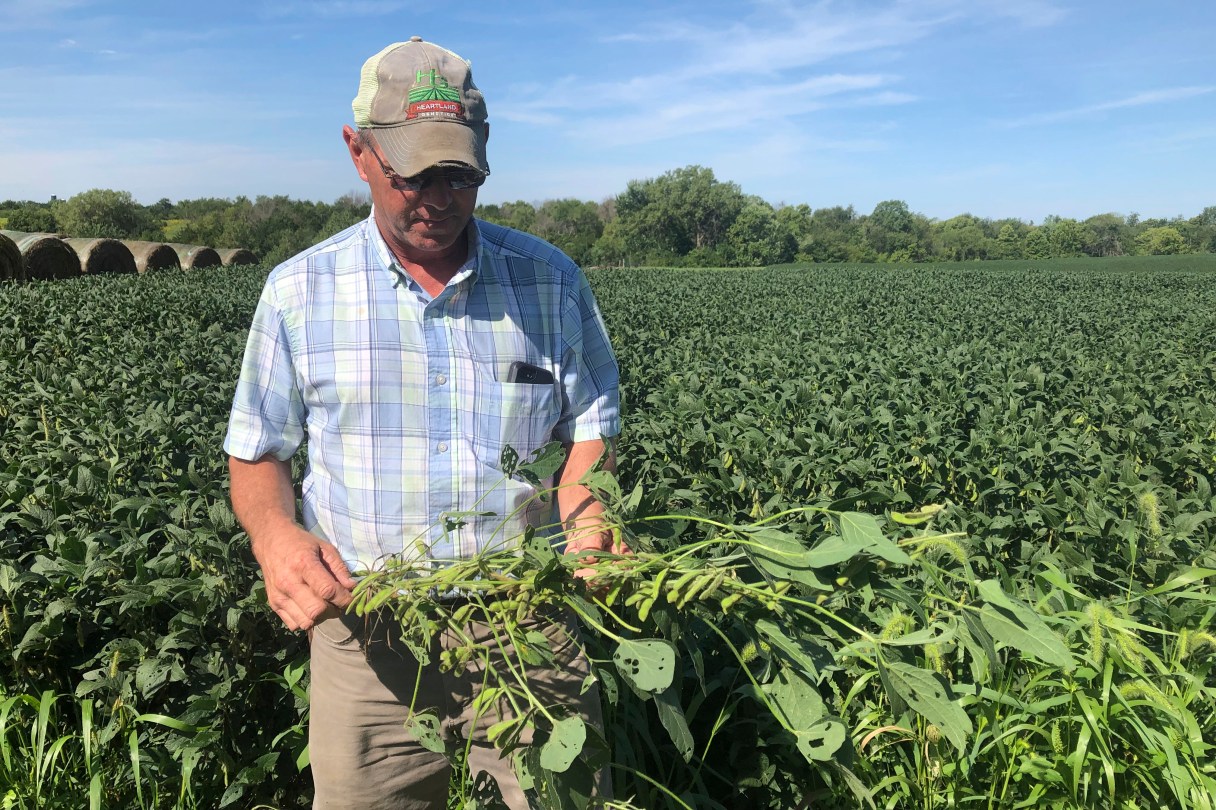
LACONA, Iowa (AP) – When President Donald Trump levied tariffs on China that scrambled global markets, farmer Randy Miller was willing to absorb the financial hit. Even as the soybeans in his fields about an hour south of Des Moines became less valuable, Miller saw long-term promise in Trump’s efforts to rebalance America’s trade relationship with Beijing.
“The farmer plays the long game,” said Miller, who grows soybeans and corn and raises pigs in Lacona. “I look at my job through my son, my grandkids. So am I willing to suffer today to get this done to where I think it will be better for them? Yes.”
But the patience of Miller and many other Midwest farmers with a president they mostly supported in 2016 is being put sorely to the test.
The trigger wasn’t Trump’s China tariffs, but the waivers the administration granted this month to 31 oil refineries so they don’t have to blend ethanol into their gasoline. Since roughly 40% of the U.S. corn crop is turned into ethanol, it was a fresh blow to corn producers already struggling with five years of low commodity prices and the threat of mediocre harvests this fall after some of the worst weather in years.
“That flashpoint was reached and the frustration boiled over, and this was the straw that broke the camel’s back,” says Lynn Chrisp, who grows corn and soybeans near Hastings, Nebraska, and is president of the National Corn Growers Association.