
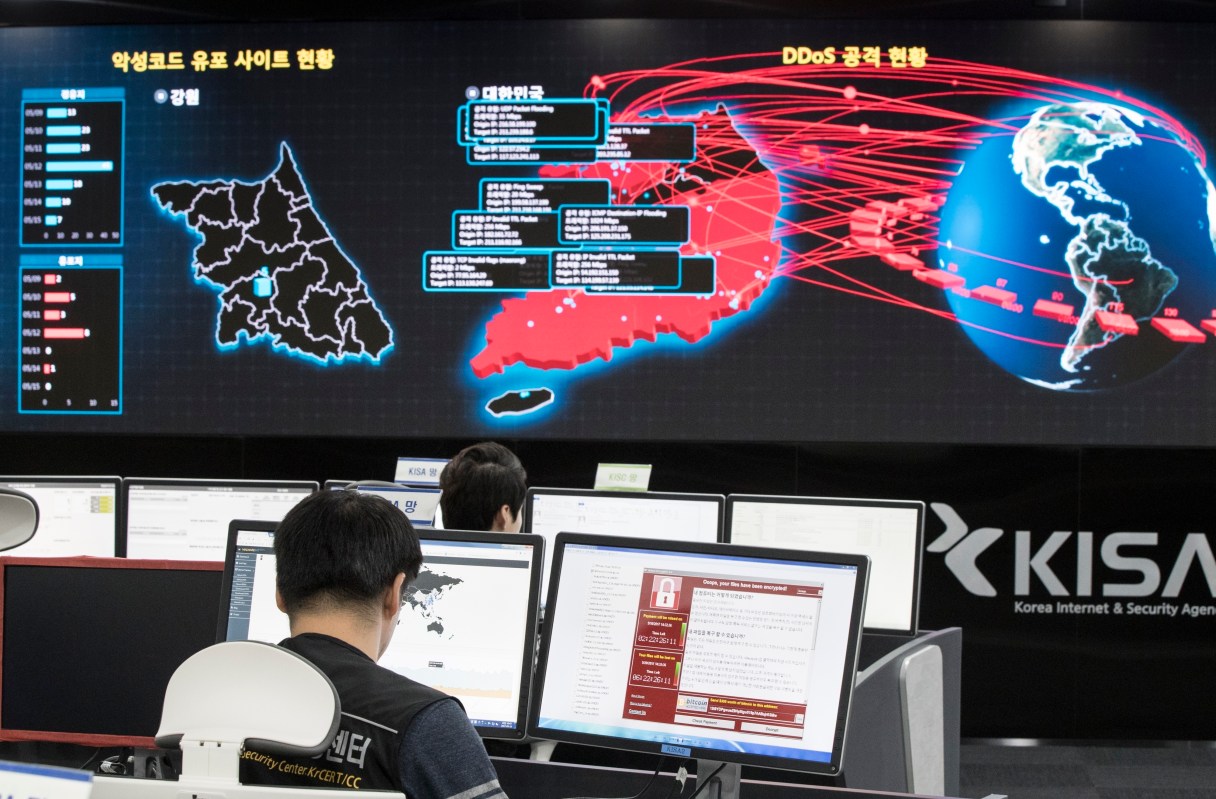
TOKYO (AP) – A couple of things about the WannaCry cyberattack are certain. It was the biggest in history and it’s a scary preview of things to come – we’re all going to have to get used to hearing the word “ransomware.” But one thing is a lot less clear: whether North Korea had anything to do with it.
Despite bits and pieces of evidence that suggest a possible North Korea link, experts warn there is nothing conclusive yet – and a lot of reasons to be dubious. Why, for example, would Pyongyang carry out a big hack that hurt its two closest strategic partners more than anyone else? And for what appears to be a pretty measly amount of loot – as of Friday the grand total of ransom that had been paid was less than $100,000.
Within days of the attack, respected cybersecurity firms Symantec and Kaspersky Labs hinted at a North Korea link. Google researcher Neel Mehta identified coding similarities between WannaCry and malware from 2015 that was tied to the North. And the media have since spun out stories on Pyongyang’s league of hackers, its past involvement in cyberattacks and its perennial search for new revenue streams, legal or shady.
But identifying hackers behind sophisticated attacks is a notoriously difficult task. Proving they are acting under the explicit orders of a nation state is even trickier.
When experts say North Korea is behind an attack, what they often mean is that Pyongyang is suspected of working with or through a group known as Lazarus. The exact nature of Lazarus is cloudy, but it is thought by some to be a mixture of North Korean hackers operating in cahoots with Chinese “cyber-mercenaries” willing to at times do Pyongyang’s bidding.