
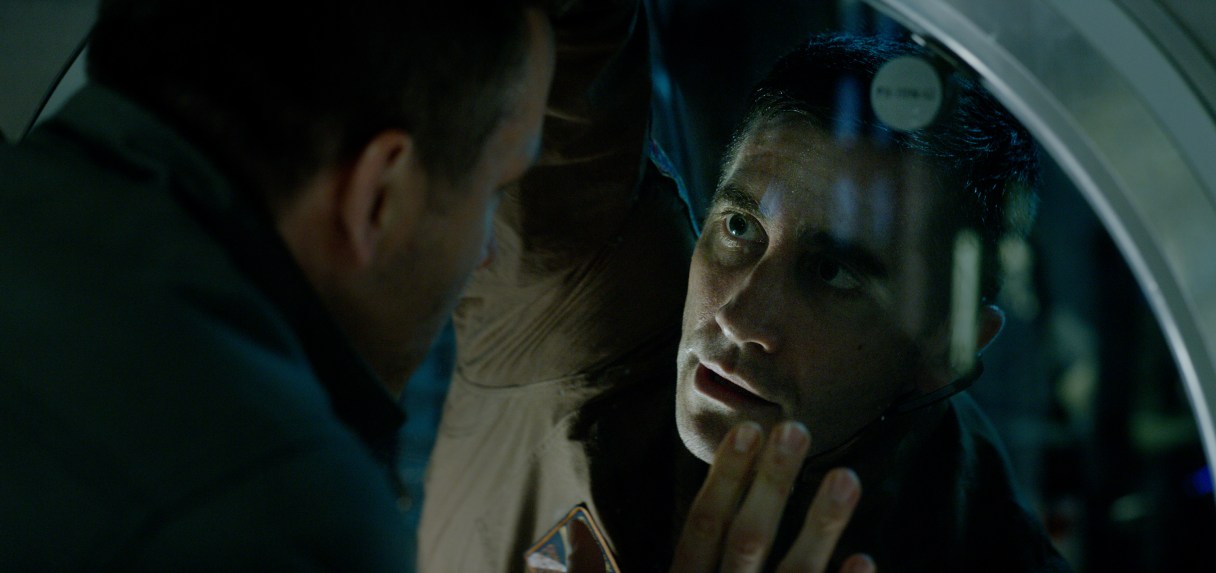
‘Life’
Rating: R for “language throughout, some sci-fi violence and terror.”Running time: 102 minutes.
In Daniel Espinosa’s “Life,” an international space station orbiting the Earth intercepts an automated capsule returning from Mars with samples: rocks, dust and, as it turns out, a tiny monocellular organism that proves the existence of life on another planet. The thing, though, about those monocellular organisms from Mars is that they grow up.
When Dr. Hugh Derry (Arioyon Bakare) injects the cell with glucose, it begins rapidly growing bigger, beyond its petri dish. (Yes, “Life” is, above all, a lesson in the dangers of too much sugar.) The crew – including Jake Gyllenhaal’s troubled veteran, Ryan Reynolds’ cocky engineer, Rebecca Ferguson’s microbiologist and Hiroyuki Sanada’s new father – celebrate their remarkable discovery and observe its development. “You’re going to be a daddy,” Reynolds’ astronaut tells the proud Derry.
Derry, the biological expert of the bunch, hopes the organism – dubbed “Calvin” – will teach the scientists about the origin, the nature “and maybe even the meaning of life.” Such glories, however, aren’t in store. The harsh revelation that Calvin brings is that life – violently striving for survival – finds a way.
Unfortunately, “Life,” the movie, doesn’t. Once the alien lifeform strengthens and gets loose, “Life” surrenders to a tiresome chase away from not just its ravenous creature but from the movies “Life” so obviously takes it cues from. “Life” certainly can’t come anywhere near the well-earned horrors of “Alien,” nor does it boast anything like the silky splendor of “Gravity.”