
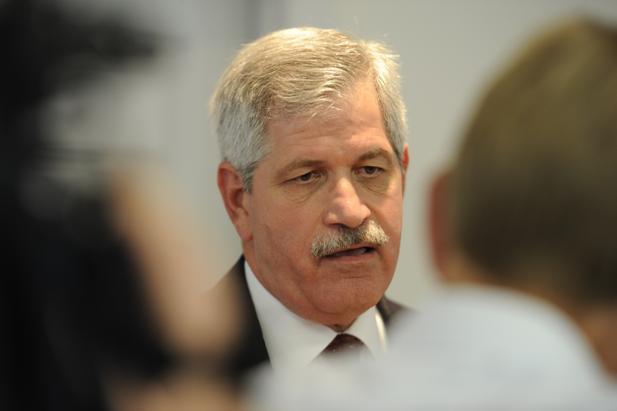
 Rick Smith
County Schools Superintendent Rick Smith’s proposal to eliminate student transfers from majority black schools to majority white schools is likely to alarm proponents of racial equity in education, and for good reason. Given this county’s racially tainted past, it clearly would be a challenge for Smith to show that there is a better immediate option for minority students who want to escape schools where average student achievement levels remain well below those in the best white-majority schools.
Blatant racism was at the core of opposition just 15 years ago to a merger of the city and county school systems. The latter had most of the better white-majority schools where student achievement was relatively high. The city school system had virtually all of the poorer urban black-majority schools where student achievement lagged. The minority-to-majority transfer program, along with magnet school options, have helped overcome the idea that minority students can be left to languish in neglected schools.
There has been substantial focus on improving student performance in urban minority schools since the school merger, to be sure. Yet overall achievement levels in predominantly black urban schools have not have improved as much as reform advocates would like. The transfer program has eased concern among some parents by providing achievement-oriented students a handy lifeline for a better education.
Coming just days after Tennessee received a waiver of the No Child Left Behind rules that mandated the transfer program, the timing of Smith’s proposal could seem suspiciously like a rush to return to the bad old days of racist neglect. Heightening that fear is the fact that Smith was installed as superintendent last year by the regressive faction of the school board and its County Commission allies, who succeeded after long battles in ousting the merged school system’s two progressive superintendents — Jesse Register and his successor, Jim Scales. Some of these board members continue to oppose the two programs that have done the most to overcome racial disparities.
Though Smith proposes to phase in elimination of minority-to-majority school transfers to let affected students finish the highest grade level at the schools they currently attend, he seems mainly interested in ending the program to save the $830,000 that the system now spends to bus some 500 transfer students from 17 schools to the paired out-of-zone, white-majority schools they have chosen to attend.