
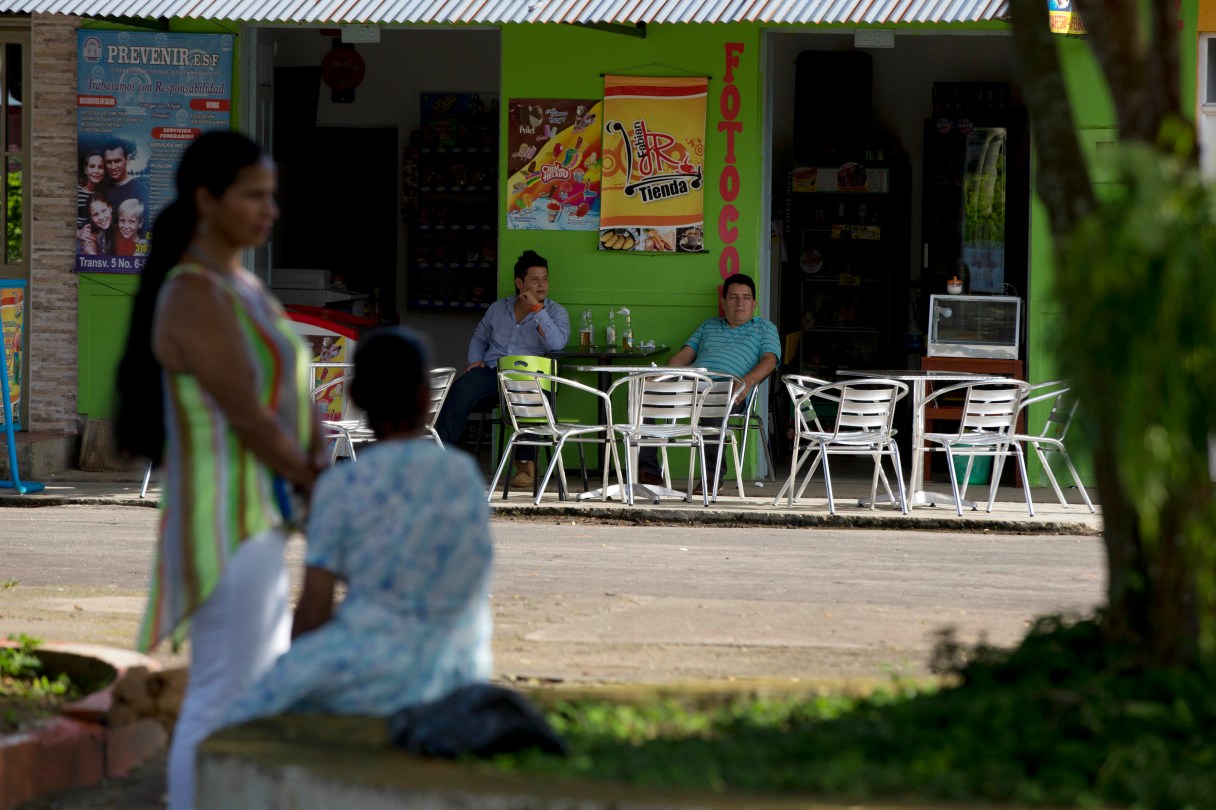
PUERTO RICO, Colombia (AP) – It’s a sweltering afternoon and two young women cool off with a juice at a bright green-painted store and watering hole as a few mules relax in the shade. The peaceful scene typical of any tropical village in Colombia makes it hard to imagine this as the site of one of the most-remembered massacres in the country’s bloody civil conflict.
At around 2:40 p.m. on May 24, 2005, members of an elite guerrilla platoon swept silently into town by boat, hopped on the back of a red pickup truck and drove a few blocks through a small police barrier to a house where a town hall meeting was taking place. They burst in with a machine gun spraying bullets and in less than 10 minutes killed seven people, including four city council members.
“They entered without God or law and started firing in every direction,” remembers Maria Luisa Celis, who survived the attack on her fellow council members by hiding in the kitchen.
As President Juan Manuel Santos prepares to sign a historic peace deal with the Revolutionary Armed Forces of Colombia, those who for years who were besieged by guerrillas operating nearby are uneasy about the future. While opinion is divided in this town ahead of an Oct. 2 referendum on the accord, even supporters resent seeing guerrilla commanders who terrorized their town for years now touting themselves as peacemakers and being rewarded with a political future.
FARC leaders on Friday gave their unanimous support to the peace agreement at their final conference as a guerrilla army, taking place in a vast savannah one town away.