
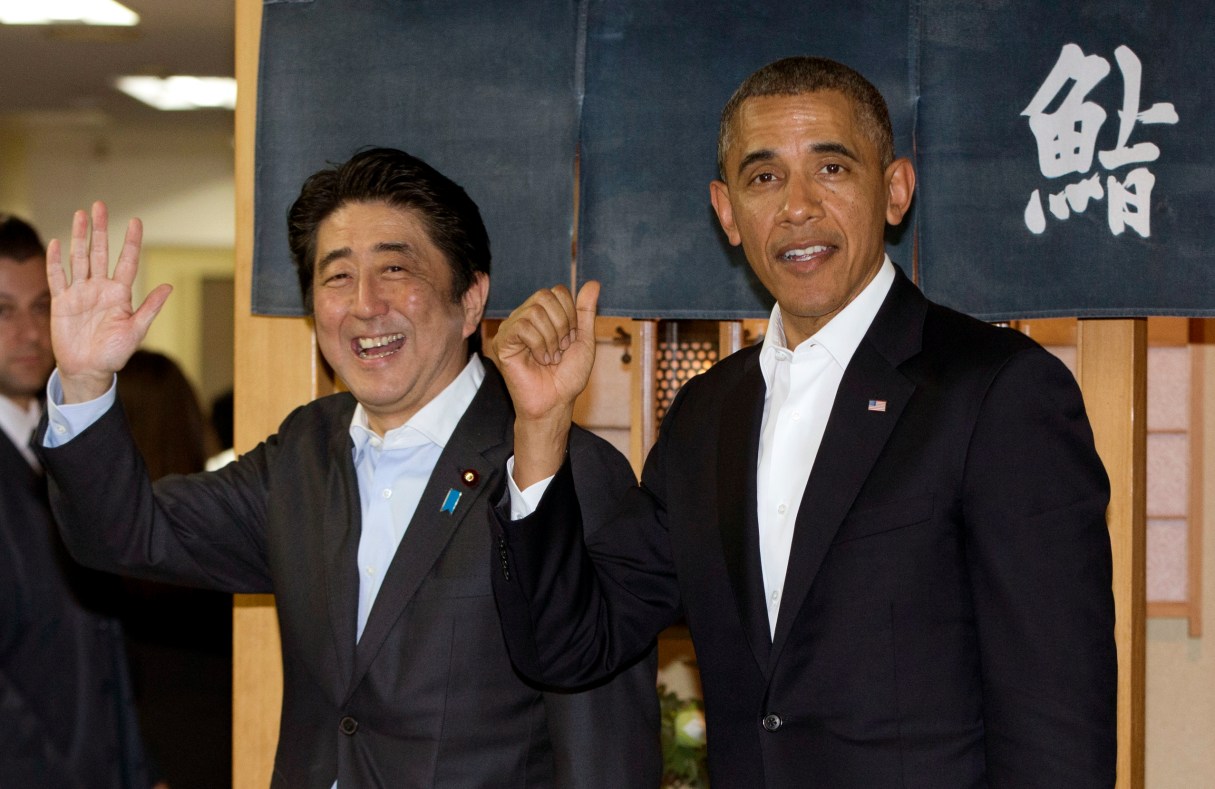
TOKYO (AP) – Japanese Prime Minister Shinzo Abe’s itinerary for his weeklong U.S. visit beginning Sunday will showcase the success of the alliance built from Tokyo’s defeat in World War II, while promoting a political agenda based on still stronger military and economic ties.
The visit will take Abe from Boston to Silicon Valley, with ample time for hobnobbing with high-flying businesspeople like the founders of Facebook and Apple, Japanese scholars and celebrities.
With no major trade or economic deals expected, the aim, officials in Tokyo said, is to confirm an upgrading of joint defense guidelines and to advertise the bright side of Japan and its people, including Americans of Japanese ancestry, and possibly sell some bullet train systems.
Abe is first among several leaders of Asia, including China and South Korea, visiting the U.S. this year, a sign of Washington’s growing attention to the region.
He can point to his brief summit the week before with Chinese President Xi Jinping as a sign of improving relations despite lingering friction over Japan’s wartime history and territorial disputes. Abe still hasn’t met bilaterally with South Korea’s President Park Geun-hye due to a row over his stance on the issue of sex slaves – women forced to work in military brothels during the war.