
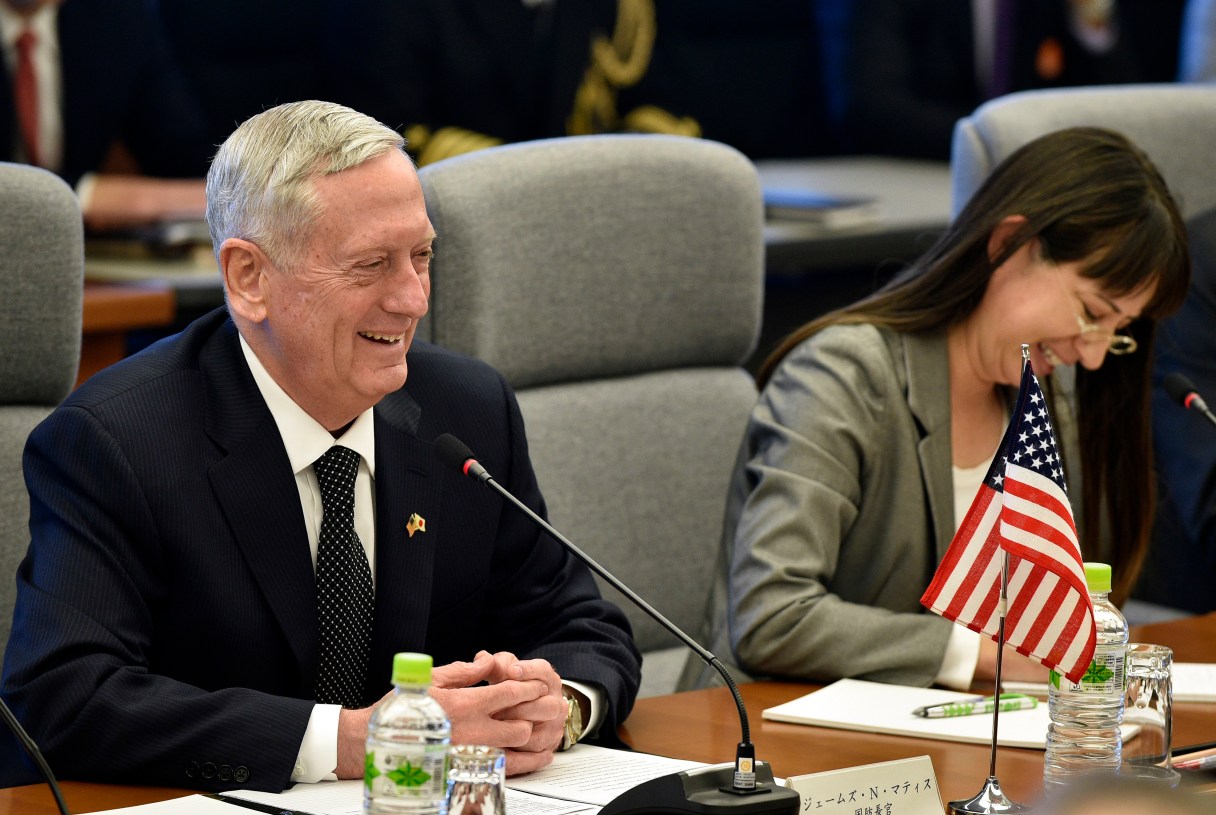
BEIJING (AP) – The U.S. is putting regional stability in East Asia at risk, a Chinese spokesman said Saturday following remarks by President Donald Trump’s defense secretary that a U.S. commitment to defend Japanese territory applies to an island group that China claims.
Chinese Foreign Ministry spokesman Lu Kang on Saturday called on the U.S. to avoid discussion of the issue and reasserted China’s claim of sovereignty over the tiny uninhabited islands, known in Japanese as the Senkaku and Chinese as Diaoyu.
The 1960 U.S.-Japan treaty is “a product of the Cold War, which should not impair China’s territorial sovereignty and legitimate rights,” Lu was quoted as saying in a statement posted on the ministry’s website.
“We urge the U.S. side to take a responsible attitude, stop making wrong remarks on the issue involving the Diaoyu islands’ sovereignty, and avoid making the issue more complicated and bringing instability to the regional situation,” Lu said.
On his first trip to Asia as secretary of defense, Mattis explicitly stated in Tokyo that the Trump administration will stick to the previous U.S. stance that the U.S.-Japan security treaty applies to defending Japan’s continued administration of the Senkaku islands.