
What should you do?
Councilman Bob Spalding says the first step to being ready in case of a disaster or emergency is preparedness. “It ultimately falls back to individual families to be prepared and have provisions in place,” he said. Resources such as ready.gov, which teaches families about how to prepare for severe weather, are available to anyone. Spalding said the Town Council is looking into putting such information in a concise format on the town’s website.
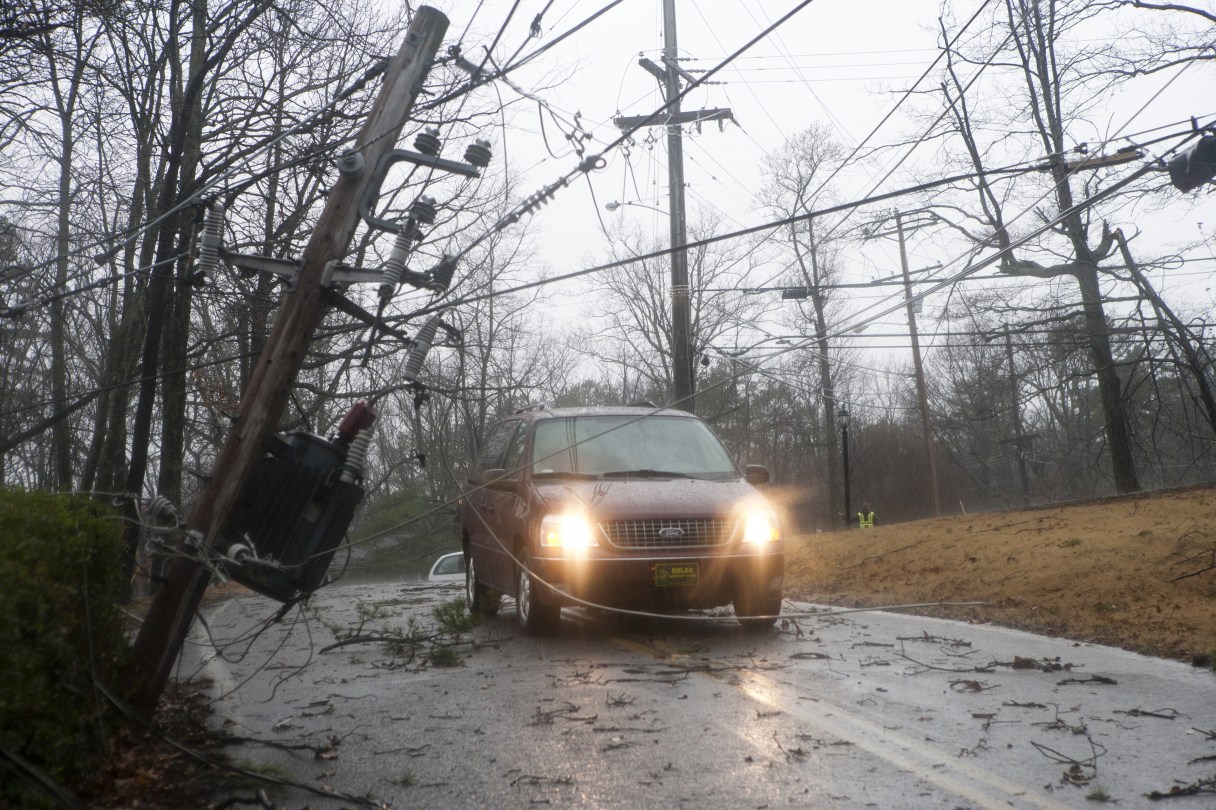
The relative isolation of the Signal Mountain community has caused a bit of concern for town officials in regard to how resources would reach people and where they would go in case of an emergency or natural disaster.
At an April 1 planning meeting, the Signal Mountain Town Council met with Tony Reavley from Hamilton County Emergency Services and Dewey Woody, deputy director of the Tennessee Emergency Management Agency, to discuss the options town residents have when it comes to a disaster.
“Up until last summer there were only two shelters that were designated in Chattanooga that had met the American Red Cross’ standards,” Councilman Bob Spalding said in a followup interview. “We wanted to make sure we had the infrastructure ahead of time to handle an emergency.”
Reavley and Woody said at the meeting that it’s policy not to pre-designate specific shelters as where people should go, just in case that shelter has been compromised or otherwise become unusable during an emergency. However, Reavley did say they’ve got an agreement with Hamilton County Schools to use them as shelters, and that discussion with local churches for their use as shelters is ongoing.
“The Red Cross has the ability to set up a shelter anywhere,” Spalding said, referencing a trailer used by the organization which houses supplies for an emergency shelter. “Our concern is that we’re geographically isolated, and that might need to be done in advance.”
Woody said at the meeting that in case of something catastrophic, TEMA can have crew from other states on the scene within hours of a disaster to help direct people to safety and distribute supplies.
Other provisions Woody and Reavley said are in place include arrangements for pets, medical needs for those displaced, and translators for those who don’t speak fluent English.
While the town’s council members said they were pleased with the level of support they would expect from the local and state agencies in case of an emergency, some expressed concern about where people would go to get immediate information.
“What happens right at the point of an emergency?” Mayor Dick Gee asked in a followup interview. “Do people know what to do or where to go? Are they aware of assembly locations? If they don’t know, do they know how to find that out? These are questions that need answers.”
Gee said the council may discuss polling residents to determine what their initial reaction during an emergency would be, and then formulate a contingency plan based on that.
“Many in the face of a crisis aren’t thinking clearly,” he explained. “They’re acting on reflex.”
He also said that while 911 is a valuable resource during an emergency, he is concerned the system could get overwhelmed during a disaster.
During a storm or other natural disaster, updates are posted over the internet by TEMA and Hamilton County officials, as well as put on television and the radio through the emergency broadcast system. If power is completely knocked out, Reavley said police officers would drive through neighborhoods with loudspeakers giving up-to-date information.
Spalding said the Town Council may look into stockpiling a few resources of its own to expedite transitioning facilities into emergency shelters should the need arise. Portable generators and beds are two provisions the town may acquire to ensure they’re in place when they’re needed, he said.
Despite concerns about the future, the council members expressed gratitude at the efforts of both Hamilton County Emergency Services and TEMA.
“I’m extremely grateful that these two agencies have worked so hard to bring about improvement of the system,” said Spalding. “This is the kind of thing you want to have ready before you need it.”