
Friday, November 13, 2026Nov 13

UNESCO wants ban on Iraq, Syria art trafficking

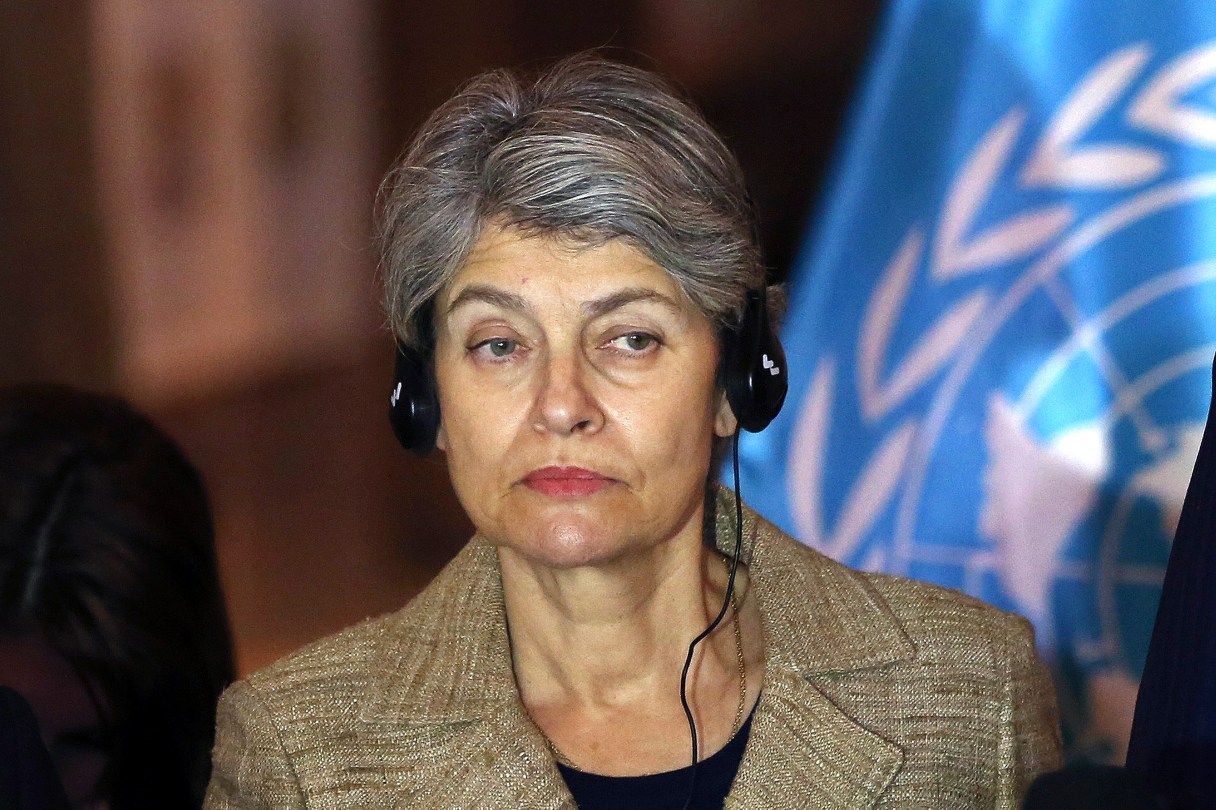
FILE - In this Nov. 2 2014 file photo, Irina Bokova, the Director-General of the United Nations Educational, Scientific and Cultural Organization (UNESCO) listens to a question during a press conference at the Iraqi National Museum in Baghdad, Iraq. She’s already the first female and Eastern European to head UNESCO, and could be the first female and Eastern European United Nations secretary-general, too _ if her government gets its way and she wins support from the five U.N. Security Council members. (AP Photo/Khalid Mohammed, File)
FILE - In this Nov. 2 2014 file photo, Irina Bokova, the Director-General of the United Nations Educational, Scientific and Cultural Organization (UNESCO) listens to a question during a press conference at the Iraqi National Museum in Baghdad, Iraq. She’s already the first female and Eastern European to head UNESCO, and could be the first female and Eastern European United Nations secretary-general, too _ if her government gets its way and she wins support from the five U.N. Security Council members. (AP Photo/Khalid Mohammed, File) FILE - In this Nov. 2 2014 file photo, Irina Bokova, the Director-General of the United Nations Educational, Scientific and Cultural Organization (UNESCO) listens to a question during a press conference at the Iraqi National Museum in Baghdad, Iraq. She’s already the first female and Eastern European to head UNESCO, and could be the first female and Eastern European United Nations secretary-general, too _ if her government gets its way and she wins support from the five U.N. Security Council members. (AP Photo/Khalid Mohammed, File)

PARIS (AP) – The head of UNESCO is calling on the U.N. Security Council to adopt a ban on the illicit trafficking of cultural objects from conflict zones in Iraq and Syria.

Ahead of a conference on endangered heritage Wednesday, Irina Bokova told The Associated Press the trafficking of objects obtained through illegal excavations in both countries is an industry now worth between $7 billion and $15 billion.

“(A U.N. ban) is critical in order to curb the financial flows, because there is the other dark side of this process: that extremists are using this money to fund their activities,” she told the AP.

“If the international community and the Security Council want to stop the financing of the terrorists, they need to look also at the trafficking of objects of art,” she said.

The 3 1/2-year-long civil war in Syria has killed more than 200,000 people and touched off a massive humanitarian crisis, forcing more than 3 million to seek refuge abroad and displacing another 6.5 million within the country. Meanwhile, the Islamic State group has seized most of the border crossings between Iraq and Syria and overrun large parts of both countries.