
Friday, October 30, 2026Oct 30

This story is free to read.

Separating Syrian moderates from terrorists could tank talks

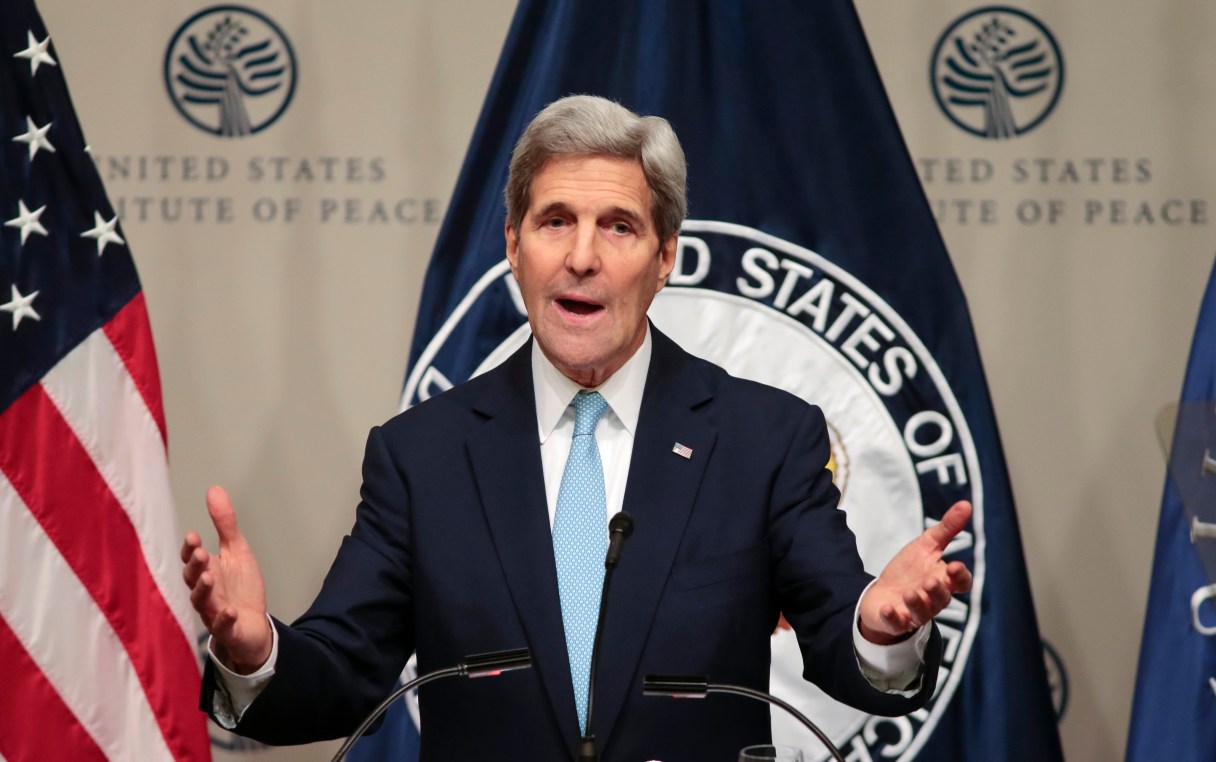
Secretary of State Kerry speaks on U.S. strategy in Syria and the Middle East before heading back to Vienna for more talks on how to resolve the crisis, Thursday, Nov. 12, 2015, at the Peace Institute in Washington. (AP Photo/J. Scott Applewhite)
Secretary of State Kerry speaks on U.S. strategy in Syria and the Middle East before heading back to Vienna for more talks on how to resolve the crisis, Thursday, Nov. 12, 2015, at the Peace Institute in Washington. (AP Photo/J. Scott Applewhite) Secretary of State Kerry speaks on U.S. strategy in Syria and the Middle East before heading back to Vienna for more talks on how to resolve the crisis, Thursday, Nov. 12, 2015, at the Peace Institute in Washington. (AP Photo/J. Scott Applewhite)

WASHINGTON (AP) – The United States, Russia, Saudi Arabia and Iran haven’t agreed on much throughout Syria’s bloody four-and-a-half year-old civil war.

But for the sake of peace, they will try this weekend to decide which of Syria’s fighting forces are common enemies and which can be included in a transition government with President Bashar Assad, their intractable enemy.

Failure to reach an agreement could leave international peace efforts in tatters.

As diplomats return to Vienna for another round of Syria talks on Saturday, they’re grappling with questions that have scuttled all previous attempts to forge a ceasefire and usher in a political transition.

Other than the Islamic State group, who are the extremists? Who from Syria’s government and opposition should do the negotiating? How long can Assad remain in power?